
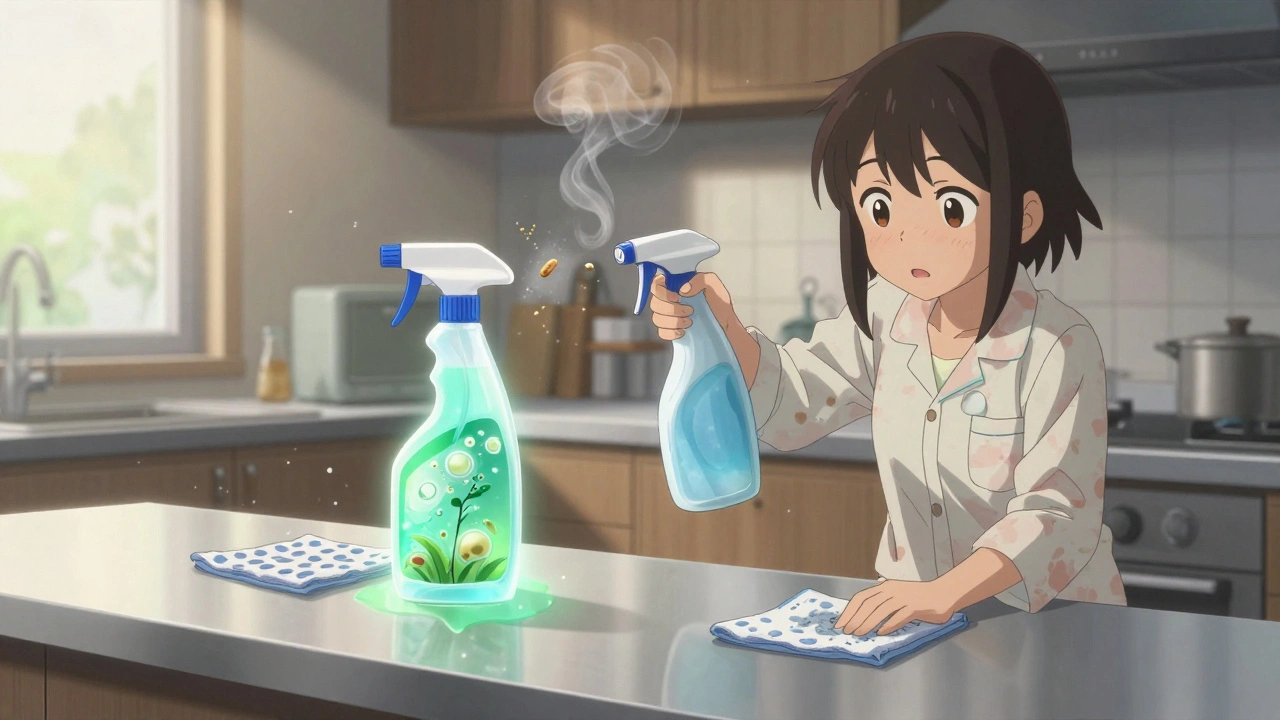
Every time you spray a cleaner on your kitchen counter, you might be stirring up more than just dirt. For people with allergies or asthma, common household cleaners can be a silent trigger-spreading dust mites, pet dander, and chemical fumes into the air instead of removing them. A 2023 study found that 87% of surfaces still held traces of peanut, milk, or egg allergens after standard wiping. That’s not cleaning. That’s redistribution.
Why Regular Cleaners Make Allergies Worse
Most conventional cleaning sprays are packed with ingredients that sound harmless but act like fireworks for sensitive lungs. Ammonia, bleach, and synthetic fragrances don’t just cut grease-they irritate airways, worsen asthma, and can even cause new allergies to develop. The European Community Respiratory Health Survey showed that people who used spray cleaners weekly had a 51% higher risk of developing adult-onset asthma. That’s not a small risk. It’s a public health red flag. Even products labeled "natural" or "unscented" aren’t safe. A 2022 study in the Journal of Allergy and Clinical Immunology found that 68% of "unscented" disinfecting wipes triggered reactions in people with fragrance sensitivity. Why? Because "unscented" often means masking agents were added to hide the smell of harsh chemicals. These hidden ingredients are the real problem.What Makes a Cleaner Truly Allergy-Friendly?
Not all eco-friendly cleaners are created equal. The only reliable way to know a product actually reduces allergens is to look for the Asthma & Allergy Friendly® certification. This program, backed by the Asthma and Allergy Foundation of America, tests products in real-world conditions. To earn the label, a cleaner must:- Remove at least 85% of common allergens like dust mite debris, pet dander, and pollen from hard surfaces
- Keep VOC emissions below 0.5 parts per million
- Pass strict testing for 12 known fragrance allergens
Independent labs at the Rochester Institute of Technology tested certified products and found they removed 92% of allergens-compared to just 76% for non-certified "natural" cleaners. That’s a huge difference when you’re trying to protect a child with eczema or someone with severe asthma.
Key ingredients in effective allergy-friendly cleaners include:
- Potassium cocoate (5-15%)-a gentle surfactant from coconut oil that lifts dirt without irritating skin or lungs
- Potassium citrate (2-8%)-softens water and binds to minerals so dirt doesn’t stick back
- Hydrogen peroxide (3-5%)-a safer alternative to bleach that kills germs without releasing toxic fumes
- Corn-based ethanol (10-20%)-a plant-derived degreaser that evaporates cleanly
These ingredients work together to clean without triggering reactions. Compare that to traditional cleaners that use 20-30% ammonia or chlorine-chemicals that linger in the air and settle on surfaces long after you think you’re done.
Top Products That Work (And Why)
Not all certified products are the same. Some stand out based on real-world results:- Seventh Generation Free & Clear Laundry Detergent-Used by families across the U.S., this detergent reduced eczema flare-ups by 70% in one case study tracked by an allergist. It’s free of dyes, fragrances, and optical brighteners.
- Renegade Brands’ Sweat-X Free & Clear Detergent-Certified in 2023, it scored 92% allergen removal in lab tests. It’s especially popular with parents of children with severe allergies.
- Attitude All-Purpose Cleaner-Uses plant-based surfactants and is rated 1.5 on the Environmental Working Group’s scale (1 = best). It’s one of the few cleaners that works on grease without harsh chemicals.
- Method All-Purpose Cleaner (Unscented)-While not certified, it’s one of the few non-certified options with no undisclosed fragrance chemicals. Still, it doesn’t meet the 85% allergen removal standard.
Amazon reviews for certified products average 4.3 stars across 12,500+ reviews. The most common 5-star comments mention: "No more sneezing after cleaning," "My kid stopped waking up coughing," and "Finally, a cleaner that doesn’t make my asthma flare."
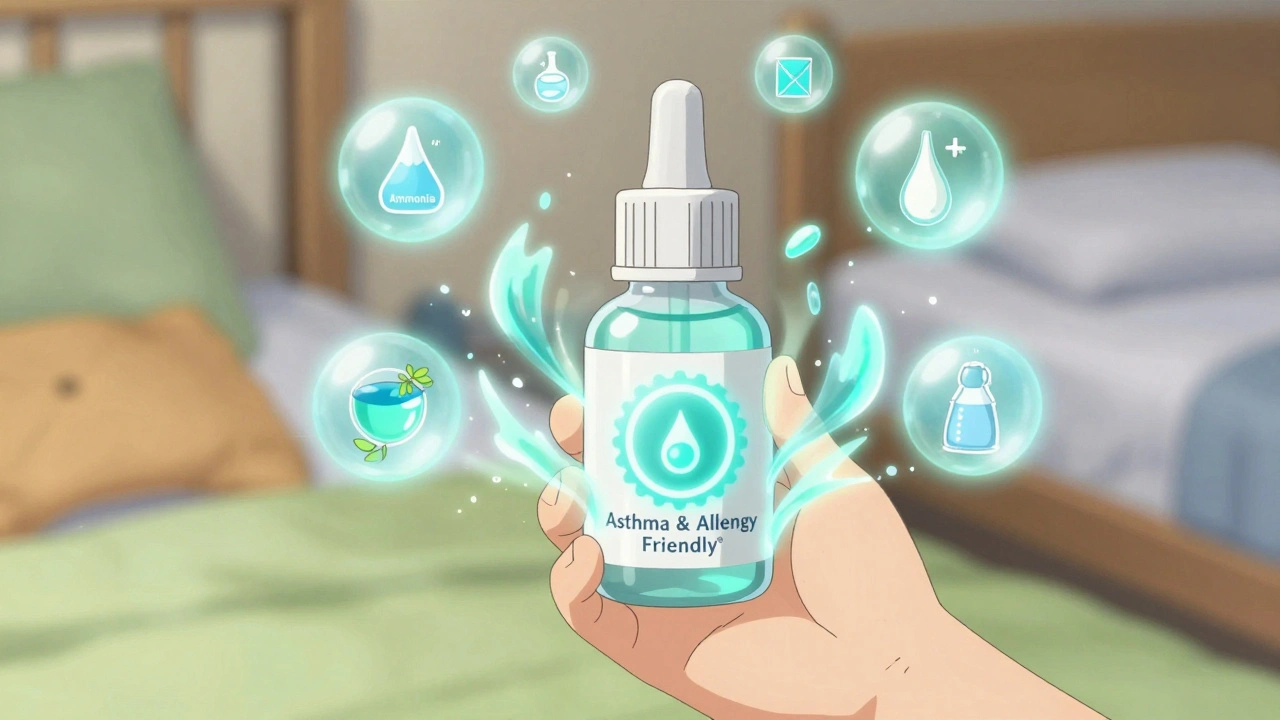
The Two-Cloth Method: The Secret Weapon
Even the best cleaner won’t help if you use it wrong. The most effective cleaning technique isn’t about the product-it’s about the method. Research from the Indoor Air Journal found that using a two-cloth system reduces airborne allergens by 63% compared to single-cloth wiping.Here’s how it works:
- Use a damp microfiber cloth with your allergy-friendly cleaner to lift dirt and allergens off surfaces.
- Immediately follow with a second damp cloth soaked in clean water only. This rinses away any leftover residue and prevents allergens from being pushed around.
This simple change cuts down on resuspension-the process where dust and allergens get kicked back into the air. It’s especially critical in kitchens (where food allergens linger) and bedrooms (where dust mites thrive).
What About Vinegar and Baking Soda?
Many people turn to DIY solutions like vinegar and water. It’s cheap, and it smells clean. But here’s the catch: a 2024 Food Standards Agency review found vinegar removes only 67% of peanut residue from surfaces. Certified products remove 89%. That’s a 22% gap in protection.Homemade cleaners also don’t kill mold or bacteria reliably. And they offer no assurance against hidden fragrance triggers. If you’re managing asthma or severe allergies, the risk isn’t worth the savings.
Cost, Convenience, and Real Results
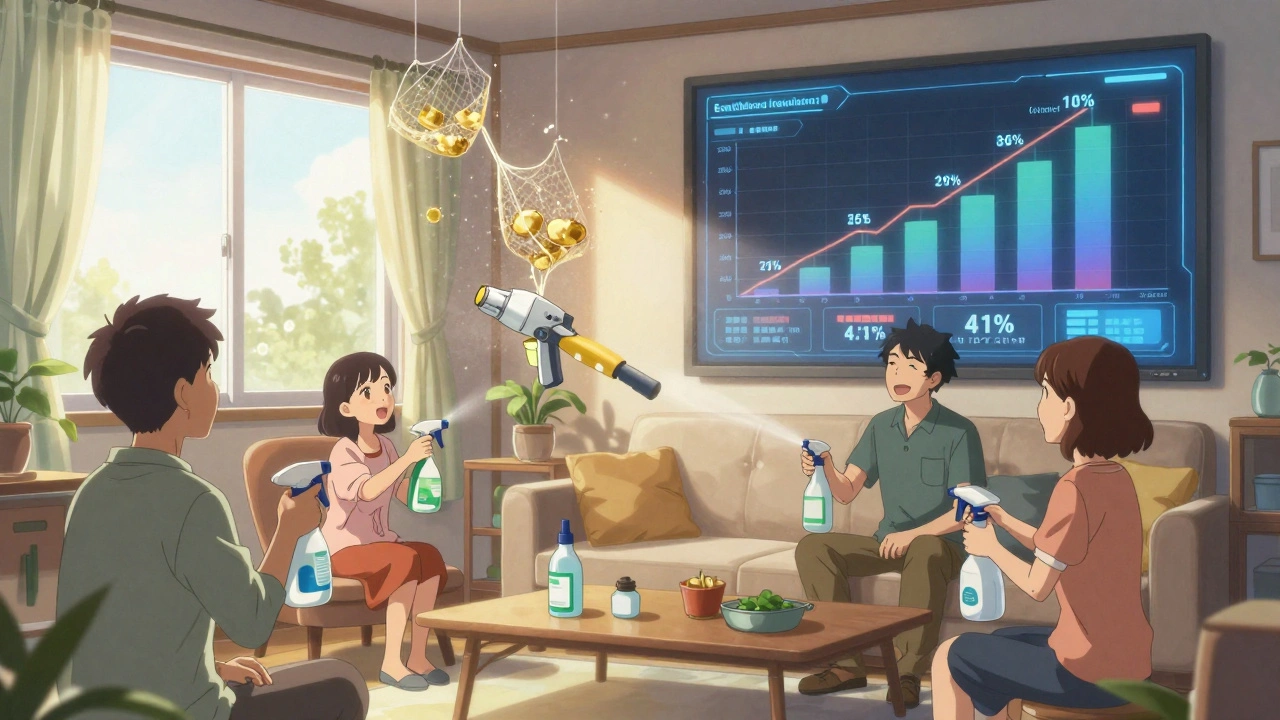
Certified allergy-friendly cleaners cost more-around $5.75 per 32oz, compared to $3.25 for non-certified "natural" brands. But consider this: a 2023 study of 45 families with children suffering from severe allergies found that switching to certified products and using the two-cloth method led to a 41% drop in emergency room visits for asthma attacks over 12 months.That’s not just comfort. That’s healthcare savings. The CDC estimates poor indoor air quality costs the U.S. $58 billion annually in medical bills and lost productivity. Investing in the right cleaners isn’t a luxury-it’s prevention.
Refill systems are growing fast, up 18% annually. Brands like Attitude and Seventh Generation now offer concentrated refills that cut plastic waste and lower the cost per use. A single 8oz concentrate can make 32oz of cleaner. That brings the price down to under $4 per 32oz.
How to Make the Switch
Transitioning doesn’t have to be overwhelming. Start here:- Replace your laundry detergent first. It’s the biggest source of allergen exposure in bedding and clothing. Seventh Generation or Renegade are top choices.
- Buy one all-purpose cleaner with the Asthma & Allergy Friendly® label. Use it in the kitchen and bathroom.
- Switch to microfiber cloths. Wash them in fragrance-free detergent after each use.
- Use the two-cloth method. Wet cloth with cleaner, then wet cloth with water.
- Don’t clean with dry dusters. They scatter allergens. Always dampen first.
Most households adapt within 2-3 weeks. After that, the difference becomes obvious-less sneezing, fewer coughing fits, better sleep.
What’s Next for Allergy-Friendly Cleaning
The market is growing fast. In 2024, certified products made up 29% of the $4.2 billion hypoallergenic cleaning market-up from 19% in 2020. By 2028, it’s expected to hit $7.1 billion. Why? Because more hospitals, schools, and daycare centers are switching. In the U.S., 63% of hospitals now use certified cleaners in patient rooms.New tech is helping too. In January 2024, electrostatic sprayers designed for hypoallergenic solutions hit the market. They use 65% less product and capture 28% more allergens than traditional spraying. They’re still pricey for homes, but they’re coming.
The EU just mandated full fragrance ingredient disclosure in 2023. The U.S. is likely to follow. That means fewer hidden triggers. And the Asthma & Allergy Foundation just updated its certification in March 2024 to test for 12 new fragrance allergens identified in NIH research.
This isn’t a trend. It’s a necessary shift in how we think about cleanliness. Real cleaning doesn’t just make things look clean. It makes them safe to breathe around.


Hi, I'm Caden Lockhart, a pharmaceutical expert with years of experience in the industry. My passion lies in researching and developing new medications, as well as educating others about their proper use and potential side effects. I enjoy writing articles on various diseases, health supplements, and the latest treatment options available. In my free time, I love going on hikes, perusing scientific journals, and capturing the world through my lens. Through my work, I strive to make a positive impact on patients' lives and contribute to the advancement of medical science.