

FDA SAE Classifier Tool
How it works: Select any outcomes that occurred during the medical event. The tool will determine if it meets the FDA's regulatory definition of "Serious," regardless of how "severe" the symptoms felt.
Serious Adverse Event (SAE)
Why? In regulatory terms, an event is "serious" based on the outcome (like hospitalization), not the intensity of the pain.
Report this experience via FDA MedWatch (Form 3500B) to help improve drug safety labels.
Adverse Event (AE)
Important Note: This event can still be "Severe" (Grade 3 or 4) if the symptoms were intense, but it is not legally classified as an SAE if it didn't lead to the outcomes listed on the left.
Keep a symptom log and discuss the severity grade with your doctor during your next visit.
Quick Takeaways: What You Need to Know
- Serious ≠ Severe: An event is "serious" based on the outcome (like hospitalization), not how bad the symptom feels.
- The Five Criteria: An event is classified as an SAE if it results in death, is life-threatening, requires hospitalization, causes permanent disability, or results in a birth defect.
- IMEs: "Important Medical Events" can also be labeled serious if they need quick intervention to prevent a worse outcome.
- Reporting: You can report your own side effects directly to the FDA via the MedWatch program.
The Big Confusion: Serious vs. Severe
The most important thing to grasp is that "serious" and "severe" are not the same thing. In everyday conversation, we use them interchangeably, but the FDA uses them as two completely different measuring sticks.
Severity is about the intensity of a symptom. Think of it like a volume knob. If you have a blistering headache that makes it impossible to work, that is a "severe" side effect. The National Cancer Institute uses a scale from Grade 1 (mild) to Grade 5 (fatal) to track this. For example, a Grade 3 event is considered severe and might require some medical intervention, but it isn't necessarily "serious" in the eyes of the law unless it hits a specific trigger.
Seriousness, on the other hand, is about the outcome. It doesn't matter if the symptom felt mild; if it landed you in the hospital, it is officially a Serious Adverse Event. To put it simply: a severe headache that you treat at home is "severe" but not "serious." A mild reaction that causes you to be admitted to the hospital for 24 hours is "serious" but not "severe."
When is an event actually "Serious"?
The FDA doesn't leave this to chance. For an event to be classified as an SAE, it must meet one of five specific criteria. If it doesn't hit one of these, it's just a standard adverse event.
- Death: Any event that results in the patient passing away.
- Life-threatening: This means the patient was at a substantial risk of dying at the exact moment the event happened.
- Hospitalization: This includes being admitted to the hospital for the first time or having an existing stay extended by 24 hours or more.
- Disability or Permanent Damage: A significant disruption of a person's ability to function in their normal daily life.
- Congenital Anomaly: A birth defect or abnormality in a baby born during or after the use of the drug.
Beyond these five, there is a "catch-all" category called Important Medical Events (IMEs). These are situations that might not have caused a hospital stay yet, but if a doctor didn't step in, they almost certainly would have. By including IMEs, the FDA was able to catch over 18,000 extra safety signals in 2022 alone, which helps them update drug labels faster to protect the public.
| Feature | Severity (Grade) | Seriousness (SAE) |
|---|---|---|
| What it measures | Intensity of the symptom | The clinical outcome/impact |
| Key Question | "How bad does this feel?" | "What did this lead to?" |
| Example | Grade 3 nausea (very intense) | Hospitalization for 2 days |
| Scale | 1 to 5 (Mild to Fatal) | Yes/No (Based on 5 criteria) |

Why this classification matters for your safety
You might wonder why the FDA spends so much time on these definitions. It's because this system is the "smoke alarm" for public health. When clinical trial sponsors report an SAE, it triggers a strict clock. Fatal or life-threatening events must be reported to the agency within 15 calendar days.
This rapid reporting allows the Center for Drug Evaluation and Research (CDER) to spot patterns. If ten different patients across three different countries all experience the same "serious" event, the FDA can step in to change the drug's warning label or, in extreme cases, pull the drug from the market entirely. In 2022, this system led to 128 safety alerts and 47 label changes, directly preventing potential harm to thousands of people.
However, it's not a perfect system. A lot of these reports are voluntary. Some experts, like Professor Joel Lexchin, argue that because companies are the ones doing the reporting, some serious events might be underestimated. This is why your own input is so valuable.
How to find this info in your medical documents
If you're reviewing a new medication or participating in a trial, you won't always see a neat table. You'll need to look in specific places to find the real story on safety.
- Medication Guides: Look for the "Warnings and Precautions" section. This is where the FDA mandates that manufacturers list serious reactions and how often they happened (e.g., "Serious infections occurred in 2.3% of patients").
- Informed Consent Forms: If you're in a study, look for "Risks and Discomforts." This section explains how the team will monitor you for SAEs.
- Patient Glossaries: Modern trials are starting to include plain-language glossaries. If you see one, check the definition of "Serious Adverse Event" to see if it aligns with the outcome-based definition we discussed.
If you're feeling overwhelmed by the jargon, don't be afraid to ask your nurse or doctor for a "plain language summary." Research shows that only about 32% of patients truly understand SAE info in consent forms without extra help. It is perfectly normal to need a 15-minute chat to clear things up.
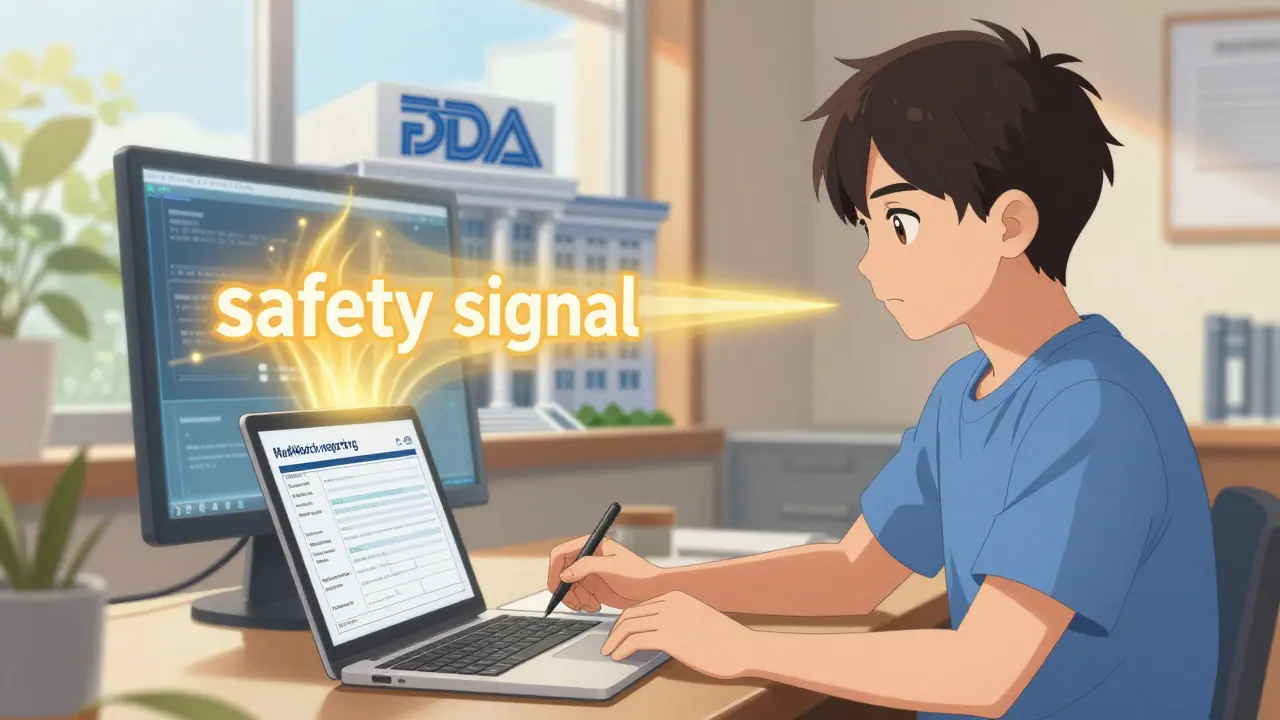
Taking action: Reporting your own experience
You don't have to wait for a doctor to report a problem. The MedWatch program is a direct line from you to the FDA. Established in 1993, it allows patients to use Form 3500B to report side effects.
When you report, try to be as specific as possible. Instead of saying "I felt terrible," say "I had a rash that required me to visit the emergency room." By mentioning the hospitalization, you're giving the FDA the exact data point they need to classify the event as "serious," which makes your report much more impactful for future safety signals.
If a side effect is "severe" but doesn't put me in the hospital, is it still an SAE?
No. If the event is intense (severe) but does not result in death, life-threatening risk, hospitalization, permanent disability, or a birth defect, it is classified as an adverse event, but not a Serious Adverse Event.
Does a "serious" event always mean the drug caused it?
Not necessarily. The FDA defines an SAE as any undesirable medical occurrence associated with the use of the product, regardless of whether it's definitively proven that the drug caused it. The goal is to capture everything so experts can analyze the patterns later.
What is an "Important Medical Event" (IME)?
An IME is a medical occurrence that might not meet the five official SAE criteria (like hospitalization) yet, but is clinically significant enough that it requires intervention to prevent a serious outcome. The FDA treats these as serious to ensure early detection of risks.
Where can I report a side effect directly to the FDA?
You can use the MedWatch program, specifically Form 3500B, which is designed for consumers and patients to report adverse events directly to the agency.
Why do some clinical trial reports use "Grades" instead of "Serious/Not Serious"?
Grades (1-5) are used to measure severity (how intense the symptom is), while the SAE label is used to measure the outcome. Most trials track both because a Grade 4 event (very severe) is important, but knowing if it was "serious" (led to hospitalization) tells the FDA if the drug is creating a critical safety risk.
Next Steps for Patients
If you are currently taking a new medication or are part of a clinical trial, here is a simple plan to stay informed:
- Audit your paperwork: Go back to your consent form or medication guide and highlight any mention of "Serious Adverse Events."
- Keep a symptom log: Note not just how a side effect feels (severity), but what it forced you to do. Did you miss work? Did you go to the clinic? Did you stay overnight in a hospital?
- Ask the "Outcome Question": Next time you talk to your doctor, ask: "Is this side effect considered 'severe' or 'serious' by FDA standards?" This will help you understand the actual risk level.
- Report it: If you've had a reaction that fits any of the five SAE criteria, use MedWatch to make sure your experience is part of the official safety record.


Hi, I'm Caden Lockhart, a pharmaceutical expert with years of experience in the industry. My passion lies in researching and developing new medications, as well as educating others about their proper use and potential side effects. I enjoy writing articles on various diseases, health supplements, and the latest treatment options available. In my free time, I love going on hikes, perusing scientific journals, and capturing the world through my lens. Through my work, I strive to make a positive impact on patients' lives and contribute to the advancement of medical science.