
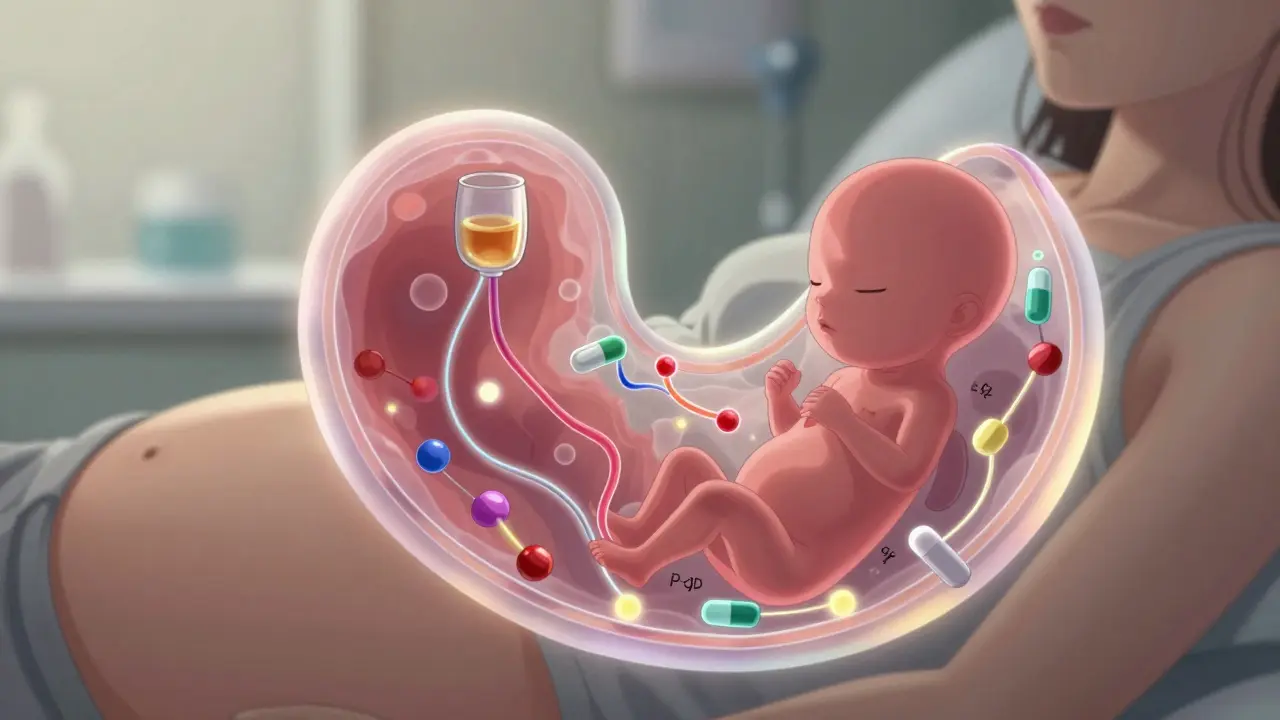
The placenta isn’t a wall. It’s not a shield. It’s more like a busy, picky traffic controller - letting some things through, blocking others, and sometimes changing its rules based on what’s happening inside the mother or the baby. When a pregnant person takes a medication, it doesn’t just disappear. It travels. And if it crosses the placenta, it reaches the fetus. That’s not a theoretical concern. It’s daily reality for thousands of people who need treatment during pregnancy - whether for depression, epilepsy, diabetes, or addiction.
Think about this: a drug that helps a mother manage her condition might also be quietly affecting a developing brain, heart, or liver. The idea that the placenta protects the baby from everything? That’s a myth. The placental barrier is selective, not absolute. And we’ve known that since the thalidomide disaster in the 1950s and 60s, when babies were born with severe limb deformities because a drug meant to calm morning sickness slipped right through.
How Drugs Actually Get Through
Not all drugs cross the placenta the same way. The main route is passive diffusion - the same physics that lets perfume spread through a room. Small, fat-soluble molecules slip through cell membranes easily. Ethanol (alcohol) and nicotine are classic examples. Their molecular weights are low - 46 and 162 Daltons respectively - and they dissolve well in lipids. Within an hour, fetal blood levels can match the mother’s. That’s why alcohol and smoking during pregnancy carry such clear risks.
But bigger molecules? They struggle. Insulin, for example, weighs over 5,800 Daltons. It barely crosses. That’s why insulin injections are safe in pregnancy - the fetus doesn’t get much of it. But some drugs use clever tricks. Certain antivirals, like zidovudine, hitch a ride on nutrient transporters built into the placenta. They’re designed to mimic glucose or amino acids. That’s how they get through efficiently, which is why they’re used to prevent HIV transmission from mother to baby.
Then there are the gatekeepers: transporters that actively push drugs back out. The placenta is packed with proteins like P-glycoprotein (P-gp) and BCRP. These are like bouncers at a club. If a drug tries to enter, they grab it and shove it back into the mother’s bloodstream. HIV protease inhibitors - drugs like lopinavir and saquinavir - are classic targets. In lab studies, when these transporters are blocked, fetal exposure jumps by up to 2.3 times. That’s not just a lab quirk. It’s why some antiviral regimens are carefully chosen during pregnancy.
What Makes a Drug More Likely to Cross?
There are five big factors that determine whether a drug gets through:
- Molecular weight: Under 500 Daltons? Much more likely to cross. Over 500? It’s a tough climb.
- Lipid solubility: The more fat-soluble a drug is (log P > 2), the easier it slips through cell membranes. This boosts transfer by 50-60%.
- Protein binding: If 99% of the drug is stuck to proteins in the mother’s blood, only the 1% that’s free can cross. Warfarin, for example, is highly bound - so even though it’s small, very little reaches the fetus.
- Ionization: At the body’s normal pH (7.4), drugs that are charged (ionized) have a hard time crossing. Non-ionized drugs slip through easily. That’s why some medications are less effective or risky depending on the mother’s acid-base balance.
- Gestational age: This is critical. Early in pregnancy - first trimester - the placenta is leakier. Tight junctions aren’t fully formed. Efflux transporters like P-gp aren’t yet active. So drugs that are safe later might be far riskier early on.
That last point is often ignored. Most studies use placentas from full-term births. But the most sensitive periods of development - when organs form - happen between weeks 3 and 8. If we only test drugs on term placentas, we’re blind to what happens in the critical window.
Real-World Examples: What We Know
Some drugs have been studied enough to give clear answers.
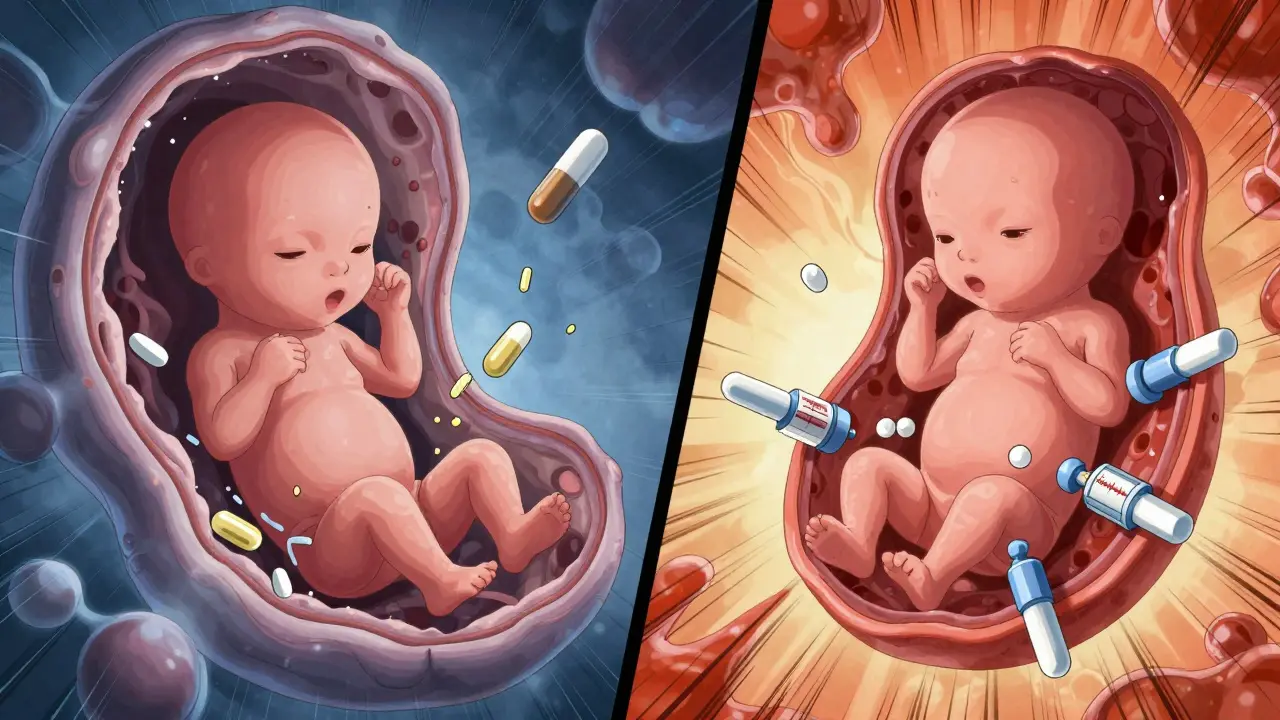
SSRIs like sertraline and fluoxetine cross easily. Cord-to-maternal ratios are often 0.8 to 1.0 - meaning fetal levels are nearly equal to the mother’s. About 30% of babies exposed to SSRIs in the third trimester develop temporary symptoms after birth: jitteriness, feeding trouble, mild breathing issues. It’s not birth defects. It’s a withdrawal-like reaction. But it’s still enough to make doctors adjust dosing or timing.
Opioids - methadone, buprenorphine, morphine - are a major concern. Methadone reaches fetal blood at 65-75% of the mother’s level. That’s why 60-80% of babies born to mothers on long-term opioid therapy develop neonatal abstinence syndrome (NAS). It’s not the drug itself causing damage - it’s the sudden absence after birth. But the fact that the placenta lets it through so well means the baby is constantly exposed.
Antiepileptic drugs like valproic acid and phenobarbital cross readily. Valproic acid, with a molecular weight of just 144, has a cord-to-maternal ratio of 0.9-1.0. That’s why its use in pregnancy is linked to a 10-11% rate of major birth defects - including neural tube defects and facial malformations. That’s 5 times higher than the general population. Phenobarbital is similar. Doctors now avoid these drugs unless absolutely necessary.
Then there’s the outlier: digoxin. It’s a heart medication. Even though it’s small and lipid-soluble, it crosses the placenta poorly - and doesn’t get pushed out by common blockers like verapamil. That’s because it’s handled by a different transporter. That’s why it’s still used in pregnancy for certain heart conditions.
Why Animal Studies Don’t Tell the Whole Story
You might wonder: if we test drugs on rats and mice, why is there still uncertainty? Because human and rodent placentas are built differently. Mouse placentas have fewer layers between mother and baby. They’re more porous. A drug that barely crosses in humans might flood the fetus in a mouse. That’s why animal data often overestimates safety. It’s not just a difference in size - it’s a difference in biology. Relying on rodent studies alone has led to dangerous assumptions in the past.
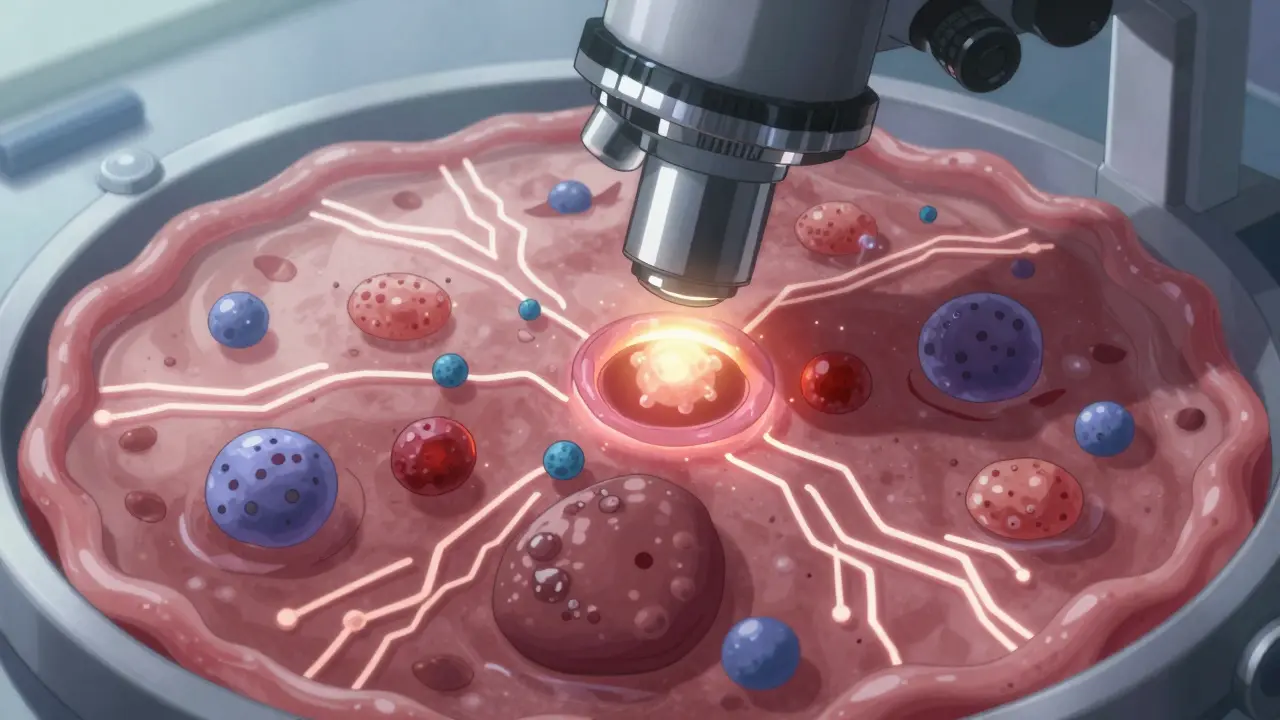
That’s why new tools are being developed. Placenta-on-a-chip systems now mimic the human placenta using human cells. One model showed glyburide (a diabetes drug) crossing at 5.6% - almost identical to real placental tissue. These systems let researchers test dozens of drugs quickly without using human tissue from abortions. They’re becoming the gold standard.
What’s Being Done - and What’s Still Missing
Regulatory agencies now demand data on placental transfer. The FDA’s Pregnancy and Lactation Labeling Rule (2015) requires drug companies to include specific numbers on how much of a drug reaches the fetus. The European Medicines Agency says the same. But here’s the problem: 45% of prescription drugs still have no reliable data on fetal exposure. Why? Because testing is expensive, ethically tricky, and historically low on the priority list.
There’s also a huge gap in research on the first trimester. Most placental studies use tissue from full-term deliveries. But the most vulnerable period is early on. We’re flying blind in the first 12 weeks.
And now, the next frontier: targeted drug delivery. Scientists are designing nanoparticles to carry drugs directly to the placenta - not to treat the fetus, but to treat placental conditions like preeclampsia. That’s promising. But it’s also risky. If those nanoparticles leak through, they could reach the baby. And we don’t yet know what nanoparticles do to developing organs.
What This Means for You
If you’re pregnant and taking medication - whether it’s for a chronic condition or a short-term issue - don’t stop without talking to your doctor. But also don’t assume it’s safe just because it’s prescribed.
Ask: What do we know about how this crosses the placenta? Is there data on fetal exposure? Are there safer alternatives?
For some conditions - like depression, epilepsy, or diabetes - the risks of *not* treating are greater than the risks of treatment. But that balance is different for everyone. That’s why personalized care matters. A drug that’s fine for one person might be risky for another, depending on dosage, timing, and genetics.
The bottom line: the placenta is not a force field. It’s a complex, changing system. And we’re still learning how to read it. But we know enough to make smarter choices - if we ask the right questions.


I am a pharmaceutical expert with over 20 years of experience in the industry. I am passionate about bringing awareness and education on the importance of medications and supplements in managing diseases. In my spare time, I love to write and share insights about the latest advancements and trends in pharmaceuticals. My goal is to make complex medical information accessible to everyone.