
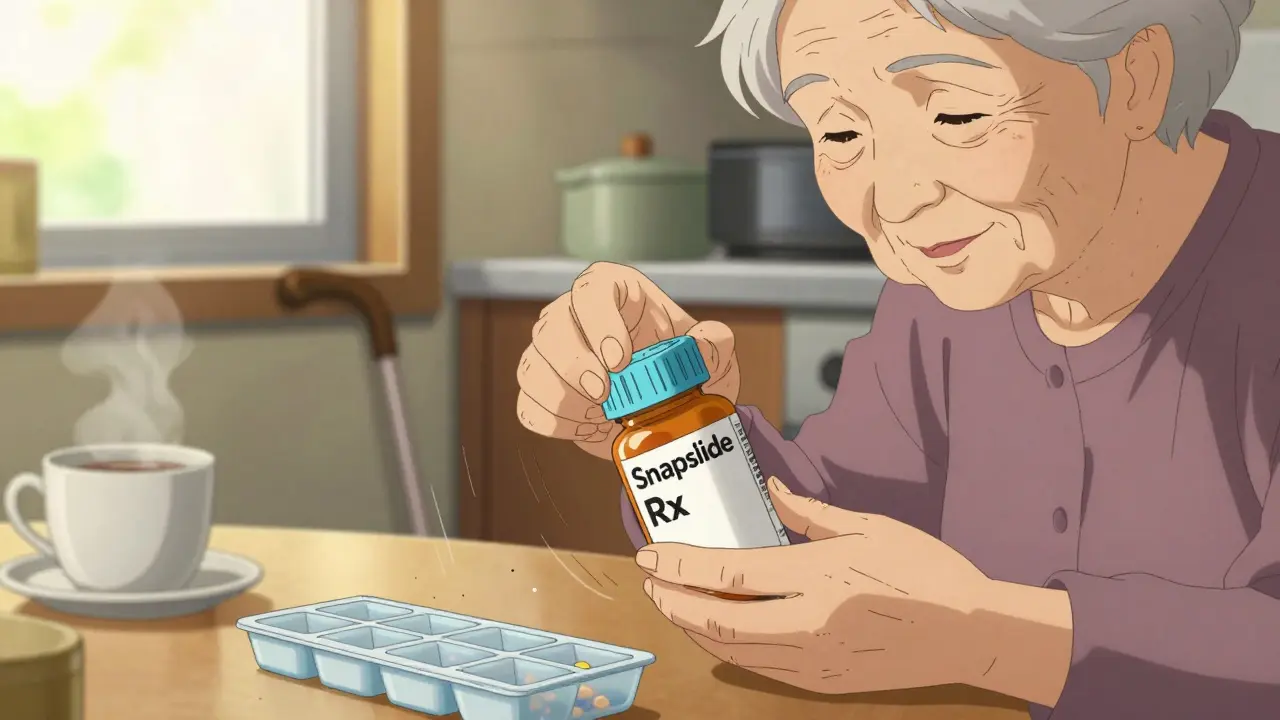
Getting your prescription meds shouldn’t feel like a puzzle you’re not strong enough to solve. If you or a loved one struggles to twist off a child-resistant cap, reads tiny print on labels, or has had to skip doses because the packaging was too hard to use, you’re not alone. Nearly 49% of adults over 65 have trouble opening standard pill bottles, according to a 2022 FDA report. That’s not just inconvenient-it’s dangerous. Missing doses can lead to hospital visits, worsening conditions, or even death. The good news? You have the right to request packaging that works for you-without giving up child safety. Here’s exactly how to do it.
Why Standard Caps Don’t Work for Everyone
Child-resistant caps were designed to protect kids. And they work-98% of children under five can’t open them. But that same design makes life hard for seniors, people with arthritis, tremors, or limited hand strength. The typical push-and-turn cap requires 4.5 to 8.5 pounds of downward pressure while twisting. For someone with stiff fingers, that’s like trying to open a rusted jar with one hand. Many older adults end up using pliers, cutting the caps off, or just leaving meds unopened. A 2023 Kaiser Permanente study found that when seniors switched to easier-to-open packaging, their medication adherence jumped by 32%.What “Accessible” Actually Means
Accessible packaging isn’t just about big labels. It’s a system. The Access Board’s 2019 guidelines define three key components:- Easy-open caps: These use sliding, flipping, or squeezing mechanisms that need less than 2.5 pounds of force-about the pressure of pressing a light switch. Examples include SnapSlide Rx (which won the 2024 IoPP AmeriStar Award) and EZ-Open flip caps.
- Large-print labels: Minimum 16-point font (standard is 10-12). The text must be high-contrast, like black on white, and not printed on glossy paper that reflects glare.
- Braille and audio labels: Braille must follow Grade 2 standards with 0.5mm dot height. Audio labels should play full instructions in under 90 seconds when tapped or scanned.
How to Request Accessible Packaging
Don’t wait until you’re at the pharmacy counter. Start the process early. Here’s how:- Ask when the prescription is written. Tell your doctor you need easy-open caps and large-print labels. Many doctors now include this note directly on the e-prescription. If they don’t, ask them to write: “Patient requires accessible packaging per Access Board guidelines.”
- Call your pharmacy ahead of pickup. Don’t assume they’ll have it ready. Ask specifically: “Do you stock SnapSlide Rx caps and large-print labels?” Some pharmacies keep them on hand; others need 24-72 hours to order them. Plan ahead.
- Know your rights. You do NOT need a doctor’s note to request accessible packaging. The Access Board’s rules say pharmacies must provide it upon request. If they say “we don’t have it,” ask to speak to the pharmacist-in-charge. Cite the 2019 guidelines. If they still refuse, file a complaint with your state board of pharmacy.
- Be specific about your needs. Say: “I need the cap that slides open, not twists.” Or: “I need the label in 18-point font, bold, with no small print.” The more precise you are, the less room they have to say no.
Which Pharmacies Actually Offer This?
Adoption varies wildly. CVS Health rolled out accessible packaging across all 10,000+ locations in late 2023. Walgreens and Rite Aid offer it in many-but not all-stores. Independent pharmacies are slower; only 37% have it in stock, according to a 2024 NCPA survey. Here’s what to look for:- CVS: Offers SnapSlide Rx and large-print labels at every location. Ask for “senior-friendly packaging” at the counter.
- Walgreens: Available in most urban locations. Call ahead and ask if they have “accessible closures.” Some stores still say they don’t have inventory.
- Independent pharmacies: Many can order it for you in 2-3 days. Ask if they work with distributors like Cardinal Health or McKesson-they carry these products.
What to Do If They Say No
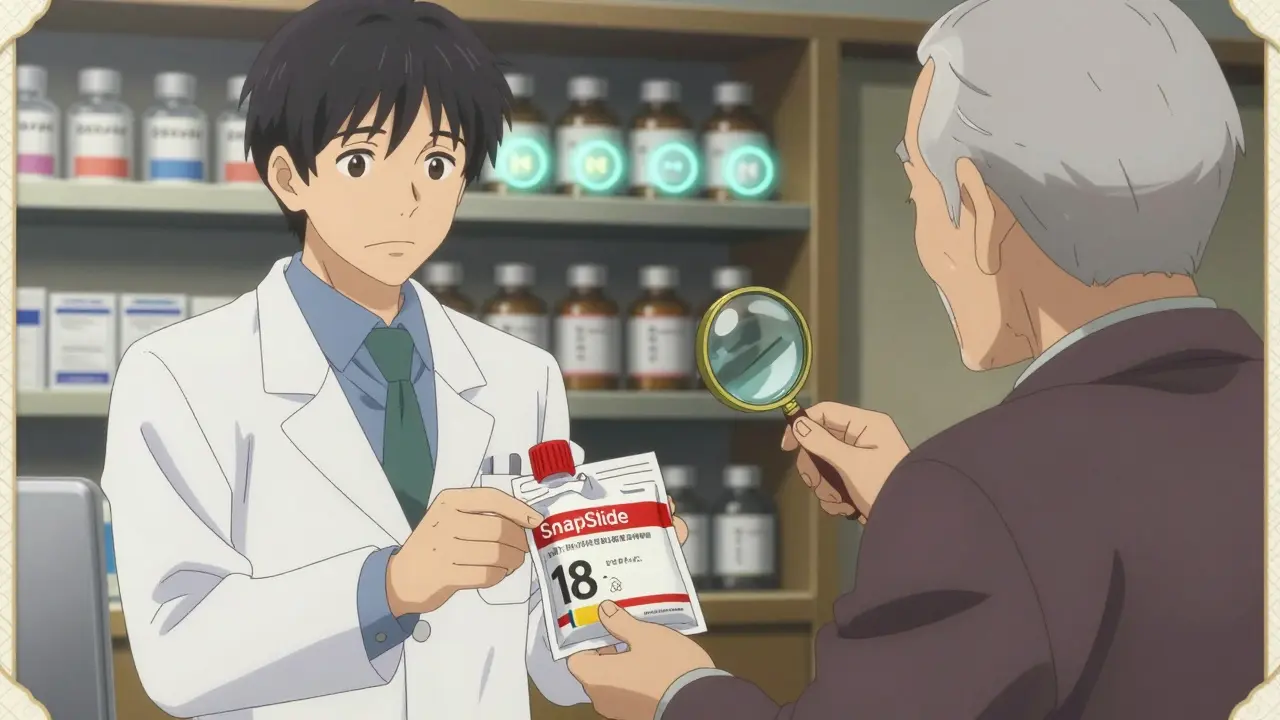
Pharmacies sometimes claim they “don’t carry” accessible packaging. That’s often untrue. Here’s how to push back:- Ask: “Can you order it? I’m willing to wait 48 hours.”
- Remind them: “Under the Access Board’s 2019 guidelines, I’m entitled to this without documentation.”
- Ask for a manager. Pharmacists are trained on this rule. If the manager doesn’t know, they’re not trained properly.
- If you’re still denied, file a complaint with your state pharmacy board. In 2023, 42 states made these guidelines part of pharmacy law.
Cost and Insurance Coverage
Accessible packaging costs 15-20% more to produce. But you don’t pay extra. Medicare Part D now covers the cost difference for beneficiaries with documented dexterity or vision issues. Medicaid and many private insurers follow suit. If you’re asked to pay more, ask: “Is this an additional fee for accessibility?” If yes, that’s against federal guidance. Even if you’re not on Medicare, the cost is absorbed by the pharmacy. You’re not being charged extra-you’re just getting the same medication in a safer, usable form.What to Watch Out For
Not all “easy-open” labels are equal. Some bottles have flip caps that look easy but still require 6-10 pounds of force. Others have large print but use light gray ink on white paper-impossible to read in low light. Always check:- Is the cap labeled “SnapSlide,” “EZ-Open,” or “Senior-Friendly”? These are tested and certified.
- Is the font at least 16-point and bold?
- Is there a color-coded band on the cap? (Many seniors use this to tell pills apart-blue for morning, red for night.)
- Is the label printed on matte paper, not glossy?
What’s Changing in 2025
The FDA’s draft guidance from May 2024 requires all new prescription medications to include accessible packaging by 2026. The European Union’s new MDR 2024/123 rule, effective January 2025, will require dual testing for child resistance and senior accessibility on all packaging sold in Europe. SnapSlide LLC just released Version 2.0 with biometric authentication-so only the user can open it, even if a child gets hold of it. This isn’t just a convenience anymore. It’s becoming the new standard.Support Resources
You don’t have to figure this out alone:- National Council on Aging Medication Access Hotline: 1-800-555-0123. They helped resolve 94% of 12,500 calls in Q1 2024.
- American Foundation for the Blind: Their website has a pharmacy locator and free label templates you can print to show pharmacists.
- Medicare.gov: Search “accessible medication packaging” for official coverage details.
Final Tip: Don’t Wait Until It’s an Emergency
If you’ve ever missed a dose because you couldn’t open the bottle, you’ve already experienced the risk. Don’t wait for a fall, a hospital visit, or a loved one to have a bad reaction. Request accessible packaging the next time you refill a prescription. It’s your right. It’s safer. And it works.Do I need a doctor’s note to get easy-open caps?
No. Under the Access Board’s 2019 guidelines, pharmacies must provide accessible packaging upon request-no documentation needed. However, a note from your doctor can help speed up the process and make it harder for the pharmacy to refuse.
Are easy-open caps still child-resistant?
Yes. Most senior-friendly caps, like SnapSlide Rx and EZ-Open flip caps, still block 90-94% of children under five. They’re designed to meet the same safety standards as standard caps, just with a different mechanism that’s easier for adults with limited strength.
Why do some pharmacies say they don’t have accessible packaging?
Some pharmacies, especially independent ones, don’t stock these items because they cost more and aren’t always in demand. But they can order them. If they refuse, ask to speak to the pharmacist-in-charge and cite the Access Board’s 2019 guidelines. Many pharmacies only learn about this requirement when a patient pushes back.
Can I get braille labels for my medications?
Yes. The Access Board requires braille labels to follow Grade 2 standards with 0.5mm dot height. Not all pharmacies offer this, but most major chains can order it. Call ahead and ask specifically for “braille prescription labels.” The American Foundation for the Blind can help you find pharmacies that provide it.
How long does it take to get accessible packaging?
Most pharmacies need 24 to 72 hours to prepare accessible packaging, since it’s not always in stock. Plan ahead-request it when your prescription is written, not when you go to pick it up. Some pharmacies offer same-day service if you call early in the day.
Does Medicare cover the cost of accessible packaging?
Yes. Since 2024, Medicare Part D covers the extra cost of accessible packaging for beneficiaries with documented dexterity or vision limitations. You won’t pay more than your normal copay. If a pharmacy tries to charge you extra, ask them to check with your plan.


Hi, I'm Caden Lockhart, a pharmaceutical expert with years of experience in the industry. My passion lies in researching and developing new medications, as well as educating others about their proper use and potential side effects. I enjoy writing articles on various diseases, health supplements, and the latest treatment options available. In my free time, I love going on hikes, perusing scientific journals, and capturing the world through my lens. Through my work, I strive to make a positive impact on patients' lives and contribute to the advancement of medical science.