
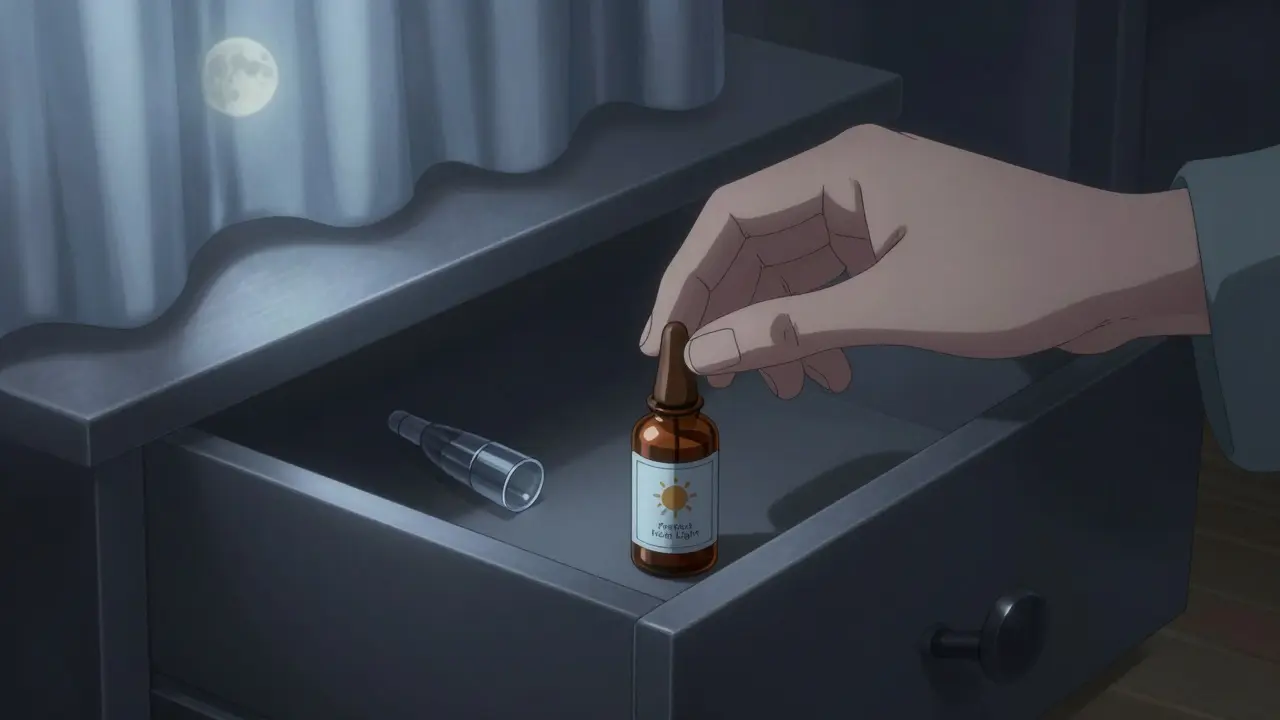
Many people don’t realize that the medicine they keep on their bathroom counter could be losing its power-sometimes by half-before it even runs out. Light-sensitive medications, including eye drops, antibiotics, and even some vitamins, break down when exposed to sunlight or even bright indoor lighting. This isn’t just about effectiveness. In some cases, degraded drugs can become unsafe. If you’re using eye drops for glaucoma, taking insulin, or managing a chronic condition with light-sensitive pills, how you store them matters more than you think.
What Makes a Medication Light-Sensitive?
Not all meds need special care. But if a drug contains certain chemicals-like tetracycline, nitroglycerin, riboflavin, or certain chemotherapy agents-it’s vulnerable to photodegradation. That means light triggers a chemical reaction that changes the drug’s structure. The result? A weaker dose, or worse, toxic byproducts. The U.S. Pharmacopeia (USP) lists over 470 injectable drugs that require light protection, and nearly 500 more have warnings for storage, mixing, or administration. Eye drops are especially at risk because they’re liquid, exposed to air, and often used daily. One study showed that after just 14 days in a clear bottle, some eye drops lost 35% of their potency. That’s not a small drop-it’s the difference between controlling your eye pressure and risking vision loss.
The good news? You don’t need to guess. Check the label. If it says “Protect from light,” “Store in original container,” or has a small sun-with-a-slash icon, you’re dealing with a light-sensitive drug. About 78% of these medications have that warning clearly printed. If you’re unsure, call your pharmacist. Don’t assume because it’s in a bottle, it’s safe.
Why Amber Bottles Are the Gold Standard
Amber glass isn’t just for fancy whiskey. It’s the most trusted way to block harmful light. Amber containers filter out wavelengths below 470 nanometers-the exact range that causes most drugs to degrade. High-quality amber bottles block 98% of UV and blue light. That’s better than most opaque plastics, which only block around 85%. For eye drops, this isn’t optional. Bausch + Lomb’s patented designs combine amber glass with UV-blocking internal coatings, extending shelf life by 25% compared to standard amber bottles.
Some people try to save money by transferring eye drops to clear containers. Don’t. Even if the bottle looks clean, it’s not designed to block light. A Reddit user shared how their latanoprost eye drops lasted the full six weeks after opening-only because they kept them in the original amber bottle. Others reported their drops going cloudy or ineffective after just four weeks because they’d poured them into a clear dropper. That’s not just inconvenient-it’s dangerous.
Amber bottles aren’t perfect. You can’t see how much is left without holding them up to the light. And they’re pricier-up to 40% more than clear plastic. But when your vision or your health depends on it, the cost is worth it.
Temperature Matters Just as Much as Light
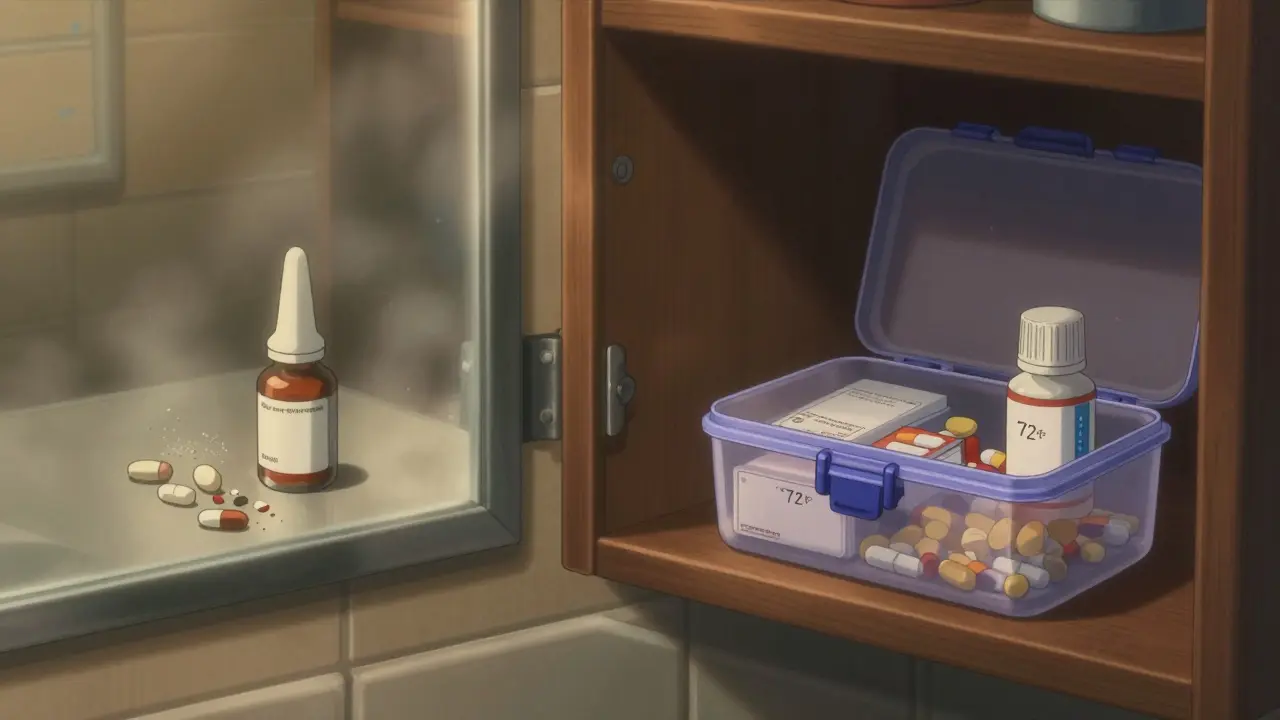
Light isn’t the only enemy. Heat and cold can wreck your meds too. Most pills and liquids should stay between 59°F and 77°F (15°C to 25°C). That’s room temperature-your kitchen cabinet, not the bathroom. Bathrooms are hot, humid, and full of steam from showers. That’s why 68% of people store meds there, even though 42% have seen their pills change color or texture because of it.
Eye drops usually need to be kept between 40°F and 77°F (4°C to 25°C) after opening. Some, like insulin or biologics, must be refrigerated at 36°F to 46°F (2°C to 8°C). But don’t freeze them. Freezing destroys the structure of many drugs. And never leave meds in a hot car, even for an hour. In Melbourne’s summer, the inside of a parked car can hit 120°F. That’s way above the 86°F limit experts say is safe.
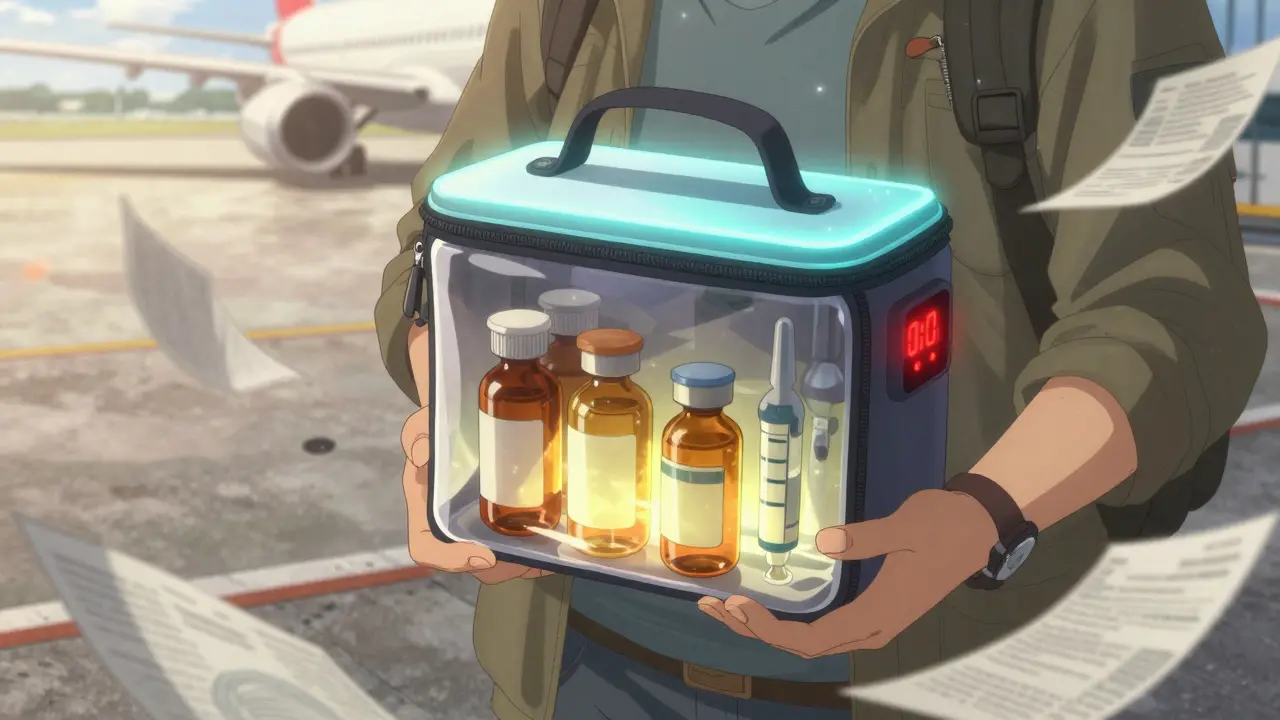
If you’re traveling, use an insulated medication bag with a UV-blocking lining. These keep meds stable for 8-12 hours, even in direct sun. Some even have temperature indicators that change color if things get too hot.
What to Do If Your Medication Looks Off
Trust your eyes. If something looks, smells, or feels wrong, don’t use it. Here’s what to watch for:
- Eye drops that look cloudy, discolored, or have particles floating in them
- Antibiotics or creams that turned yellow, brown, or green
- Pills that are cracked, sticky, or smell like vinegar (aspirin does this when it breaks down)
- Insulin that looks frosted or has clumps
These aren’t just signs of age-they’re signs of danger. The FDA recorded over 1,800 adverse events in 2022 linked to improper storage, and nearly 330 of them mentioned light exposure. If you see any of these changes, throw it out. Don’t risk it.
Storage Hacks That Actually Work
You don’t need fancy gear to keep meds safe. Here’s what works:
- Use the original container. Always. Even if it’s ugly or hard to open. The bottle was designed to protect the drug.
- Store in a cool, dark place. A bedroom drawer, a kitchen cabinet away from the stove, or a shelf in a closet. Avoid windows, heat vents, or the top of the fridge.
- Keep eye drops in the fridge after opening. Unless the label says not to, refrigeration slows degradation and feels soothing on the eye.
- Use a UV-blocking storage box. If you have multiple light-sensitive meds, a $25-$60 box with a UV-filtered lid keeps them all protected. Amazon reviews give these 4.3 out of 5 stars-most users say they’ve stopped wasting money on spoiled meds.
- Write the discard date on the bottle. Most eye drops expire 4-6 weeks after opening. Mark the date with a Sharpie so you don’t forget.
One user on the r/pharmacy subreddit threw out $120 worth of tretinoin cream because it turned yellow after two weeks in a bathroom cabinet. That’s avoidable. A simple change in storage saved them hundreds.
What About Travel and Emergencies?
If you’re flying, never check your meds. Keep them in your carry-on. Airplane cargo holds can get extremely cold or hot. Use a small insulated bag with a cold pack if you’re going somewhere hot. Some pharmacies sell travel-sized amber bottles for prescriptions-ask your pharmacist.
In an emergency-like a power outage or heatwave-move your meds to the coolest, darkest part of your home. A basement, a closet with no windows, or even a sealed container in a tub of cool water (not ice) can help. Don’t wait until it’s too late.
When to Replace Your Medication
Expiration dates aren’t just a suggestion. They’re based on stability testing under ideal conditions. If your meds were stored in sunlight, heat, or humidity, they may not last that long. Here’s a quick guide:
- Eye drops: Discard 4-6 weeks after opening, even if the bottle says “use by 2026.”
- Insulin: Once opened, lasts 28 days at room temperature or 6 months in the fridge. Always check for clumps.
- Antibiotics: Throw out if discolored, even if still within the printed date.
- Birth control pills: Heat and light can reduce effectiveness. Store in a cool drawer, not your purse.
If you’re unsure, call your pharmacy. Most offer free checks. The American Society of Health-System Pharmacists has an online tool that tells you exactly how to store over 12,000 medications.
Final Thought: Your Health Isn’t Worth Risking
Light-sensitive meds aren’t a niche concern. They’re common. One in three people taking chronic medication uses at least one that degrades in light. Yet, only 62% of patients store them correctly. That’s not because they don’t care-it’s because no one told them.
Start today. Look at your medicine cabinet. Find the amber bottles. Put them in a cool, dark spot. Throw out anything that looks off. Your body doesn’t know the difference between a full-strength dose and a degraded one. It just reacts to what it gets. Don’t let your meds lose their power before you do.
Can I store eye drops in the fridge?
Yes, most eye drops can and should be stored in the refrigerator after opening, unless the label says otherwise. Refrigeration slows down chemical breakdown and keeps the drops cool and comfortable when applied. Keep them in their original amber bottle inside the fridge to protect from both light and temperature spikes. Don’t freeze them.
What if my medication came in a clear bottle?
If the label says “Protect from light” but the bottle is clear, contact your pharmacy immediately. They can replace it with an amber container at no extra cost. Never transfer the medication to another container unless it’s specifically designed for light-sensitive drugs. Clear plastic, glass, or even foil-wrapped containers aren’t safe substitutes unless they meet USP light-blocking standards.
Is it safe to keep medications in the bathroom?
No. Bathrooms are too hot and humid. Steam from showers and sinks can degrade pills and liquids, and bathroom lighting-especially overhead LEDs-can damage light-sensitive drugs. Store medications in a cool, dry place like a bedroom drawer or kitchen cabinet away from the sink and stove.
How do I know if my medication has gone bad?
Look for changes: discoloration (yellow, brown, green), cloudiness, unusual smells (like vinegar for aspirin), or particles in liquids. If pills are cracked, sticky, or crumbling, or if eye drops look cloudy, throw them out. When in doubt, call your pharmacist. It’s better to replace a $20 bottle than risk your health.
Do I need to buy special storage containers?
Not always. If your meds come in amber bottles and you store them properly, you’re fine. But if you have multiple light-sensitive drugs or travel often, a UV-blocking storage box ($20-$60) is worth it. These boxes protect from light and temperature changes, and many have compartments and labels to keep things organized. They’re especially helpful for insulin, chemotherapy drugs, or eye drops.


Hi, I'm Caden Lockhart, a pharmaceutical expert with years of experience in the industry. My passion lies in researching and developing new medications, as well as educating others about their proper use and potential side effects. I enjoy writing articles on various diseases, health supplements, and the latest treatment options available. In my free time, I love going on hikes, perusing scientific journals, and capturing the world through my lens. Through my work, I strive to make a positive impact on patients' lives and contribute to the advancement of medical science.