
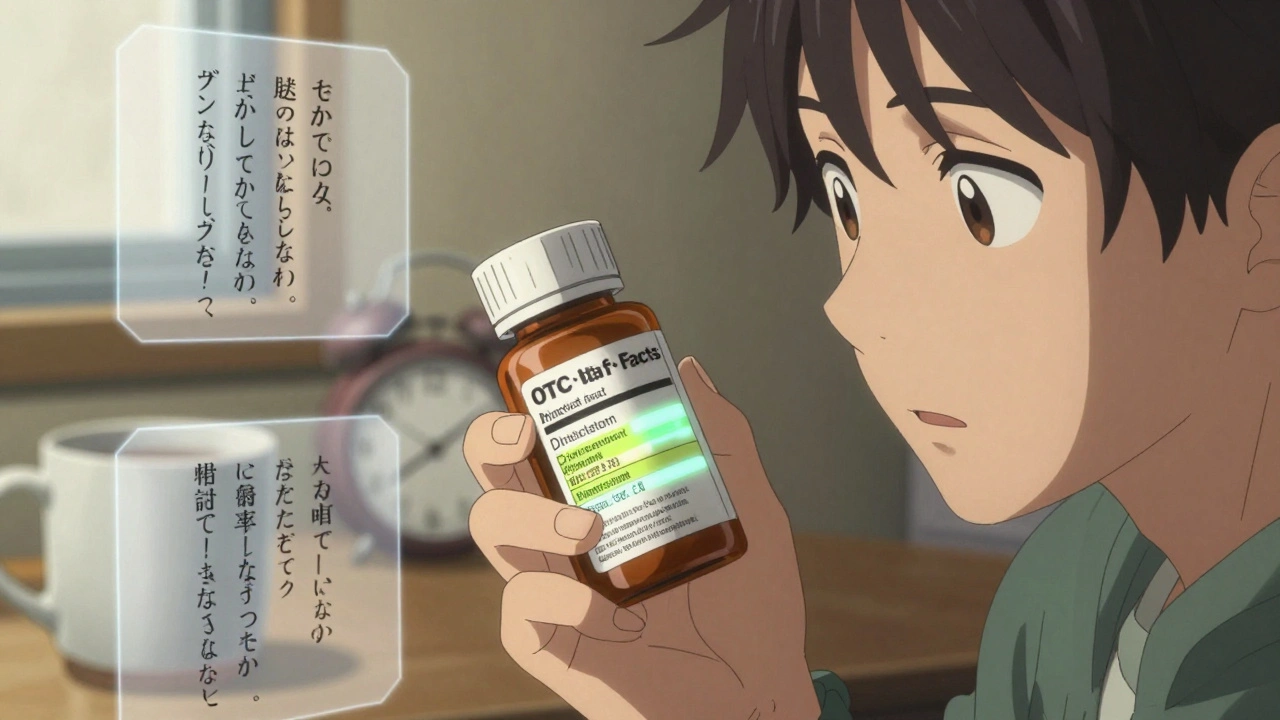
OTC Drug Ingredient Checker
How It Works
Enter the names of OTC medications you're taking. This tool checks if they contain the same active ingredients that could lead to accidental overdose when combined.
Important: This tool is for informational purposes only. Always consult a pharmacist or doctor before combining medications.
Check your medications to see if any active ingredients overlap...
Every time you pick up a bottle of pain reliever, allergy pill, or hand sanitizer, there’s a small but powerful piece of information staring back at you: the OTC Drug Facts label. It’s not just a sticker or a fine-print paragraph. It’s a federally mandated safety guide, designed by the FDA to help you use medicines correctly-and avoid dangerous mistakes. Yet most people skim it or ignore it entirely. That’s a problem. In 2022, over 1.2 million calls to U.S. poison control centers were about OTC medicine misuse. Many of those could have been prevented with just 30 seconds of reading.
What Is the OTC Drug Facts Label?
The OTC Drug Facts label is the standardized format the U.S. Food and Drug Administration (FDA) requires on all nonprescription medicines. It replaced a chaotic patchwork of labels from different brands that made it hard to compare products or understand risks. Since 1999, every OTC product-whether it’s cough syrup, antacid tablets, or sunscreen-must use this same layout. The goal? Make it easy to find critical info, no matter which brand you buy.
This isn’t optional. The FDA enforces this under 21 CFR § 201.66. Even products you might not think of as drugs, like anti-cavity toothpaste or rubbing alcohol, must carry this label. It’s the law. And it’s one of the most effective public health tools the FDA has ever created. Studies show that when people actually read the label, they’re 63% less likely to have a bad reaction or overdose.
The 8 Sections You Must Know
The Drug Facts label isn’t random. It’s ordered exactly the same on every product. Here’s what each section means-and why it matters.
1. Active Ingredient(s)
This is the most important part. It tells you what chemical is actually doing the work. For example, acetaminophen, ibuprofen, or diphenhydramine. The amount per dose (like 500 mg per tablet or 10 mg per teaspoon) is listed right after it. If a product has multiple active ingredients, they’re listed alphabetically.
Why care? Because many cold and flu meds contain the same active ingredients. Taking two products with acetaminophen at the same time can lead to liver damage. That’s why you always check this section before combining medicines.
2. Purpose(s)
This tells you what type of drug it is. Examples: analgesic (pain reliever), antihistamine (allergy), antacid (heartburn), or sunscreen (UV protection). It helps you understand the medicine’s category so you can recognize similar products later.
3. Use(s)
This section lists the symptoms or conditions the product treats. It might say “relieves minor aches and pains,” “reduces fever,” or “prevents cavities.” The FDA requires these uses to match approved monographs-so if a label says it treats “chronic back pain,” that’s a red flag. OTC meds aren’t meant for long-term or serious conditions.
4. Warning(s)
This is where safety kicks in. Warnings are broken into three parts:
- When using this product: Side effects you might experience, like drowsiness or upset stomach.
- Stop and ask a doctor if: Symptoms get worse, last more than a few days, or new ones appear. For example, if your headache gets worse after taking painkillers, stop and call your doctor.
- Stop using if: You have a severe reaction, like rash, swelling, or trouble breathing. These are emergencies.
Some warnings are in red boxes. That’s not decoration-it’s the FDA’s way of saying, “Pay attention.” Liver warnings, asthma alerts, and allergy risks often appear this way.
5. Directions
This tells you exactly how to use the product. How much? How often? For how long? It includes age-based dosing (like “children 6-11 years: 1 tablet every 6 hours”).
Watch out for vague terms like “as needed.” The label should still specify a maximum number of doses per day. If it says “take 2 tablets,” don’t guess-use the measuring device that came with it. A kitchen spoon isn’t accurate. One teaspoon of liquid medicine can vary by 20% if you use a random spoon.
6. Other Information
This includes storage tips (like “keep at room temperature”) and sodium content-for pills or liquids you swallow. If you’re on a low-sodium diet, this matters. A single antacid tablet can have over 500 mg of sodium. That’s more than a bag of chips.
7. Inactive Ingredients
These are the fillers, dyes, and preservatives. They don’t treat symptoms, but they can cause reactions. If you’re allergic to red dye #40, gluten, or lactose, this section tells you if the product contains them. Many people don’t check here-until they get a rash or stomach upset.
8. National Drug Code (NDC)
This is a unique 10-digit number that identifies the product, manufacturer, and package size. It’s usually near the bottom. Not something you need to memorize-but if you ever need to report a problem to the FDA or call poison control, having this number helps them track the exact product.
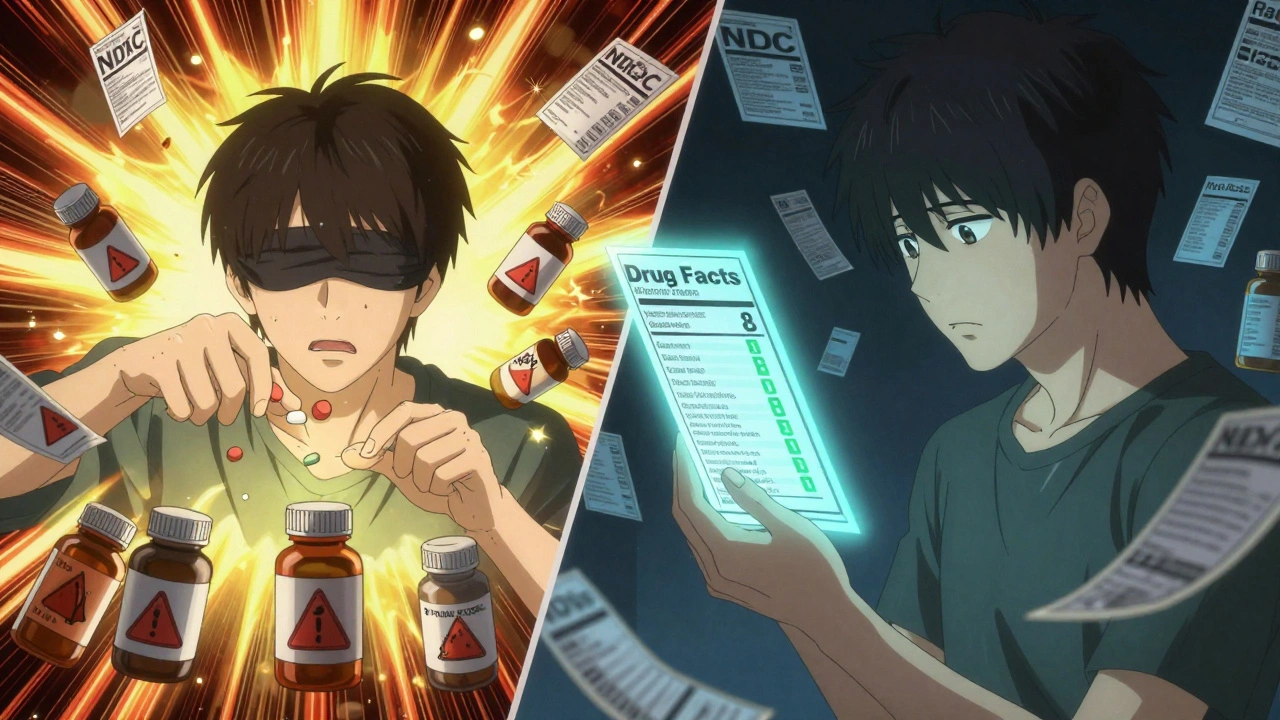
How to Use the Label Like a Pro
Reading the label isn’t enough. You need to use it the right way.
- Check active ingredients before taking anything new. If you’re already taking Tylenol, don’t add a cold medicine with acetaminophen. You’ll overdose without knowing it.
- Read warnings for your health conditions. If you have high blood pressure, avoid decongestants. If you’re pregnant, check for safe alternatives. Don’t assume “OTC” means “safe for everyone.”
- Use the right measuring tool. Never use a regular spoon. Use the cup, dropper, or syringe that came with the medicine. If it’s missing, ask your pharmacist for one.
- Don’t exceed the daily limit. Even if you still feel bad, don’t take another dose early. The maximum is there for a reason.
- Store and dispose of properly. Keep meds away from kids and heat. Don’t flush them. Take unused pills to a drug take-back location.
Common Mistakes People Make
Even with clear labels, people mess up. Here are the top errors:
- Ignoring drug interactions. 41% of OTC medication errors involve mixing medicines without checking for overlapping ingredients.
- Using expired products. The label doesn’t always show an expiration date, but if it’s been over a year, toss it. Effectiveness drops, and some chemicals can break down into harmful substances.
- Assuming natural = safe. Herbal supplements aren’t regulated the same way. Just because it’s sold next to OTC meds doesn’t mean it’s safe to combine.
- Skipping the label for kids’ medicine. Children’s dosing is weight-based, not age-based. A 30-pound toddler needs less than a 50-pound child. Never guess.
What’s Changing in 2025?
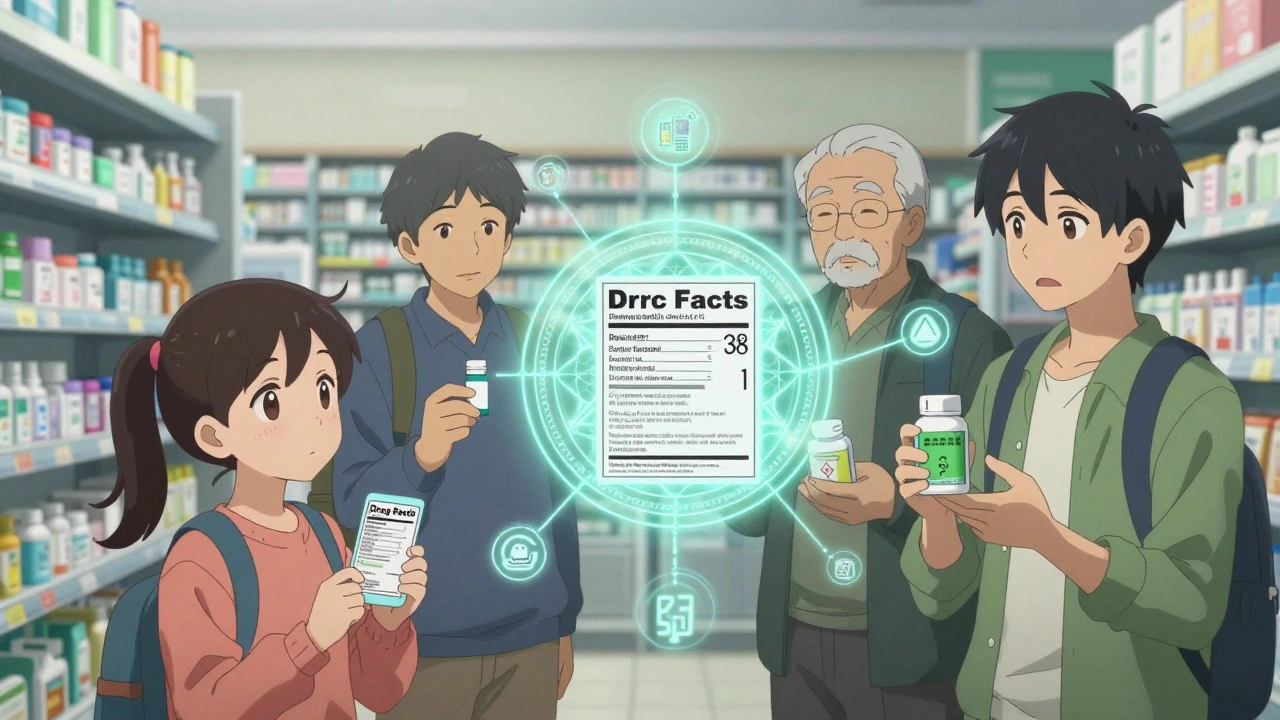
The FDA is testing new ways to make labels even clearer. Some products now include QR codes that link to video instructions or multilingual translations. This is especially helpful for the 25 million Americans with limited English proficiency.
Also, the CARES Act of 2020 made it easier for the FDA to update OTC drug rules faster. That means new safety info can appear on labels quicker than before. You’ll start seeing updated warnings on pain relievers, cough syrups, and antacids over the next few years.
But the core format isn’t changing. The Drug Facts label is here to stay. It’s simple, consistent, and proven to save lives.
When to Call a Doctor
OTC meds are great for minor, short-term issues. But if you’re using them for more than 7-10 days, or if symptoms get worse, it’s time to see a professional. Persistent headaches, ongoing nausea, unexplained fatigue-these aren’t things to treat with OTC pills. They’re signs something else is going on.
Also, if you’re taking prescription meds, talk to your pharmacist before adding anything OTC. Even something as simple as ibuprofen can interfere with blood pressure or kidney medications.
And if you ever feel unsure-call poison control. In the U.S., it’s 1-800-222-1222. They’re free, confidential, and available 24/7. No judgment. Just help.
The OTC Drug Facts label isn’t just paperwork. It’s your personal safety manual. Treat it like one.
Do all OTC medicines have the same label format?
Yes. Since 2003, every OTC medicine sold in the U.S. must use the FDA-mandated Drug Facts label format. This includes pain relievers, allergy meds, cold remedies, antacids, sunscreens, hand sanitizers, and even anti-cavity toothpaste. The layout, headings, and order are identical across all brands. This standardization helps you find information quickly, no matter which product you pick up.
Can I trust OTC drugs if they’re sold next to supplements?
Be careful. OTC drugs are regulated by the FDA and must prove safety and effectiveness. Dietary supplements are not. A product labeled as a “natural immune booster” might sit next to a cold medicine, but it doesn’t have to list active ingredients or follow the Drug Facts format. Always check for the official Drug Facts label to know you’re getting a regulated medicine, not a supplement with unproven claims.
Why does the label list sodium content?
Some OTC medicines, especially antacids and effervescent tablets, contain high levels of sodium. For people with high blood pressure, heart failure, or kidney disease, too much sodium can be dangerous. The FDA requires this to be listed so those individuals can make safer choices. One tablet might contain 500 mg of sodium-more than half the daily limit for some patients.
What should I do if I can’t read the label?
Don’t guess. Ask your pharmacist for help-they can read it aloud or explain it in plain language. Many pharmacies offer magnifying tools or large-print labels. If you’re using a smartphone, try a free text-to-speech app to read the label aloud. Some newer products now include QR codes that link to audio instructions in multiple languages.
Is it safe to use OTC medicine past its expiration date?
It’s not recommended. While most expired OTC meds don’t become toxic, they lose effectiveness over time. A pain reliever that’s two years old might not work as well. Liquid medicines can grow bacteria. Eye drops or insulin-like OTC products should never be used past expiration. When in doubt, throw it out and get a new one.
How do I know if a product is FDA-approved?
If it has a Drug Facts label, it’s regulated by the FDA. Products without this label-like many herbal remedies or “wellness” drops-are not FDA-approved drugs. They’re classified as supplements and aren’t required to prove they work or are safe for daily use. Look for the Drug Facts box to confirm you’re getting a regulated medicine.


Hi, I'm Caden Lockhart, a pharmaceutical expert with years of experience in the industry. My passion lies in researching and developing new medications, as well as educating others about their proper use and potential side effects. I enjoy writing articles on various diseases, health supplements, and the latest treatment options available. In my free time, I love going on hikes, perusing scientific journals, and capturing the world through my lens. Through my work, I strive to make a positive impact on patients' lives and contribute to the advancement of medical science.