
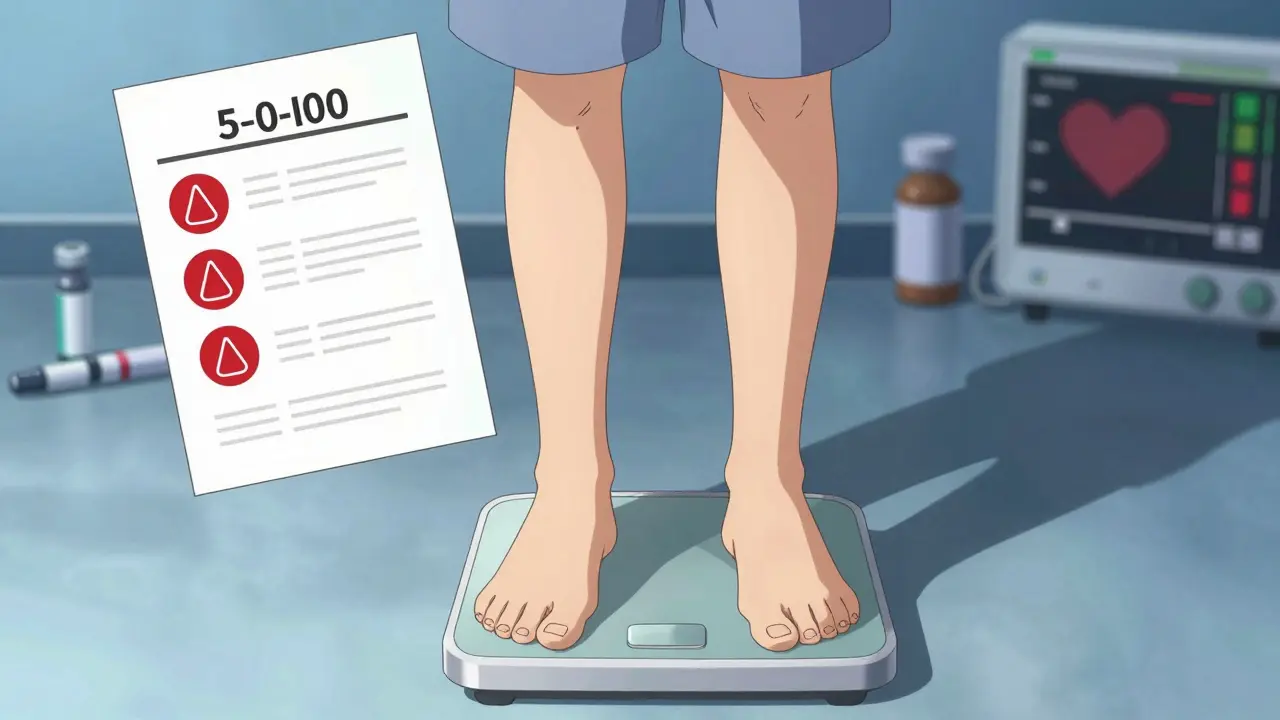
Pioglitazone Safety Risk Calculator
This tool helps you understand your personal risk factors for complications while taking pioglitazone. Answer the questions below based on your medical history.
Risk Assessment Questions
When you’re managing type 2 diabetes, finding a medication that lowers blood sugar without causing new problems is tough. Pioglitazone-sold under the brand name ACTOS-was once a go-to option. It worked well, improved insulin sensitivity, and didn’t cause low blood sugar like some other drugs. But over the past 15 years, serious safety concerns have changed how doctors use it. Today, pioglitazone isn’t a first choice anymore. Why? Because of three major risks: heart failure, edema, and bladder cancer.
How Pioglitazone Causes Fluid Retention and Swelling
Pioglitazone doesn’t just lower blood sugar-it changes how your body holds onto fluid. It activates a receptor called PPAR-γ, which helps cells respond better to insulin. But that same mechanism also makes tiny blood vessels leakier and tricks your kidneys into keeping more salt and water. The result? Fluid builds up, especially in your legs, ankles, and feet. This is called peripheral edema.
In clinical trials, about 2 out of every 10 people taking pioglitazone developed noticeable swelling. In the PROactive study, 27% of patients on pioglitazone had edema compared to just 16% on placebo. That’s more than a 50% increase. And it’s not just a cosmetic issue. For many, it’s painful. Shoes don’t fit. Legs feel heavy. Standing for long periods becomes impossible.
What makes this worse is that diuretics-water pills-often don’t help. If you’re already on furosemide or hydrochlorothiazide for high blood pressure, adding pioglitazone might make the swelling worse, not better. The only reliable fix? Stopping the drug. Most people see improvement within days of quitting.
The Heart Failure Connection
Fluid retention doesn’t stay in your ankles. When too much fluid builds up, your heart has to work harder to pump it. That’s when heart failure can start-or get much worse.
The FDA requires a boxed warning on pioglitazone labels-the strongest kind-because of this risk. It’s contraindicated for anyone with NYHA Class III or IV heart failure. That means if you’ve been hospitalized for heart failure, have severe shortness of breath at rest, or can’t walk a block without stopping, you shouldn’t take it.
But even people without diagnosed heart failure are at risk. A 2023 meta-analysis of over 16,000 patients found that pioglitazone increased the chance of hospitalization for heart failure by 41%. That might sound small, but it’s real. In one study, 34% of patients who developed serious heart failure had swelling in their legs first. That swelling was the warning sign.
Doctors now check for red flags before prescribing: weight gain over 5 pounds in a week, new shortness of breath (especially when lying down), or swollen neck veins. If any of these show up, pioglitazone is pulled immediately. Monthly weight checks are standard for patients starting the drug. If you gain more than 2-3 pounds in a week, your doctor will likely stop it.
Bladder Cancer: The Long-Term Fear
While heart failure and swelling happen quickly, bladder cancer is a slow-burning concern. It took over a decade to uncover.
In 2011, the FDA reviewed data from the PROactive trial, which followed patients for 10 years. The results showed a small but real increase in bladder cancer among those taking pioglitazone. The hazard ratio was 1.2-meaning a 20% higher risk compared to placebo. That doesn’t sound huge, but when you’re taking a drug for years, even small risks add up.
Who’s most at risk? Men, people over 50, those with a history of smoking, or anyone who’s had bladder cancer before. The risk rises with longer use-especially after 2 years. That’s why many doctors avoid pioglitazone in patients with a personal or strong family history of bladder cancer.
Studies from the U.S., Canada, and Europe all point to the same conclusion: long-term use increases bladder cancer risk. The European Medicines Agency restricts pioglitazone to second-line use only, and only after assessing bladder cancer risk. The FDA doesn’t ban it outright, but the label now includes a warning about bladder tumors.
What should you watch for? Blood in the urine, frequent urination, or pain during urination. If you notice any of these, get checked right away. Most cases are caught early and treatable-but only if you speak up.

How Pioglitazone Compares to Other Diabetes Drugs
Compared to other diabetes medications, pioglitazone is in a tough spot. It’s effective at lowering A1c-often by 0.5% to 1.0%. But so are newer drugs, without the same risks.
Metformin is still the first-line choice. It’s cheap, safe, and doesn’t cause weight gain or swelling. SGLT2 inhibitors like empagliflozin and dapagliflozin not only lower blood sugar-they actually reduce heart failure hospitalizations by 30% or more. GLP-1 receptor agonists like semaglutide help with weight loss and protect the heart.
Even rosiglitazone, the other drug in the same class, was pulled from the European market because of heart attack risks. Pioglitazone didn’t get that bad, but it’s still not the safest option.
Today, pioglitazone is mostly used as a last resort. Maybe you can’t tolerate metformin. Maybe you’ve tried everything else and still have high A1c. Maybe you have NASH (fatty liver disease)-where pioglitazone has shown real benefit in reducing liver fat. But even then, doctors weigh the risks carefully.
Who Should Avoid Pioglitazone Altogether?
There are clear red flags that mean you should never take pioglitazone:
- Current or past heart failure (NYHA Class III or IV)
- History of bladder cancer
- Unexplained blood in the urine
- Severe liver disease
- Already taking insulin with fluid retention issues
Also avoid it if you’re over 65 and have high blood pressure, kidney disease, or a history of ankle swelling. Older adults are more sensitive to fluid retention, and their hearts don’t handle extra volume well.
Even if you’re young and healthy, your doctor should check your NT-proBNP level-a blood test that shows heart stress-before starting. If it’s above 125 pg/mL, pioglitazone is a no-go.

What If You’re Already Taking It?
If you’re on pioglitazone and haven’t had problems, don’t panic. But do this:
- Check your weight every week. Write it down.
- Watch for swelling in your legs, ankles, or feet.
- Notice if you’re more tired than usual or get short of breath climbing stairs.
- Look for blood in your urine or new urinary symptoms.
- Call your doctor if any of these happen-even if you think it’s minor.
Many people have been on pioglitazone for years without issues. But the longer you’re on it, the higher your risk becomes. Talk to your doctor about whether switching to a safer drug makes sense. Options like SGLT2 inhibitors or GLP-1 agonists might be better long-term.
Why Is Pioglitazone Still on the Market?
If it’s this risky, why hasn’t it been pulled? Because for some people, it still works-and alternatives don’t.
It’s one of the few drugs that helps with fatty liver disease (NASH). In the PIVENS trial, 53% of patients on pioglitazone saw improvement in liver fat, compared to just 24% on placebo. For those with no other options, it’s a lifeline.
It’s also cheap. Generic pioglitazone costs $150-$250 a month. Newer drugs can cost over $1,000. For patients without good insurance, that matters.
But prescriptions have dropped by 72% since 2010. From 18.7 million to just 5.2 million per year. Doctors are choosing safer drugs. Pioglitazone is fading out-not because it doesn’t work, but because we now have better ones.
What’s Next for This Drug?
Researchers are working on next-generation drugs that mimic pioglitazone’s benefits without the side effects. One experimental drug, MSDC-0602K, showed 62% less edema in trials while keeping blood sugar control. It’s not on the market yet, but it’s a sign that science is trying to fix what pioglitazone broke.
Some doctors are experimenting with low-dose pioglitazone (15 mg) combined with SGLT2 inhibitors. Early data suggests the combination might balance out fluid retention. But this is still experimental. Don’t try it without medical supervision.
For now, pioglitazone remains a tool in the toolbox-but one that’s used sparingly, with eyes wide open.
Can pioglitazone cause weight gain?
Yes, pioglitazone commonly causes weight gain-usually 2 to 6 pounds, but sometimes more than 10 pounds. Most of this is fluid, not fat. If you gain more than 5 pounds in a week, contact your doctor. Weight gain from pioglitazone is often a sign of fluid retention that could lead to heart failure.
Is edema from pioglitazone dangerous?
Edema itself isn’t always dangerous, but it’s a warning sign. In over a third of cases, swelling in the legs came before serious heart failure. If you notice swelling, especially if it’s new or getting worse, don’t ignore it. It could mean your heart is struggling to handle the extra fluid. Stopping the drug usually reverses it quickly.
How long does it take for pioglitazone to cause bladder cancer?
There’s no set timeline, but risk increases after 2 years of use. The longer you take it, the higher your risk. Most cases are found in patients who’ve been on the drug for 5 or more years. If you’ve been on pioglitazone for over 2 years, ask your doctor about screening for bladder cancer-especially if you smoke or have a family history.
Can I take pioglitazone if I have high blood pressure?
It’s risky. High blood pressure already strains your heart, and pioglitazone adds fluid volume, making it work harder. If your blood pressure is poorly controlled, or you have heart disease, most doctors will avoid pioglitazone. Better options exist that lower blood pressure and blood sugar together, like SGLT2 inhibitors.
Are there any safe alternatives to pioglitazone?
Yes. Metformin is the first choice for most people. For those who need more, SGLT2 inhibitors (like empagliflozin) and GLP-1 agonists (like semaglutide) are safer and offer heart and kidney protection. These drugs actually reduce heart failure risk, unlike pioglitazone. Talk to your doctor about switching if you’re on pioglitazone and have any risk factors.


Hi, I'm Caden Lockhart, a pharmaceutical expert with years of experience in the industry. My passion lies in researching and developing new medications, as well as educating others about their proper use and potential side effects. I enjoy writing articles on various diseases, health supplements, and the latest treatment options available. In my free time, I love going on hikes, perusing scientific journals, and capturing the world through my lens. Through my work, I strive to make a positive impact on patients' lives and contribute to the advancement of medical science.