
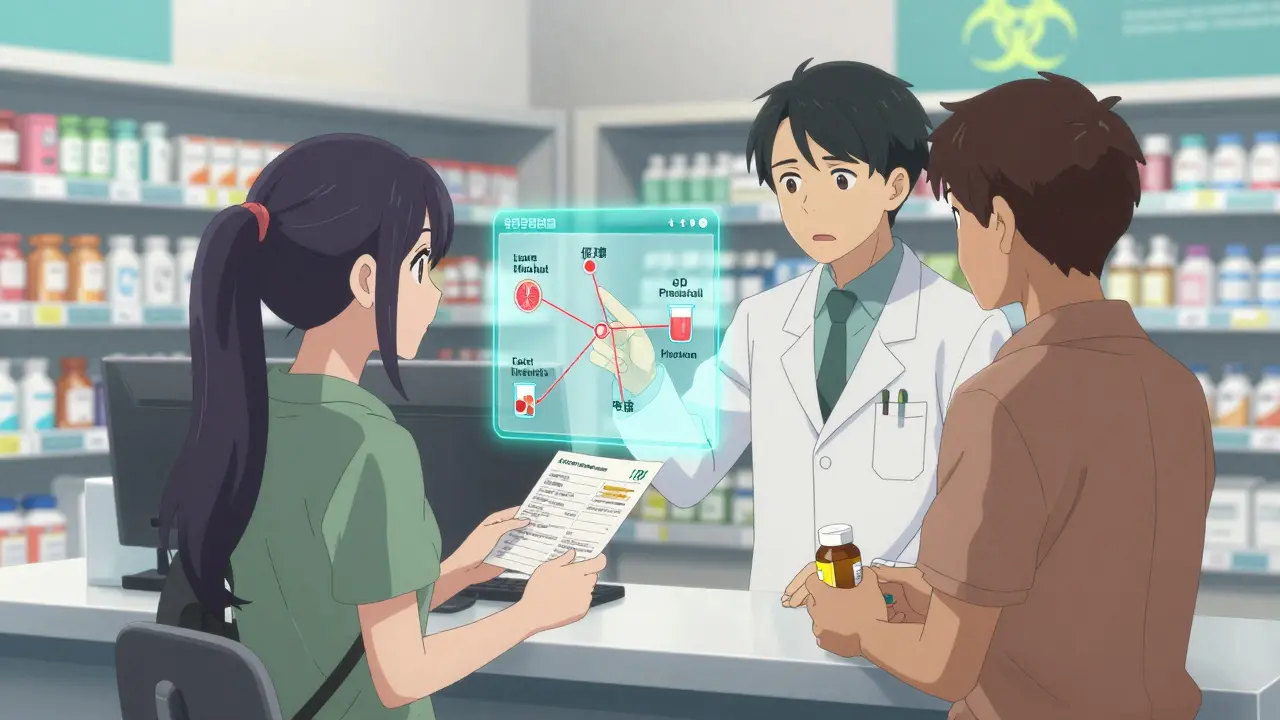
Medication Interaction Checker
This tool helps you identify potential interactions between medications, supplements, and common foods. Please note: this is not a substitute for professional medical advice. Always consult with your pharmacist or healthcare provider.
Interaction Results
Important Note: These results are based on common knowledge of medication interactions. They should not replace professional medical advice. Always consult with your healthcare provider or pharmacist for personalized guidance.
The FDA reports over 1 million people in the U.S. are injured annually due to medication errors, with nearly 7% involving dangerous interactions.
Every year, over a million people in the U.S. are injured because of medication errors - and nearly 7% of those cases involve dangerous medication interactions. You might think your doctor has covered everything, but the truth is, pharmacists are the real experts when it comes to how your pills, supplements, and even your morning coffee might clash. They don’t just hand out prescriptions - they know exactly what happens when your blood pressure med meets your grapefruit juice, or when your antibiotic kills your birth control’s effectiveness. But here’s the problem: only about 38% of patients get a real conversation about these risks when they pick up their meds. If you’re not asking the right questions, you’re leaving your safety to chance.
What medicines, supplements, or foods should I avoid with this drug?
This is the most basic, most important question you can ask. It sounds simple, but most people don’t say it out loud. Your pharmacist needs to know every single thing you’re taking - not just prescriptions, but also over-the-counter painkillers, herbal teas, vitamin D pills, fish oil, melatonin, or even that magnesium supplement you started for better sleep. Some interactions are obvious - like warfarin and cranberry juice - but others aren’t. For example, antacids like Tums can make certain Hepatitis C treatments useless. Grapefruit juice doesn’t just affect one or two drugs - it messes with 85 different prescriptions, including statins like atorvastatin. One study found that people who drank grapefruit juice while taking statins had up to 1,500% more of the drug in their blood. That’s not a small risk. It can lead to muscle damage, kidney failure, or worse. Your pharmacist can tell you if your meds are on that list - but only if you ask.Can this medication interact with my other prescriptions?
Doctors often focus on treating one condition at a time. But you’re not just one condition. You’re probably taking multiple drugs for different things - maybe blood pressure, diabetes, arthritis, and depression. And here’s the catch: some combinations can be deadly. Mixing SSRIs like fluoxetine with MAOIs (used for depression or Parkinson’s) can trigger serotonin syndrome - a life-threatening spike in brain chemicals. It’s rare, but it happens. In 2021 alone, over 1,200 cases were reported to the FDA. You might not realize your new antidepressant could be dangerous with your old painkiller. Pharmacists use automated systems to screen for these clashes, but they can’t catch everything if you don’t give them the full picture. Bring a list. Write down every pill, capsule, or patch you use - even if you think it’s “just a vitamin.”What about alcohol? Can I still have a drink?
A lot of people assume alcohol is harmless with their meds - until they feel dizzy, nauseous, or worse. The National Institute on Alcohol Abuse and Alcoholism says over 40% of adults take medications that react badly with alcohol. Metronidazole, a common antibiotic, can cause vomiting, rapid heartbeat, and flushing if you drink even a sip of beer. Even something as mild as Tylenol becomes riskier with alcohol - it can damage your liver faster than you think. If you take sleeping pills, anxiety meds, or opioids, mixing them with alcohol can slow your breathing to dangerous levels. Your pharmacist knows which meds are off-limits with alcohol. Don’t guess. Ask. And if you’re not sure whether your drink counts as “a little,” tell them how much you usually have. They’ve heard it all.Does this medicine make me more sensitive to the sun?
This one catches people off guard. Some medications - including certain antibiotics, diuretics, and even acne treatments - make your skin hyper-sensitive to sunlight. You might think you’re just getting a bad sunburn, but it could be a reaction to your medicine. Dr. Erika Brown, a lead pharmacist, says these reactions can cause serious burns, blisters, or even long-term skin discoloration. If you’re planning a beach trip, hiking in summer, or even just spending time outside during lunch, this matters. Ask your pharmacist: “Will this make me burn easier?” If the answer is yes, they’ll tell you how to protect yourself - whether that means wearing sunscreen with higher SPF, avoiding midday sun, or switching to a different medication.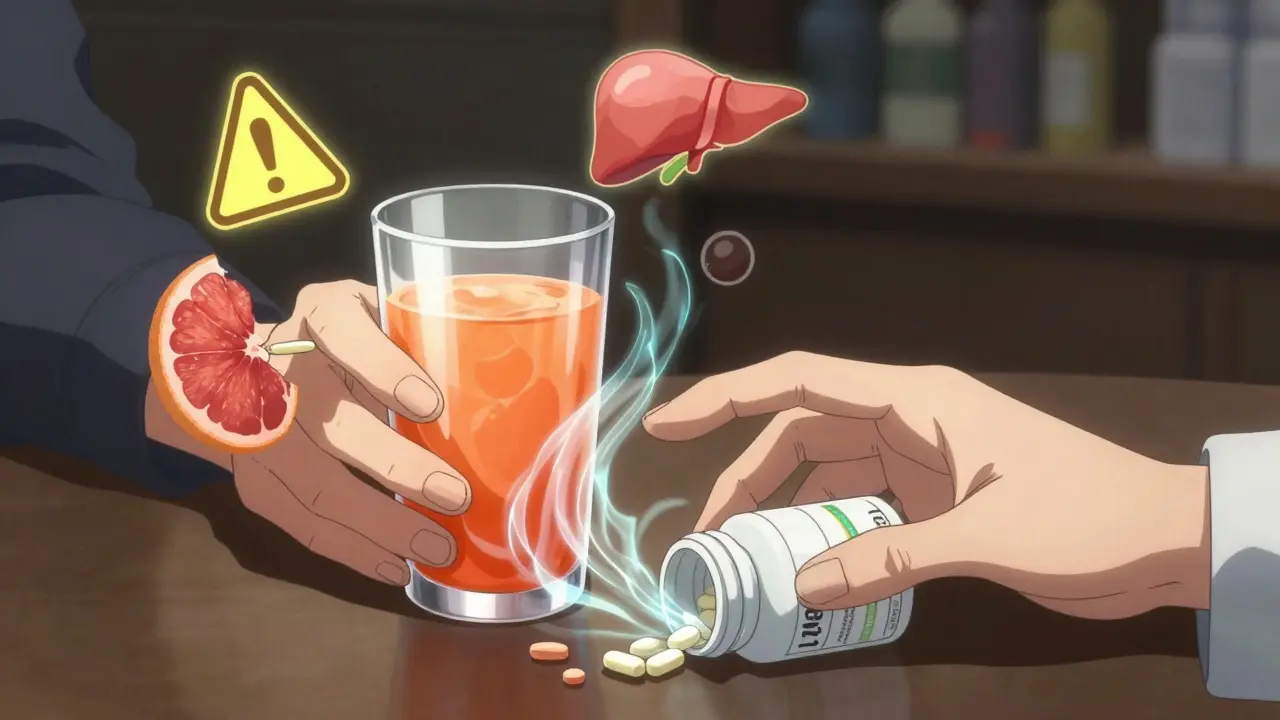
When and how should I take this to avoid interactions?
It’s not just what you take - it’s when. Take levothyroxine (a thyroid med) with calcium or iron supplements, and your body absorbs up to half as much of the drug. That means your thyroid levels stay low, and you keep feeling tired, cold, or depressed. The fix? Take the thyroid pill first thing in the morning on an empty stomach, then wait at least four hours before taking calcium or iron. Same goes for antibiotics like ciprofloxacin - they don’t work well if taken with dairy. Your pharmacist can give you a simple schedule: “Take this at 7 a.m., wait two hours, then eat. Take this one with dinner, not with your evening snack.” Timing turns a risky interaction into a safe routine.Will I need blood tests or monitoring while on this?
Some medications need regular checks. Warfarin, for example, requires frequent blood tests to make sure your clotting levels are in the safe range - especially if you start eating more leafy greens (which are high in vitamin K). Statins can affect your liver, so your pharmacist might recommend a liver function test after a few weeks. If you’re on a new heart rhythm drug, you might need an ECG. These aren’t optional. Skipping them can lead to serious complications. Ask: “Will I need any tests? How often? And who will tell me if something’s off?” Many pharmacists now offer follow-up calls or app reminders - but only if you ask for them.What side effects should I watch for that mean something’s wrong?
Not every side effect is dangerous. But some are red flags. If you’re on an SSRI and suddenly feel restless, sweaty, confused, or have a racing heart - that could be serotonin syndrome. If you’re on a statin and your muscles feel sore or weak - especially if your urine turns dark - that’s a sign of muscle breakdown. If you’re taking a blood thinner and notice unusual bruising, nosebleeds, or blood in your stool - don’t wait. These aren’t normal. Your pharmacist can tell you exactly what symptoms mean trouble. Write them down. Keep the list in your phone or wallet. And if you see one of them, call your pharmacist before calling your doctor. They can tell you whether to go to urgent care, wait it out, or stop the med immediately.
What if I forget to take my pill? Can I double up?
This is a common mistake. People forget. They take two pills the next day to “make up for it.” But that can be dangerous. Some meds, like blood thinners or seizure drugs, build up in your system. Doubling up can push you into overdose territory. Other meds, like antibiotics, need steady levels in your blood - missing a dose can let bacteria survive and become resistant. Your pharmacist can give you a clear rule: “If you miss a dose by less than 4 hours, take it. If it’s more, skip it. Never double up.” They can also suggest tools - alarms, pill boxes, or apps - to help you stay on track.Are there cheaper alternatives that won’t interact the same way?
Cost matters. Sometimes, a brand-name drug has more interactions than its generic version - or vice versa. Your pharmacist knows which formulations are safest for your specific mix of meds. If your current statin interacts badly with grapefruit juice, they might suggest a different one that doesn’t. If your blood pressure med causes dizziness when you stand up, they might recommend a cheaper alternative with fewer side effects. Don’t assume all versions are the same. Ask: “Is there another option that works just as well but doesn’t clash with my other meds?” Many pharmacies offer copay cards or patient assistance programs. Your pharmacist can help you find them.Can I take this with herbal supplements or CBD?
Herbal supplements are booming - and so are the risks. The National Center for Complementary and Integrative Health reports a 24% jump in herbal supplement use since 2021. But these aren’t regulated like prescription drugs. A turmeric pill might thin your blood. St. John’s wort can make birth control fail or stop your antidepressant from working. CBD can interfere with liver enzymes that break down over 150 common medications. Your pharmacist has access to databases that track these obscure interactions - your doctor might not. If you’re taking anything labeled “natural,” “herbal,” or “plant-based,” tell them. Don’t assume it’s safe just because it’s sold in a health food store.How do I report a bad interaction if I experience one?
If something goes wrong - a strange reaction, a scary side effect, or a warning sign you didn’t expect - you have the right to report it. The FDA’s MedWatch program lets patients report medication problems directly through their website or app. In the first six months after launching the mobile tool, over 12,000 people reported interactions. Your pharmacist can help you file a report. They might even do it for you. These reports help the FDA update warnings and protect others. Don’t brush it off as “just me.” Your experience could save someone else’s life.Can my pharmacist really help me avoid dangerous drug interactions?
Yes. Pharmacists have a Doctor of Pharmacy degree and specialize in how drugs work together. They’re trained to spot interactions your doctor might miss, especially with supplements, food, or alcohol. They use real-time screening tools and databases updated daily. While not every pharmacy offers full counseling, they’re legally required to answer your questions - and they want to help.
What if I don’t know all the meds I’m taking?
Start with what you remember: prescriptions, painkillers, vitamins. Then check your pill bottles, your pharmacy app, or your email receipts. Many pharmacies let you download your full medication history. If you’re unsure, bring all your bottles to the pharmacy - they’ll sort them out. Don’t wait until you’re having a reaction. Getting the full list now can prevent a hospital visit later.
Do I need to ask every time I get a new prescription?
Always. Even if you’ve taken the same meds for years, adding one new drug can change everything. A new antibiotic might interact with your old heart med. A new sleep aid could make your anxiety meds less effective. Every change matters. Make it a habit: every time you get a new script, ask your pharmacist about interactions before you leave the counter.
Are online interaction checkers reliable?
Some apps and websites can flag major risks, but they’re not perfect. A 2023 study found they missed nearly 40% of clinically dangerous interactions. They don’t know your full medical history, your dosages, or your timing. A pharmacist can connect the dots - like how your grapefruit habit, your statin, and your thyroid med all interact. Use apps as a reminder, not a replacement.
What if my pharmacist says there are no interactions?
Ask for specifics. Say: “Can you show me what you checked?” or “Are you sure it won’t affect my other meds?” Sometimes, pharmacists assume you’re only taking what’s on the script. If you’re also taking melatonin, fish oil, or turmeric, they need to know. If you’re still unsure, ask for a second opinion - or request a Medication Therapy Management (MTM) session, which is free under Medicare Part D.
If you’re on multiple medications, you’re not alone. But you’re also not powerless. The tools are there - your pharmacist is trained, willing, and ready to help. All you have to do is ask. Write down your questions before your next visit. Bring your pill bottles. Don’t be shy. Your safety isn’t something you should guess about. It’s something you have the right to understand - and your pharmacist is the best person to help you get there.


Hi, I'm Caden Lockhart, a pharmaceutical expert with years of experience in the industry. My passion lies in researching and developing new medications, as well as educating others about their proper use and potential side effects. I enjoy writing articles on various diseases, health supplements, and the latest treatment options available. In my free time, I love going on hikes, perusing scientific journals, and capturing the world through my lens. Through my work, I strive to make a positive impact on patients' lives and contribute to the advancement of medical science.