

Imagine a situation where your body’s defense system, designed to protect you from germs, suddenly turns against you. That is exactly what happens during sepsis is a life-threatening organ dysfunction caused by a dysregulated host response to infection. It isn't just a "bad infection"; it is a medical emergency where the body overreacts to a pathogen, causing widespread inflammation that can shut down your kidneys, liver, and lungs in a matter of hours. Because it moves so fast, the difference between a full recovery and a fatal outcome often comes down to a single hour of time.
The Red Flags: How to Spot Sepsis Early
Sepsis doesn't always start with a clear wound or a high fever. It can sneak up on you. The most critical thing to remember is that sepsis is time-sensitive, much like a heart attack or a stroke. If you notice a combination of the following signs, you need to get to an emergency room immediately.
The Sepsis Alliance uses a helpful mnemonic called "TIME" to help people remember the core warnings:
- T - Temperature: You might have a high fever (above 38°C), but surprisingly, some people experience abnormally low temperatures (below 36°C).
- I - Infection: You may have an existing infection (like a UTI or pneumonia) or signs of a new one, such as a wound that won't heal.
- M - Mental Decline: Confusion, disorientation, or extreme sleepiness. If a loved one is suddenly difficult to wake up or doesn't know where they are, this is a massive red flag.
- E - Extreme Illness: A visceral feeling of doom. About 78% of patients report a terrifying sensation that they "feel like they might die."
Beyond the "TIME" framework, keep an eye out for physical changes. Look for skin that appears blue, grey, or blotchy, especially around the lips. A rash that doesn't fade when you press a glass against it is another urgent sign of systemic failure. In infants, the signs are different: look for a lack of urination for over 12 hours, extreme lethargy, or a high fever in babies under 3 months old.
What Happens in the Hospital: The First Hour
Once you hit the ER, doctors enter a race against the clock. The "golden hour" is the window where intervention can reduce mortality by up to 79%. To standardize this, many hospitals use the Sepsis Six, a bundle of six critical interventions that must happen as quickly as possible.
| Intervention | Goal / Action | Why it Matters |
|---|---|---|
| Blood Cultures | Collect samples before antibiotics | Identifies the specific germ causing the infection |
| Antibiotics | Administer broad-spectrum IV drugs | Kills the bacteria causing the systemic response |
| IV Fluids | Crystalloid resuscitation (30mL/kg) | Raises blood pressure and protects organ perfusion |
| Oxygen Therapy | Maintain saturation between 94-98% | Ensures organs get enough oxygen during stress |
| Lactate Measurement | Check serum lactate levels | High levels (>4mmol/L) signal severe tissue distress |
| Urine Output | Target >0.5mL/kg/hour | Confirms the kidneys are still functioning |
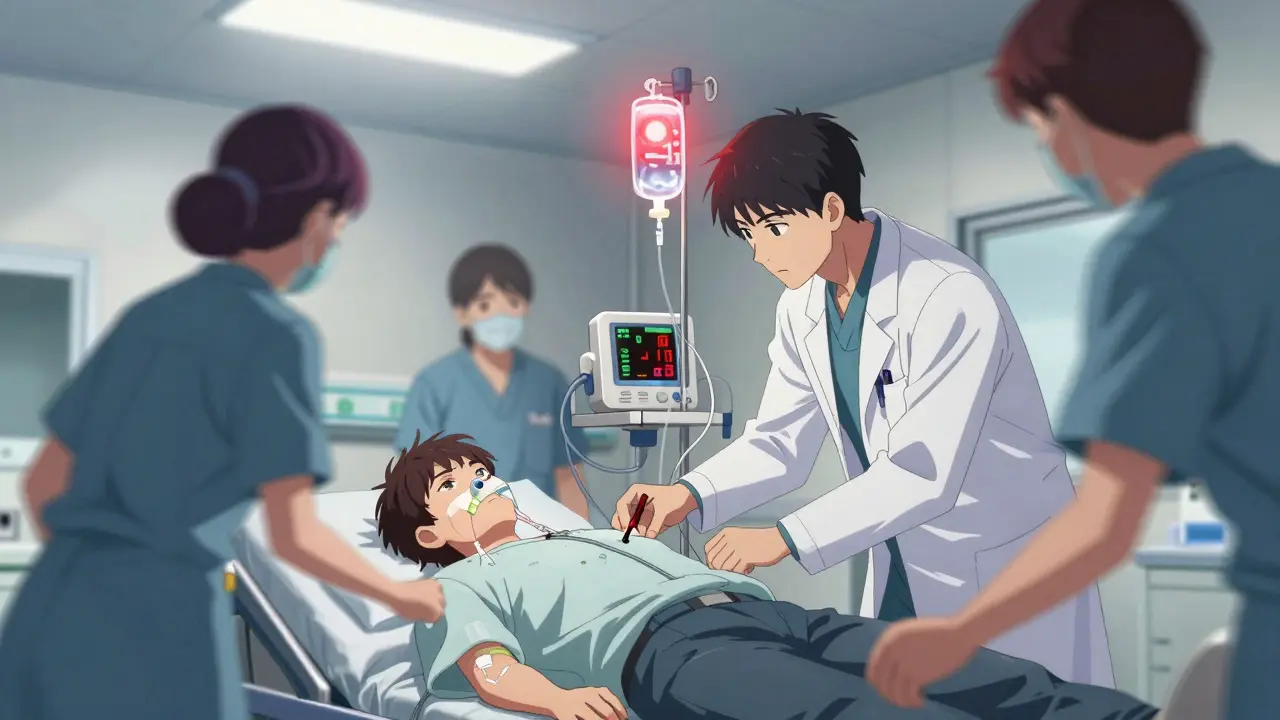
For those who don't respond to fluids, the condition may progress to septic shock. This is the most severe stage, where blood pressure drops so low that the organs can't get blood. In these cases, doctors use norepinephrine, a powerful medication called a vasopressor, to tighten blood vessels and force the mean arterial pressure (MAP) back up to a safe level (usually at least 65 mmHg).
Advanced Care and Source Control
While the first hour is about stabilizing the patient, the next 6 to 12 hours are about "source control." Antibiotics alone can't fix everything. If there is an abscess that needs draining or an infected catheter that needs removing, surgeons must step in. Without removing the source of the infection, the sepsis can persist despite the best medications.
Modern hospitals also monitor glucose levels closely, targeting a range of 140-180 mg/dL, because extreme blood sugar spikes can interfere with healing. In cases where blood pressure remains unstable despite heavy medication, doctors may use stress-dose corticosteroids like hydrocortisone. While these don't always lower the overall death rate, evidence shows they can shorten the time a patient spends in shock and reduce the total length of stay in the ICU.
The Road to Recovery: Post-Sepsis Syndrome
Surviving the ICU is a huge victory, but for many, the battle isn't over upon discharge. A significant number of survivors deal with what is known as post-sepsis syndrome. This isn't just "feeling tired"; it is a complex set of physical and cognitive hurdles.
Common long-term struggles include:
- Persistent Fatigue: Up to 60% of survivors feel exhausted for six months or more after the event.
- Respiratory Issues: Nearly half of patients struggle with shortness of breath during simple activities like walking.
- Cognitive Fog: Difficulty concentrating or memory gaps, often referred to as "brain fog."
- Physical Disability: Mobility limitations and chronic body aches that can require long-term physical therapy.
The good news is that early rehab makes a massive difference. Starting physical and cognitive therapy within 72 hours of entering the ICU can reduce long-term disability by about 22%. It's not just about getting out of bed; it's about retraining the body and brain to function after a systemic crash.

The Future of Sepsis Detection
We are finally moving away from the "wait and see" approach. Traditionally, identifying the specific bacteria in a blood culture took 48 to 72 hours. This meant patients stayed on broad-spectrum antibiotics that might not even be the right match for their specific infection.
New technology, such as the Accelerate PhenoTest BC Kit, is changing the game by slashing that identification time down to just 1.5 hours. This allows doctors to switch to a targeted antibiotic much faster, reducing the risk of antibiotic resistance and improving survival rates. Combined with AI-driven alert systems in hospitals, the goal is to identify sepsis before the patient even feels "sick," catching the organ dysfunction in its earliest stages.
Can I get sepsis if I don't have a fever?
Yes. While fever is common, some people-especially the elderly or those with compromised immune systems-may have a very low body temperature (hypothermia) or no fever at all during sepsis. This is why mental confusion and extreme lethargy are just as important as temperature checks.
What is the difference between sepsis and septic shock?
Sepsis is the body's extreme response to infection that causes organ dysfunction. Septic shock is a more advanced stage where your blood pressure drops to dangerously low levels and doesn't respond to fluids alone, requiring medications called vasopressors to keep organs alive.
How quickly do antibiotics need to be given?
Every hour counts. Research suggests that every single hour of delay in administering the correct antibiotics increases the risk of death by about 7.6%. This is why the "Sepsis Six" bundle emphasizes treatment within the first hour of diagnosis.
Does sepsis always require an ICU stay?
Not always, but many do. If the patient has septic shock or multiple organs failing (like the kidneys and lungs), the level of monitoring required-such as continuous blood pressure tracking and ventilator support-usually necessitates an Intensive Care Unit (ICU) stay.
Can anyone get sepsis?
Anyone can get sepsis, but certain groups are at higher risk. This includes older adults, people with weakened immune systems (like those undergoing chemotherapy), and individuals with chronic illnesses such as diabetes or kidney disease.
Next Steps for Recovery
If you or a loved one has survived sepsis, the path forward involves more than just a discharge paper. For those transitioning home, the focus should shift to a multidisciplinary recovery plan. This includes scheduled follow-ups with a primary care physician to monitor organ function, especially the kidneys. If you experience ongoing shortness of breath or extreme fatigue, don't dismiss it as "just getting old" or "recovering slowly"; ask your doctor about a referral for post-sepsis rehabilitation. Early movement and cognitive exercises are the best tools to regain the quality of life lost during the crisis.
Hi, I'm Caden Lockhart, a pharmaceutical expert with years of experience in the industry. My passion lies in researching and developing new medications, as well as educating others about their proper use and potential side effects. I enjoy writing articles on various diseases, health supplements, and the latest treatment options available. In my free time, I love going on hikes, perusing scientific journals, and capturing the world through my lens. Through my work, I strive to make a positive impact on patients' lives and contribute to the advancement of medical science.