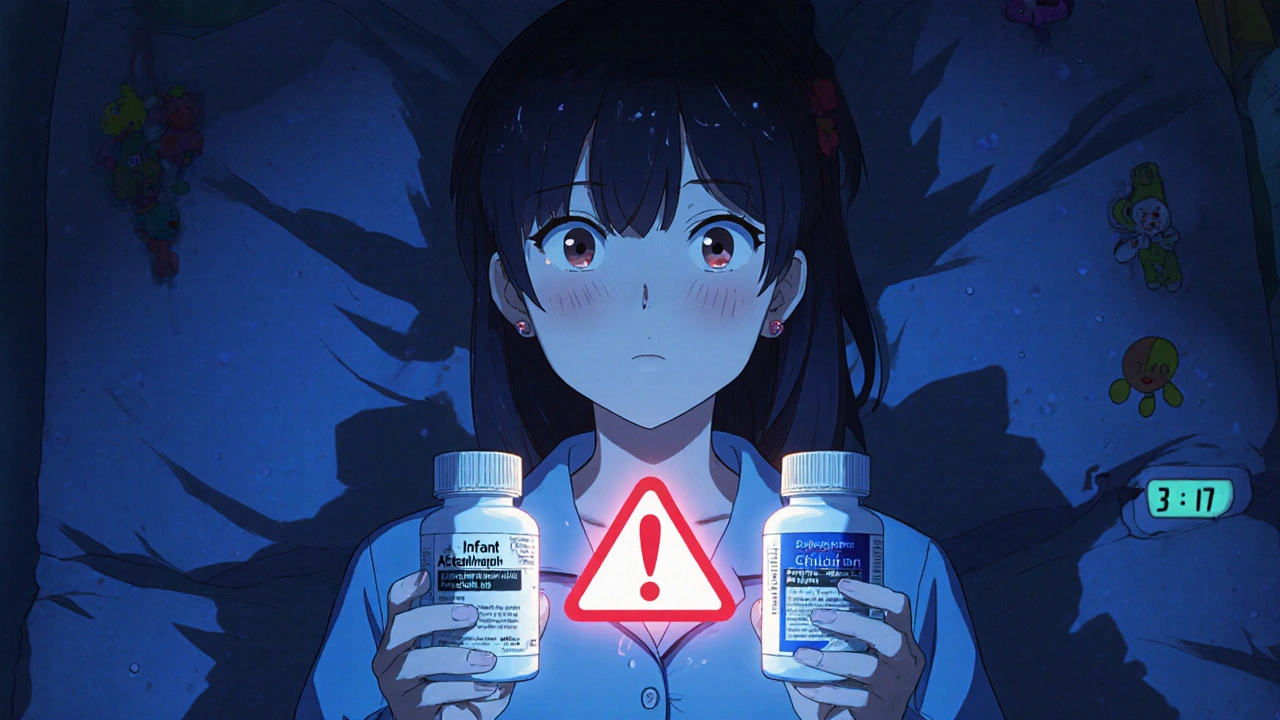
Infant medication safety depends on accurate dosing, correct concentrations, and proper measuring tools. Learn how to avoid deadly errors with acetaminophen, ibuprofen, and other liquid meds for babies under 1 year.

When we talk about baby drops, liquid medications or supplements given orally to infants in small, measured doses. Also known as infant drops, they’re often used for colic, reflux, fever, or nutritional support—but not all are created equal. Many parents reach for them without knowing what’s inside, how they interact with other meds, or whether they’re even needed. The truth? Some baby drops are harmless, others can cause serious side effects, especially when mixed with prescription drugs or used long-term.
Pediatric dosing, the precise amount of medication given to infants based on weight and age isn’t just a suggestion—it’s life-or-death. A drop too much of something like acetaminophen or iron can overload a baby’s tiny liver. And it’s not just about the active ingredient. Many drops contain alcohol, artificial sweeteners, or preservatives that aren’t listed clearly on the label. The drug safety for babies, the practice of ensuring medications don’t harm infants due to their developing organs and metabolism is different from adults. Babies process drugs slower, absorb more through their skin and gut, and can’t tell you when something feels wrong.
Look at the posts below. They don’t mention baby drops directly, but they cover the same risks: medication interactions, side effects, and how small doses can have big consequences. One post warns about Dong Quai increasing bleeding risk with warfarin. Another explains how clindamycin can trigger life-threatening diarrhea. A third details how serotonin syndrome can happen from mixing common antidepressants. These aren’t adult problems—they’re warning signs for anyone giving anything to a baby. If a drug can mess with an adult’s INR or trigger TTP, imagine what it can do to a 6-pound infant.
There’s no universal rule for baby drops. What works for one child might harm another. Some drops are backed by science. Others? They’re sold on fear, not facts. The key is knowing what’s actually in the bottle, why it’s being used, and whether there’s a safer alternative. You don’t need more products. You need clarity.
Below, you’ll find real-world guides on how medications behave in the body, how to spot hidden dangers, and what to ask your doctor before giving anything to your child. No fluff. No marketing. Just what you need to protect your baby from avoidable harm.
Infant medication safety depends on accurate dosing, correct concentrations, and proper measuring tools. Learn how to avoid deadly errors with acetaminophen, ibuprofen, and other liquid meds for babies under 1 year.