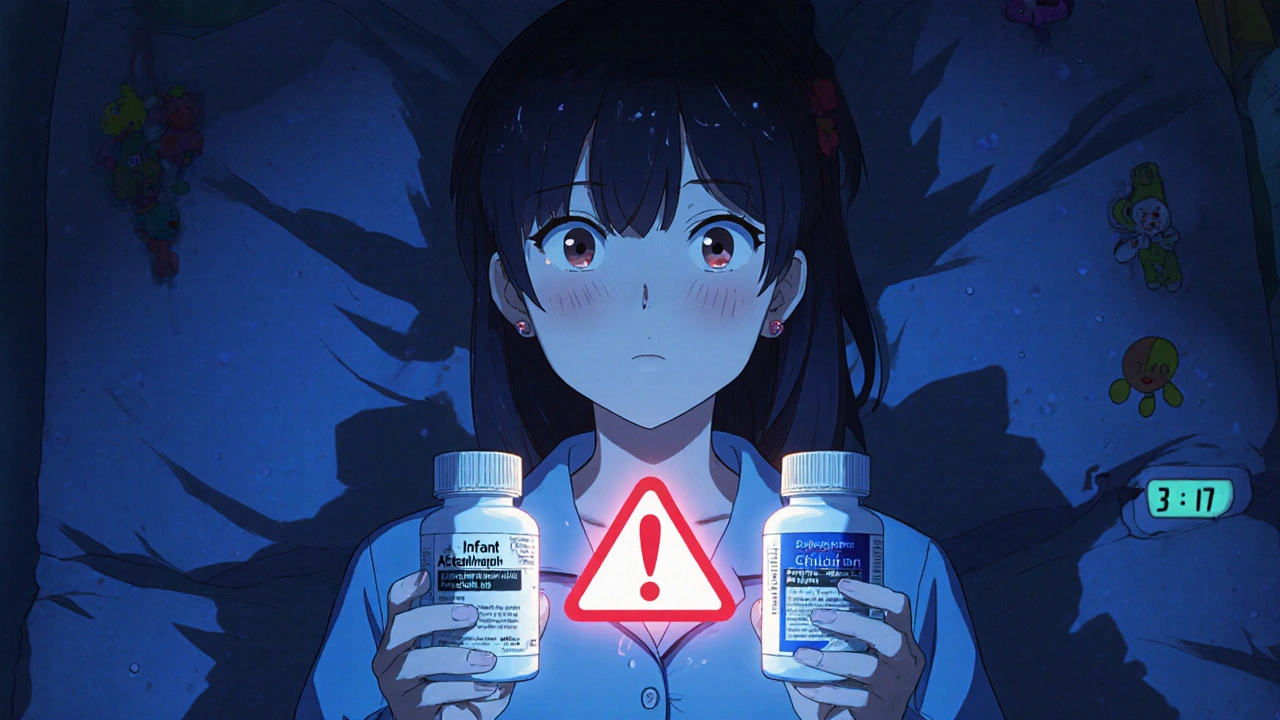
Infant medication safety depends on accurate dosing, correct concentrations, and proper measuring tools. Learn how to avoid deadly errors with acetaminophen, ibuprofen, and other liquid meds for babies under 1 year.

When it comes to infant medication, medicines specifically formulated or dosed for babies under one year old. Also known as pediatric drugs, it is not just a smaller version of adult medicine—it’s a completely different category with unique risks and rules. Babies don’t process drugs the same way adults do. Their liver and kidneys are still developing, their body weight changes fast, and even small dosing errors can lead to serious harm. That’s why giving your baby any medication—whether it’s acetaminophen, an antibiotic, or an herbal remedy—requires more than just following the bottle label.
Medication dosing for infants, the precise calculation of drug amounts based on weight and age is one of the most critical factors. A teaspoon too much of fever reducer can cause liver damage. A wrong antibiotic choice can trigger C. difficile, a dangerous gut infection often caused by antibiotics like clindamycin, which is especially risky in babies. Even common supplements like Dong Quai, which some parents think are "natural" and safe, can dangerously interact with blood thinners or affect hormone levels. And don’t assume that because a drug is sold over the counter, it’s harmless for infants—many OTC cold and cough syrups are not approved for babies under two.
Parents often worry about side effects like diarrhea, rashes, or drowsiness, but the real danger lies in hidden reactions. drug interactions in babies, when two or more medications or supplements combine to create unexpected and dangerous effects are underreported and poorly understood. For example, mixing a fever reducer with a multivitamin that contains the same active ingredient can lead to overdose. Or using a topical steroid cream too often can cause systemic absorption in a baby’s thin skin. That’s why tracking what your baby takes, when, and why matters more than you think.
This collection doesn’t just list drugs—it shows you what actually happens when infant medication goes wrong, how to spot the warning signs before it’s an emergency, and what alternatives exist. You’ll find real guidance on antibiotics that are safe for newborns, why certain pain relievers are risky, how to avoid accidental overdoses, and what to do if your baby reacts badly. No fluff. No guesswork. Just clear, practical information from real cases and clinical evidence—so you can give your baby the right medicine, the right way, without fear.
Infant medication safety depends on accurate dosing, correct concentrations, and proper measuring tools. Learn how to avoid deadly errors with acetaminophen, ibuprofen, and other liquid meds for babies under 1 year.