
When the FDA issues a warning letter to a drug manufacturer, it’s not a gentle reminder. It’s a formal red flag that something serious is wrong with how medicines are being made. These letters don’t come out of nowhere. They follow inspections where inspectors found clear, documented failures in quality control - failures that could put patients at risk. In 2023, the FDA sent out 327 warning letters to pharmaceutical manufacturers worldwide, up from 289 the year before. That’s not just a number - it’s a growing trend showing the agency is getting tougher on quality lapses.
What Exactly Is an FDA Warning Letter?
An FDA warning letter is the agency’s official way of telling a company: "You broke the rules, and we’re documenting it." These letters aren’t opinions. They’re legal notices based on violations of the Federal Food, Drug, and Cosmetic Act, specifically around Current Good Manufacturing Practices (CGMP). CGMP rules cover everything from how raw materials are tested to how clean the production floor is. If a company misses even one key requirement - like failing to sterilize equipment or not properly documenting test results - the FDA can issue a warning letter. These letters follow a strict format. First, they list exactly what went wrong, with real examples. For instance, one letter from July 2025 cited a worker’s forehead being exposed in a sterile ISO 5 cleanroom. Another pointed to non-sterile tape being used on a filling line. These aren’t hypotheticals - they’re observations made by FDA inspectors on-site. Then, the letter cites the exact regulation that was broken. Most often, that’s 21 CFR Parts 210 and 211 - the core rules for drug manufacturing. Finally, the letter tells the company what it must do to fix the problem. This isn’t vague. It demands specific actions: "Investigate every batch made since January 2023," "Validate your sterility testing method," "Submit your full CAPA plan within 15 working days."Why These Letters Matter More Than You Think
Many companies treat warning letters like paperwork to be filed away. That’s a dangerous mistake. These letters become public record within 15 business days of being sent. Investors, customers, and regulators all see them. A company with an active warning letter can lose contracts, face delays in new product approvals, and see its stock price drop. One mid-sized generic drugmaker reported losing $28 million in revenue after a warning letter delayed a product launch by 14 months. The FDA doesn’t just issue these letters to punish. They’re meant to force change. But the pressure is real. Companies typically have just 15 working days to respond. That’s not enough time to fix deep-rooted problems. Most need 6 to 12 months of work to fully resolve the issues. During that time, they often can’t submit new products for approval. For small manufacturers, the cost of hiring consultants, rewriting procedures, and retraining staff can run into millions. One small facility spent over $250 per hour on three consultants just to draft the response - nearly bankrupting the company.What Are the Most Common Violations?
Not all violations are the same. Some happen once. Others keep coming back. Data shows a pattern:- Inadequate investigation of out-of-specification (OOS) results - This shows up in over 63% of warning letters. If a test result is weird, the company must dig into why. Too many just ignore it or blame the test.
- Poor quality unit oversight - Found in nearly 58% of cases. The quality team must be independent and empowered to stop production if something’s wrong. Too often, they’re sidelined by production pressure.
- Aseptic processing failures - Seen in 78% of letters for sterile products. This includes dirty rooms, bad gowning, or flawed media fills. One letter cited a facility using non-sterile tape on a filling line - a simple mistake with deadly consequences.
- Data integrity issues - Up from 42% in 2019 to 67% in 2023. This means falsified records, deleted data, or unapproved software changes. The FDA now checks electronic systems just as closely as physical ones.
- Failure to test incoming ingredients - One letter called out a company for not testing glycerin and propylene glycol for diethylene glycol, a toxic contaminant.
How Companies Respond - and Why Most Fail
A good response isn’t just an apology. It’s a detailed plan backed by data. The FDA expects:- A full root cause analysis - not just "human error," but why the system allowed it to happen.
- Corrective actions - what you’re fixing right now.
- Preventive actions - how you’ll stop it from ever happening again.
- Verification - proof that the fix actually works, through testing or monitoring.
- Documentation - every step written down, signed off, and traceable.
Who Gets Targeted - and Why It’s Unfair
Indian manufacturers received nearly 39% of all warning letters in 2022. U.S. facilities got about 31%. That might seem fair - but experts point out something troubling: equivalent violations often get different treatment. A 2022 government report found that 37% of similar problems led to warning letters at one facility but only a Form 483 (a less serious observation) at another. Foreign facilities get warning letters 22% more often than U.S. ones for the same issues. Why? Some say it’s because inspectors find more problems abroad. Others say it’s because foreign companies have less access to legal and regulatory support. Small manufacturers, especially, struggle. They don’t have the staff to handle complex responses. The FDA’s 45-day target for reviewing responses often stretches to 120 days or more. That leaves companies in limbo - unable to move forward, unable to plan.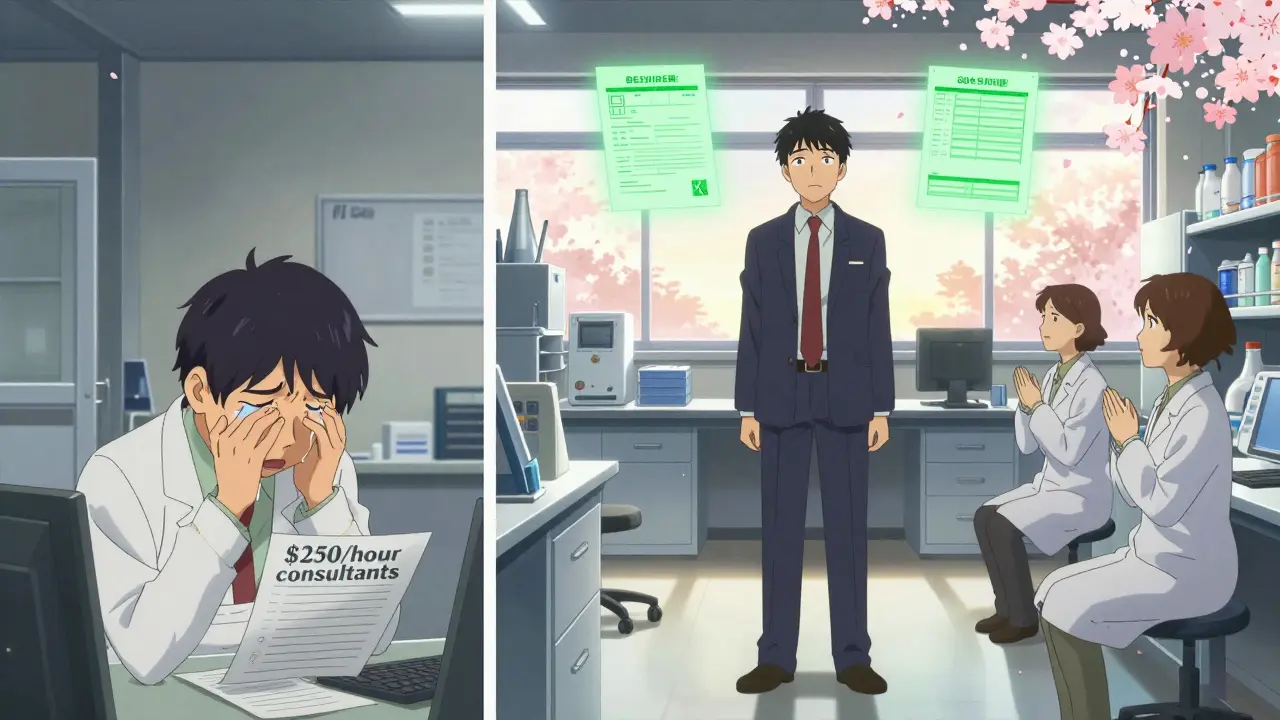
What’s Changing - and What’s Coming
The FDA isn’t slowing down. In fact, enforcement is accelerating. Warning letters jumped 92% from 2018 to 2023. The agency now spends over $112 million a year on foreign inspections - up nearly 30% since 2020. New programs like the Risk-Based Certificate of Pharmaceutical Product Pilot (launched in October 2023) mean even more scrutiny for global suppliers. The focus is shifting too. Data integrity is now a top concern. Sterile manufacturing remains under heavy watch after past contamination outbreaks. And the FDA’s 2023-2027 Strategic Plan says it will prioritize inspections of facilities with past violations - aiming to cut repeat offenses by 25% by 2027. But there’s a risk. A 2023 FDA inspector report found that 31% of follow-up inspections were delayed past the 6-month goal because of staffing shortages. That means some companies get away with unresolved problems - for now. Experts warn that without more resources, the system risks becoming more about punishment than correction.What Manufacturers Should Do Now
If you make drugs, here’s what you need to do:- Review your last 3 inspections. Did you get a Form 483? What was on it? Fix it now - don’t wait for a warning letter.
- Train your quality team to be independent. They need authority to stop production.
- Build a data integrity plan. Audit your electronic records. Make sure no one can delete or alter data without a trace.
- Test your CAPA system. Can you trace a problem from discovery to fix to verification? If not, you’re not ready.
- Prepare for a warning letter response. Have a team ready - legal, QA, regulatory, and technical - with templates and procedures in place.
What happens if I don’t respond to an FDA warning letter?
If you don’t respond, or if your response is inadequate, the FDA can escalate enforcement. This could mean an import alert (blocking your products from entering the U.S.), a consent decree (a court-enforced agreement with strict oversight), product seizures, or even criminal charges. The agency considers silence as non-cooperation, which significantly increases the risk of harsher penalties.
Can a warning letter be removed from public records?
No. Once issued, a warning letter stays on the FDA’s public website permanently. However, if you fully resolve the issues and the FDA confirms compliance, they may issue a letter closing the case. This doesn’t delete the original letter, but it shows regulators and customers that you’ve fixed the problem. Many companies use the closure letter in marketing and investor communications to rebuild trust.
How long does it take to fix a warning letter issue?
It typically takes 6 to 12 months to fully resolve the issues raised in a warning letter. The initial response is due in 15 working days, but that’s just the start. Root cause analysis, system changes, validation, and verification take time. Companies that rush often get flagged again. The FDA expects proof - not promises - that the fix works long-term.
Are warning letters only for drug manufacturers?
No. While most are issued to pharmaceutical companies, the FDA also sends warning letters to makers of medical devices, biologics, and even dietary supplements. Any facility regulated under the FD&C Act can receive one if it violates CGMP or other standards. The rules for sterile devices or compounded drugs are just as strict as for pills or injections.
Why do some companies get warning letters while others get a Form 483 for the same issue?
The FDA has discretion in how it responds. A Form 483 is an inspectional observation - a list of issues found. A warning letter is a formal enforcement action. The difference often comes down to severity, history, and intent. If a company has previous violations, or if the issue poses a direct patient risk, the FDA is more likely to issue a warning letter. Inconsistent application is a known issue, and the FDA acknowledges it - but they don’t publicly explain why one company gets a letter and another doesn’t.


I am a pharmaceutical expert with over 20 years of experience in the industry. I am passionate about bringing awareness and education on the importance of medications and supplements in managing diseases. In my spare time, I love to write and share insights about the latest advancements and trends in pharmaceuticals. My goal is to make complex medical information accessible to everyone.