

Medication Side Effect Risk Calculator
This tool estimates your risk of experiencing side effects from medications based on key factors discussed in the article. Results are for educational purposes only and not medical advice.
Your Risk Level
Important: This is an educational estimate based on general factors discussed in the article. Your actual risk depends on complex factors including genetics, liver/kidney function, and specific medications.
Ever taken a medication that worked perfectly for your friend but left you feeling sick? You’re not alone. The same pill that helps one person sleep through the night might give another a racing heart or a rash. This isn’t bad luck or bad prescribing - it’s biology. Drug side effects vary wildly from person to person, and the reasons go far beyond dosage or age. They’re written in our genes, shaped by our bodies, and influenced by everything we eat, drink, and take alongside our prescriptions.
It’s Not Just About the Drug - It’s About Your Body
When you swallow a pill, your body doesn’t just absorb it like a sponge. It breaks it down, moves it around, and reacts to it - and every step of that process is different for everyone. This is where pharmacokinetics and pharmacodynamics come in. Pharmacokinetics is what your body does to the drug: how fast it’s absorbed, where it goes, how quickly it’s broken down, and how it’s cleared. Pharmacodynamics is what the drug does to your body: how it binds to receptors, triggers changes, and produces effects - good or bad. Two people can take the exact same dose of the same drug, and one might feel relief while the other gets dizzy, nauseous, or worse. Why? Because their bodies handle the drug differently. For example, about 5 to 10% of white Europeans have a genetic variant that makes them slow metabolizers of the liver enzyme CYP2D6. If they take a common painkiller like codeine, their body can’t convert it properly to morphine - so it doesn’t work. Meanwhile, ultra-rapid metabolizers (1-2% of Europeans, up to 29% of Ethiopians) turn codeine into morphine too fast, risking overdose even at normal doses.Your Genes Are the Hidden Blueprint
Genetics explain up to 95% of why people respond differently to certain drugs. It’s not just one gene - it’s dozens, sometimes hundreds, working together. The most studied genes involve the cytochrome P450 family, especially CYP2C9, CYP2C19, and CYP2D6. These enzymes are like factory workers in your liver, breaking down over 70% of all prescription drugs. If your version of these enzymes is slower or faster than average, your drug levels go up or down unpredictably. Take warfarin, a blood thinner. Two people on the same dose can have wildly different blood clotting levels. Why? Because variations in CYP2C9 and VKORC1 genes explain 30-50% of why some people need just 1 mg a day while others need 10 mg. In a landmark study, patients whose doses were adjusted based on their genetics reached safe levels 27% faster and had 31% fewer dangerous bleeds. That’s not a small difference - it’s life-saving. Even rarer genes matter. About 5% of asthma patients have a variant in the 5-lipoxygenase gene. For them, drugs like zafirlukast can cut asthma attacks in half. For the other 95%, those same drugs cost $250-$300 a month with almost no benefit. That’s not just wasted money - it’s wasted time and missed control over a chronic illness.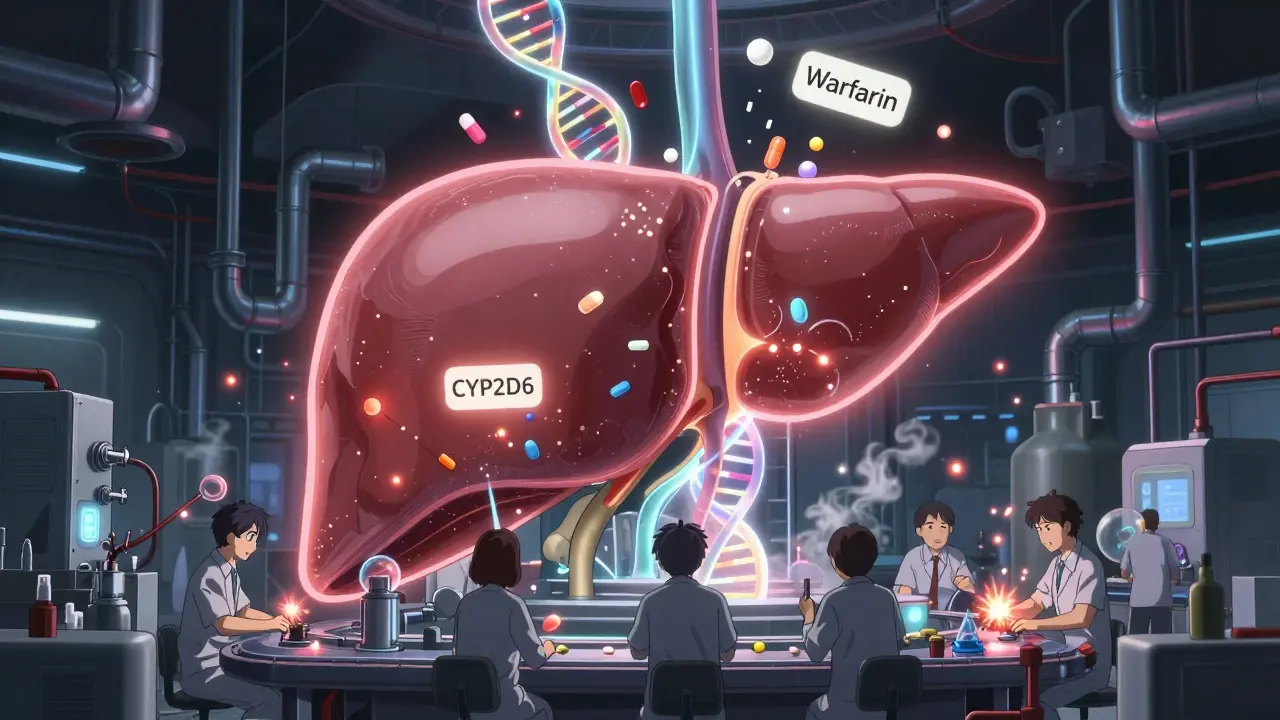
Age, Health, and Other Hidden Factors
Genes aren’t the whole story. Your age, weight, liver and kidney function, and even what you ate for breakfast all play a role. Older adults naturally carry more body fat and less water. Fat-soluble drugs like some antidepressants or benzodiazepines build up in their system longer, increasing side effect risks. Kidney function drops with age too - meaning drugs cleared by the kidneys, like certain antibiotics or diuretics, stay in the body longer. Inflammation from infections or chronic conditions like arthritis can shut down liver enzymes by 20-50%. That means a drug you’ve taken safely for years might suddenly become toxic if you catch the flu. And don’t forget drug interactions. Amiodarone, a heart rhythm drug, can block the metabolism of warfarin, causing its levels to spike 100-300%. That’s not a rare case - it’s a common mistake in older patients on multiple medications. In fact, people taking five or more drugs have a 300% higher chance of an adverse reaction than younger, healthier people. Polypharmacy isn’t just a buzzword - it’s a ticking time bomb for many elderly patients.Pharmacogenomics: The Future Is Here, But Not Everywhere
Pharmacogenomics - using your genes to guide drug choices - is no longer science fiction. The FDA has included genetic guidance in the labels of over 300 drugs. For 44 of them, dosing recommendations are already based on genetic testing. In pediatric cancer, St. Jude Children’s Research Hospital reduced severe toxicity from mercaptopurine from 25% to 12% by testing kids for TPMT gene variants before treatment. A 2022 Mayo Clinic study of 10,000 patients showed those who got genetic testing had 32% fewer ER visits and 26% shorter hospital stays. That’s not just better outcomes - it’s lower costs. Hospitals that use pharmacogenomics save $1,200 to $1,800 per patient per year by avoiding adverse reactions. But here’s the problem: most doctors still don’t use it. Only 18% of primary care practices in the U.S. have any system in place. Sixty-eight percent of physicians say they don’t feel trained to interpret genetic reports. Even though testing costs have dropped from $2,000 in 2015 to around $250 today, insurance coverage is still patchy. Only 18% of U.S. insurers fully cover it. And it’s not just about access. The science is still catching up. Testing just three genes (CYP2C9, CYP2C19, CYP2D6) explains only 15-19% of all adverse reactions. The rest? It’s likely hundreds of other genes, epigenetic changes, gut bacteria, and environmental triggers we haven’t fully mapped yet. The future isn’t single-gene tests - it’s polygenic risk scores that look at hundreds of variants at once. Early results show they predict drug response 40-60% better than current methods.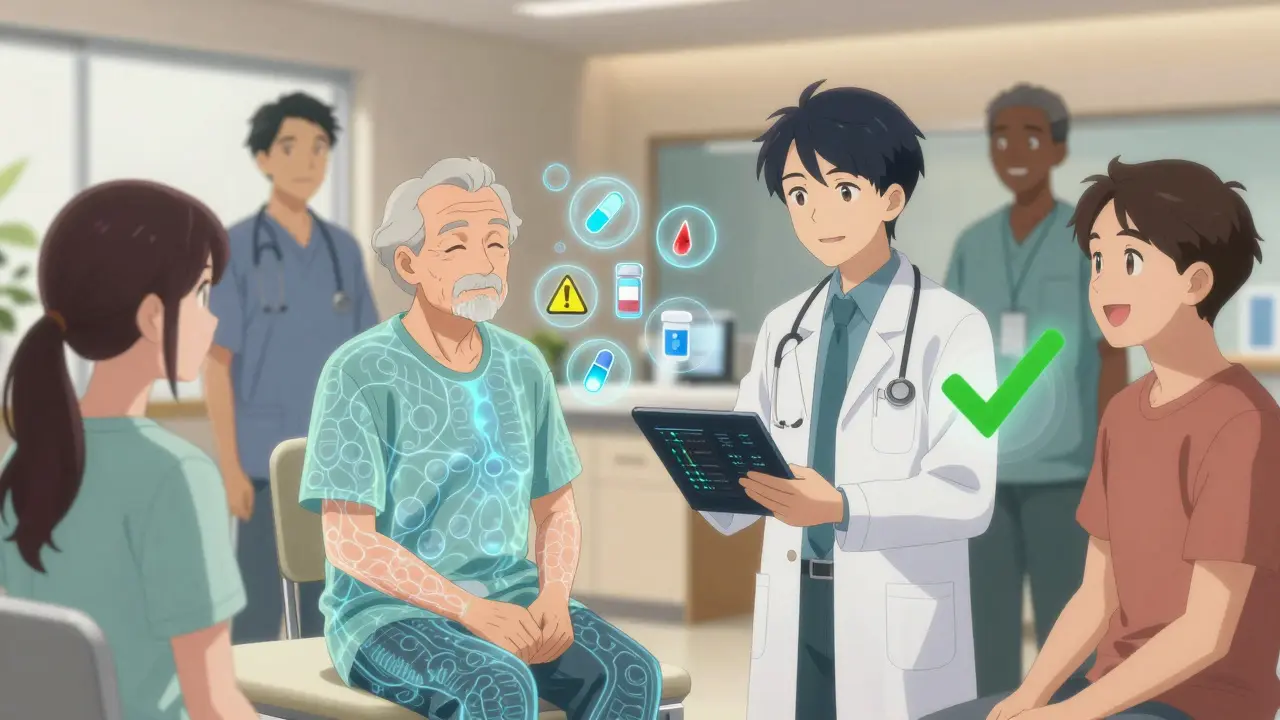
What This Means for You
You don’t need a genetic test to start making smarter choices. If you’ve had a bad reaction to a drug before - even a mild one - tell your doctor. Keep a list of every medication you’ve taken and how you felt. Did you get dizzy on a beta-blocker? Did you break out in a rash on penicillin? Did your pain medication do nothing? That’s data. That’s your personal pharmacogenomic history. If you’re on long-term meds - especially blood thinners, antidepressants, or heart drugs - ask if genetic testing is right for you. Ask your pharmacist. Ask for a referral to a clinical pharmacist trained in pharmacogenomics. In the UK, the NHS is slowly rolling out testing for high-risk patients, especially in cardiology and psychiatry. And if you’re taking multiple drugs, be extra careful. Ask your doctor or pharmacist to review everything you’re on - including over-the-counter meds and supplements. Many dangerous interactions happen because no one looked at the full picture.What’s Next?
By 2024, Medicare in the U.S. will cover pharmacogenomic testing for 17 high-risk medications. The EU has mandated that all new clinical trials include genetic data. Point-of-care tests - like a 60-minute CYP2C19 test for clopidogrel - are now available in ERs and cardiology clinics. The goal isn’t to test everyone tomorrow. It’s to test the right people at the right time. The era of ‘one-size-fits-all’ prescribing is ending. We’re moving toward precision medicine - not because it’s fancy, but because it works. And for people who’ve suffered avoidable side effects, it’s not just science. It’s relief.Why do some people have side effects from drugs while others don’t?
People react differently because of genetic differences in how their bodies process drugs. Variations in liver enzymes like CYP2D6 and CYP2C19 affect how quickly a drug is broken down. Some people metabolize drugs too slowly, leading to buildup and toxicity. Others process them too fast, making the drug ineffective. Age, liver and kidney function, other medications, and even inflammation from illness also play major roles.
Can genetic testing prevent bad drug reactions?
Yes - when used correctly. Genetic testing can prevent up to 30% of adverse drug reactions in high-risk cases. For example, testing for CYP2C9 and VKORC1 before starting warfarin reduces dangerous bleeding by 31%. Testing for TPMT before giving mercaptopurine to children with leukemia cuts severe toxicity in half. But testing only works if doctors know how to use the results - and many still don’t.
Which drugs have genetic testing recommendations?
The FDA includes pharmacogenomic guidance for over 300 drugs. Forty-four of them have clear genetic dosing recommendations. These include warfarin, clopidogrel, statins like simvastatin, certain antidepressants (citalopram, escitalopram), codeine, and cancer drugs like mercaptopurine and 5-FU. Testing is most established in cardiology, oncology, and psychiatry.
Is pharmacogenomic testing covered by insurance?
Coverage is improving but still limited. In the U.S., Medicare now covers testing for 17 high-risk medications starting in January 2024. Private insurers cover it in only 18% of cases. In the UK, the NHS offers testing selectively for specific conditions like clopidogrel resistance or severe depression. Costs have dropped from $2,000 in 2015 to around $250 today, but insurance approval remains a barrier for many.
Should I get genetic testing before taking a new medication?
It’s not necessary for everyone, but it’s worth considering if you’ve had a bad reaction to a drug before, are taking multiple medications, or have a chronic condition like heart disease, depression, or cancer. Ask your doctor or pharmacist if your medication has known genetic interactions. Testing is most useful when it changes your treatment - not just for curiosity.


I am a pharmaceutical expert with over 20 years of experience in the industry. I am passionate about bringing awareness and education on the importance of medications and supplements in managing diseases. In my spare time, I love to write and share insights about the latest advancements and trends in pharmaceuticals. My goal is to make complex medical information accessible to everyone.