Combo Generics vs Individual Components: The Real Cost Difference

Combo Generics vs Individual Components: The Real Cost Difference

When you’re managing a chronic condition like high blood pressure or type 2 diabetes, you’re likely on more than one medication. That’s where combo generics come in - pills that combine two or more drugs in a single tablet. They sound convenient. But are they worth the price?

Here’s the hard truth: in many cases, buying the same drugs as separate generic pills saves you hundreds - sometimes thousands - of dollars a year. And it’s not just a theory. Real data from Medicare shows billions in wasted spending because doctors and pharmacies defaulted to branded combo pills when cheaper alternatives existed.

Why Combo Pills Cost So Much

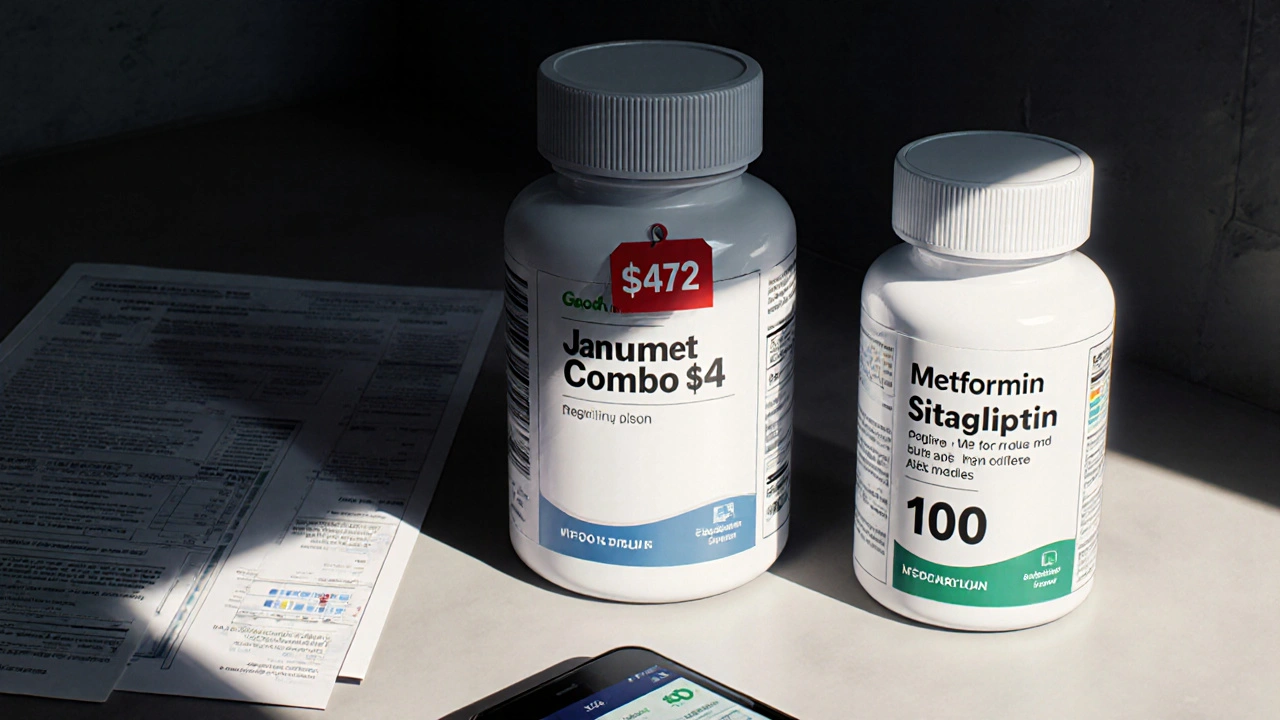
Fixed-dose combinations (FDCs) aren’t new. They’ve been around for decades. But over the last 10 years, drugmakers have used them in a way that’s hard to justify. Take Janumet, a combo of sitagliptin and metformin. In 2016, Medicare paid an average of $472 for a 30-day supply of this branded combo. Meanwhile, generic metformin? At Walmart’s $4 program, it cost $4. The sitagliptin component? Even as a brand, it wasn’t much more than $100 a month. Put them together? You’d expect around $104. But the combo pill? Nearly $472. That’s a 350% markup.

This isn’t rare. A 2018 study in JAMA Internal Medicine looked at 29 branded combo drugs and found Medicare spent $925 million more in 2016 than it would have if patients had taken the same drugs as separate generics. For the 10 most expensive combos, the savings potential was $2.7 billion. That’s not a rounding error. That’s money pulled straight out of the pockets of taxpayers and patients.

Why does this happen? It’s called evergreening. When one drug in a combo loses its patent, the manufacturer pairs it with a new, still-patented drug. Suddenly, the whole combo stays protected. Even if one component is cheap, the combo stays expensive. Nexlizet - a combo of ezetimibe (generic since 2016) and bempedoic acid (new, expensive) - costs over $12 a day in the U.S. That’s $360 a month. Generic ezetimibe alone? About $10. The new drug might cost $150. So why pay $360? Because the combo is still under patent. And insurers often don’t push back.

How Much Can You Actually Save?

Let’s break down real numbers from common combo drugs:

  • Entresto (sacubitril/valsartan): $550/month. Generic valsartan? $15. Sacubitril alone? Around $300. Total if bought separately: ~$315. That’s $235 saved per month.
  • Kazano (alogliptin/metformin): $425/month. Generic metformin? $4-$10. Alogliptin? ~$200. Separate total: ~$210. Savings: $215/month.
  • Januvia + Metformin (separate): $300 + $10 = $310. Janumet (combo): $472. You’re paying $162 extra for the convenience of one pill.

These aren’t outliers. They’re standard. The FDA says generic drugs cost 80-85% less than brand-name versions. But combo pills break that rule. They’re priced like brand-name drugs even when one or both ingredients are generic.

And here’s the kicker: most of these combos are not even the first-line treatment. Metformin, for example, is the gold standard for type 2 diabetes. It’s been used for over 60 years. Yet when paired with a newer drug in a combo, the price skyrockets. Why? Because the system rewards complexity over simplicity.
Patient in pharmacy choosing generics over branded combo pill with glowing savings tag.

Who Pays the Price?

It’s not just Medicare. Private insurers, pharmacy benefit managers (PBMs), and patients all foot the bill. In 2021, combo drugs made up just 2.1% of prescriptions but 8.3% of Medicare Part D spending. That means a tiny fraction of pills were eating up nearly one in 10 dollars spent on drugs.

Many Part D plans now require prior authorization for high-cost combos. That’s a red flag. If your insurer has to approve something before you can get it, they already know it’s overpriced. Some plans even have "carve-outs" - they won’t cover the combo at all unless you prove you’ve tried the separate generics first.

Patients don’t always know this is an option. Doctors don’t always bring it up. And pharmacies? They’re often paid more to dispense the combo pill because it’s branded. It’s not that they’re being dishonest - they’re just following the system. But that system is broken.

Is Convenience Worth the Cost?

Drug companies argue that combos improve adherence. Take a study from the American College of Cardiology: patients on combo pills were 25% more likely to stick with their treatment than those on multiple pills. That’s real. Skipping pills can lead to hospitalizations, which cost far more than any drug.

But here’s the problem: that benefit doesn’t justify a 300% price hike. If you’re paying $500 a month for a combo, you’re already struggling. Many patients cut pills in half or skip doses because they can’t afford it. If you can get the same drugs for $100 a month, you’re far more likely to take them consistently.

And if adherence is the goal, there are better tools. Pill organizers, smartphone reminders, and once-daily generics exist. You don’t need a fancy combo pill to stay on track. You need affordable access.
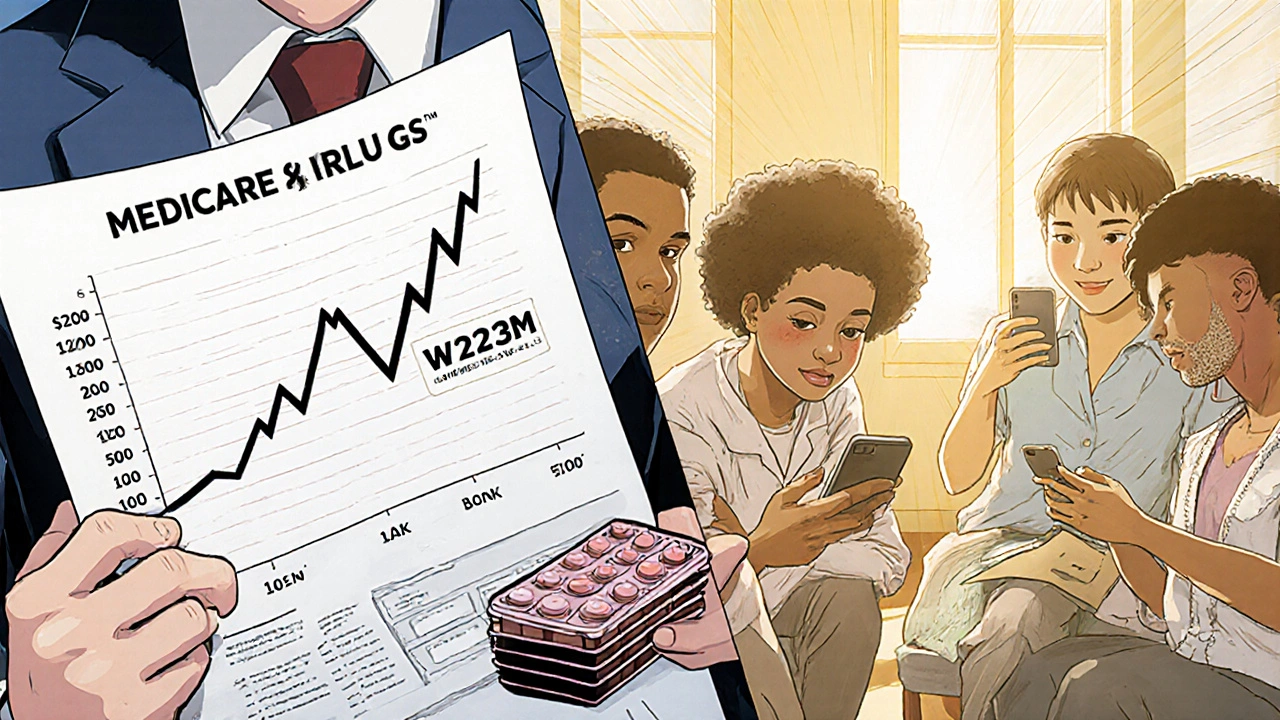
Split scene: Medicare cost graph on left, patients taking generics peacefully on right.

What You Can Do

You’re not powerless. Here’s how to take control:

  1. Ask your doctor: "Are there generic versions of each of these drugs? Can I take them separately?" Don’t assume the combo is the only option.
  2. Check prices: Use GoodRx or your pharmacy’s price checker. Compare the combo to the sum of the individual generics. You’ll often be shocked.
  3. Request a prior authorization exception: If your plan denies the combo, ask for a form to appeal based on cost. Many plans will approve the generics if you show the price difference.
  4. Use mail-order pharmacies: Some offer deeper discounts on generics. A 90-day supply of metformin might cost $15 instead of $10 for 30 days.
  5. Look for manufacturer assistance: Some companies offer co-pay cards. Novartis’s Entresto Access Program cuts the price to $10 for eligible Medicare patients. That’s helpful - but still $90 more than generics.

Don’t feel guilty for asking. This isn’t about being cheap. It’s about getting the same clinical outcome without paying a premium for packaging.

The Bigger Picture

This isn’t just about your prescription. It’s about how the system works. The Inflation Reduction Act of 2022 gave Medicare the power to negotiate drug prices - and combo drugs are high on the list. The Congressional Budget Office predicts Medicare will spend an extra $14.3 billion on these overpriced combos between 2023 and 2032.

Regulators are starting to notice. The FDA is pushing to speed up generic approvals. The Medicare Payment Advisory Commission has called for payment changes that reflect the true cost of combo drugs. But change moves slowly.

Until then, the best tool you have is information. Know the prices. Ask the questions. Push back when it makes sense. You’re not just saving money - you’re pushing back on a system that’s designed to make you pay more for less.

There’s no magic pill. But there is a smarter way to get the same treatment - and it doesn’t cost a fortune.

Author
  1. Elara Kingswell
    Elara Kingswell

    I am a pharmaceutical expert with over 20 years of experience in the industry. I am passionate about bringing awareness and education on the importance of medications and supplements in managing diseases. In my spare time, I love to write and share insights about the latest advancements and trends in pharmaceuticals. My goal is to make complex medical information accessible to everyone.

    • 29 Nov, 2025
Comments (12)
  1. linda wood
    linda wood

    So let me get this straight - we’re paying $500 for a pill that’s just two generics stuck together, and the system calls that ‘innovation’? 🤡 I’ve seen better pricing at a flea market.

    My grandma takes metformin and lisinopril separately, pays $10 a month total, and still outlives half the people on combo drugs. Convenience doesn’t justify robbery.

    • 29 November 2025
  2. Peter Lubem Ause
    Peter Lubem Ause

    This is one of those topics where the math is brutally simple but the system is designed to make you forget it. I’m from Nigeria, and here we don’t even have access to most of these combo pills - but if we did, we’d be horrified. In Lagos, a month’s supply of metformin is about $0.50. Sitagliptin? Maybe $2.50. Put them together? $3. That’s it.

    Here in the U.S., we’re being sold a luxury package for a basic need. It’s not just unethical - it’s a form of economic violence against people with chronic conditions. The fact that Medicare paid $925 million extra on this? That’s not a bug. It’s a feature of a broken system. And the worst part? Doctors aren’t always to blame - they’re just following the default scripts programmed by reps with clipboards and commission checks. We need transparency, not just awareness.

    Pharmacies get paid more to push combos. Insurers don’t fight it because they’re part of the same profit chain. Patients? We’re left holding the bag. But if we all start asking ‘why not separate generics?’ - and show the receipts - change happens. One prescription at a time.

    • 29 November 2025
  3. LINDA PUSPITASARI
    LINDA PUSPITASARI

    OMG YES I JUST DID THIS LAST WEEK 😭

    My doc prescribed Janumet and I was like ‘wait’ so I checked GoodRx - metformin $4, sitagliptin $87 → total $91. Janumet? $468. I asked my pharmacist if I could split them and she said ‘absolutely’ and even gave me a free pill organizer 🙌

    Now I take two pills instead of one and save $377/month. I feel like a financial ninja. Also my blood sugar is better because I’m not skipping doses to afford it anymore. This should be common knowledge. Why isn’t it?

    Also shoutout to my pharmacist - she’s a hero. 🏥💖

    • 29 November 2025
  4. Brandy Johnson
    Brandy Johnson

    The assertion that generic combinations are universally superior is statistically unsound and ideologically driven. The data cited fails to account for pharmacokinetic synergies, bioavailability variances, and adherence metrics that are demonstrably improved in fixed-dose formulations. Furthermore, the conflation of price with value constitutes a fundamental misinterpretation of pharmaceutical economics.

    The U.S. healthcare system, while imperfect, incentivizes innovation through patent protection. To dismantle this framework without evidence of clinical inferiority is to invite stagnation. The real issue is not pricing - it is reimbursement policy and the failure of PBMs to negotiate transparently.

    This narrative is dangerously reductionist.

    • 29 November 2025
  5. Jennifer Wang
    Jennifer Wang

    While the cost differential between combination therapies and their individual generic components is well-documented, it is critical to recognize that therapeutic equivalence does not always equate to clinical equivalence. Variability in absorption, timing of peak plasma concentration, and patient-specific metabolism may impact outcomes when drugs are administered separately.

    Additionally, the FDA’s approval process for fixed-dose combinations requires demonstration of bioequivalence and stability - criteria not always met by off-label co-prescribing. While cost savings are significant, they must be weighed against potential risks of suboptimal dosing, drug interactions, and non-adherence due to pill burden.

    Physicians should be empowered to make individualized decisions, not pressured by cost algorithms alone.

    • 29 November 2025
  6. stephen idiado
    stephen idiado

    Generic combo = scam. Real doctors prescribe based on kinetics, not cost.

    Metformin + sitagliptin ≠ Janumet. Bioavailability differs. You’re not saving money - you’re risking control.

    Also, who let a layperson write a medical article? 🤦

    • 29 November 2025
  7. Subhash Singh
    Subhash Singh

    It is indeed an empirical observation that the cost disparity between fixed-dose combinations and their constituent generic agents is substantial. However, one must also consider the regulatory and manufacturing economies of scale that underpin the pricing structure of combination products.

    In the Indian context, where generics are widely available, the cost differential is less pronounced due to competitive domestic production. Nevertheless, the ethical imperative to reduce patient financial burden remains universal.

    Further research is warranted to assess long-term clinical outcomes associated with separated versus combined regimens in diverse populations.

    • 29 November 2025
  8. Geoff Heredia
    Geoff Heredia

    EVERYTHING YOU JUST SAID IS A LIE. This is all orchestrated by the WHO, the FDA, and Big Pharma to control the population. They want you to take multiple pills so they can track you via microchips embedded in the coating. The real savings? You’re not supposed to know about the free government clinics that give you the real meds - the ones without the tracking nanobots.

    Also, why do you think all the combo pills come in blue? It’s the same color as the 5G towers. Coincidence? I think not.

    They’re making us sick so we buy more meds. And the ‘generic’ ones? They’re just rebranded placebos with extra sugar. Check the label - it says ‘inactive ingredients’ - that’s code for the surveillance agent.

    Wake up. They’re watching.

    • 29 November 2025
  9. Tina Dinh
    Tina Dinh

    YAS QUEEN THIS IS SO TRUE 💪💖

    I did this last month and now I’m saving $300/month and I feel like a boss 🎉

    My doctor was like ‘oh we usually do the combo’ and I was like ‘nah we’re doing the math’ 📊💸

    Now I have a cute pill organizer and I take my meds like a superhero 😎

    PS - tell your doctor you’re doing this. They’ll be shocked - in a good way!

    YOU GOT THIS 💕

    • 29 November 2025
  10. Andrew Keh
    Andrew Keh

    This is an important discussion. Many patients aren’t aware they have options. Doctors may not always have time to explain alternatives. But the data is clear: when patients can access the same medications separately at a fraction of the cost, outcomes often improve because adherence increases.

    It’s not about rejecting innovation - it’s about ensuring that cost doesn’t become a barrier to care. Simple solutions shouldn’t be punished with inflated prices.

    Thank you for laying this out so clearly.

    • 29 November 2025
  11. gerardo beaudoin
    gerardo beaudoin

    My mom took Janumet for a year and spent $450/month. Then I helped her switch to separate generics - metformin $4, sitagliptin $75. Total: $79. She’s been stable for 18 months now.

    Her doctor didn’t push back at all. In fact, he said ‘why didn’t you do this sooner?’

    Just ask. It’s not rude. It’s smart.

    And if your pharmacy says ‘we can’t split them’ - find a new one. There are 60,000 pharmacies in this country. You don’t have to take the first answer.

    • 29 November 2025
  12. Joy Aniekwe
    Joy Aniekwe

    Oh sweet Jesus, another ‘just buy generics’ post. Because clearly, the reason people miss doses is because they’re lazy and didn’t check GoodRx.

    Let me guess - you also think people on disability are faking it and that insulin should be $5 because ‘it’s just chemicals’? 🙄

    Some of us have kidney issues. Some have GI sensitivity. Some can’t take metformin in extended release form. Some need the combo because the individual drugs don’t play nice when taken 12 hours apart.

    But sure, let’s shame people into choosing the cheaper option while ignoring that their body doesn’t care about your spreadsheet.

    Thanks for making patients feel guilty for needing help. Real hero stuff.

    • 29 November 2025
Write a comment