
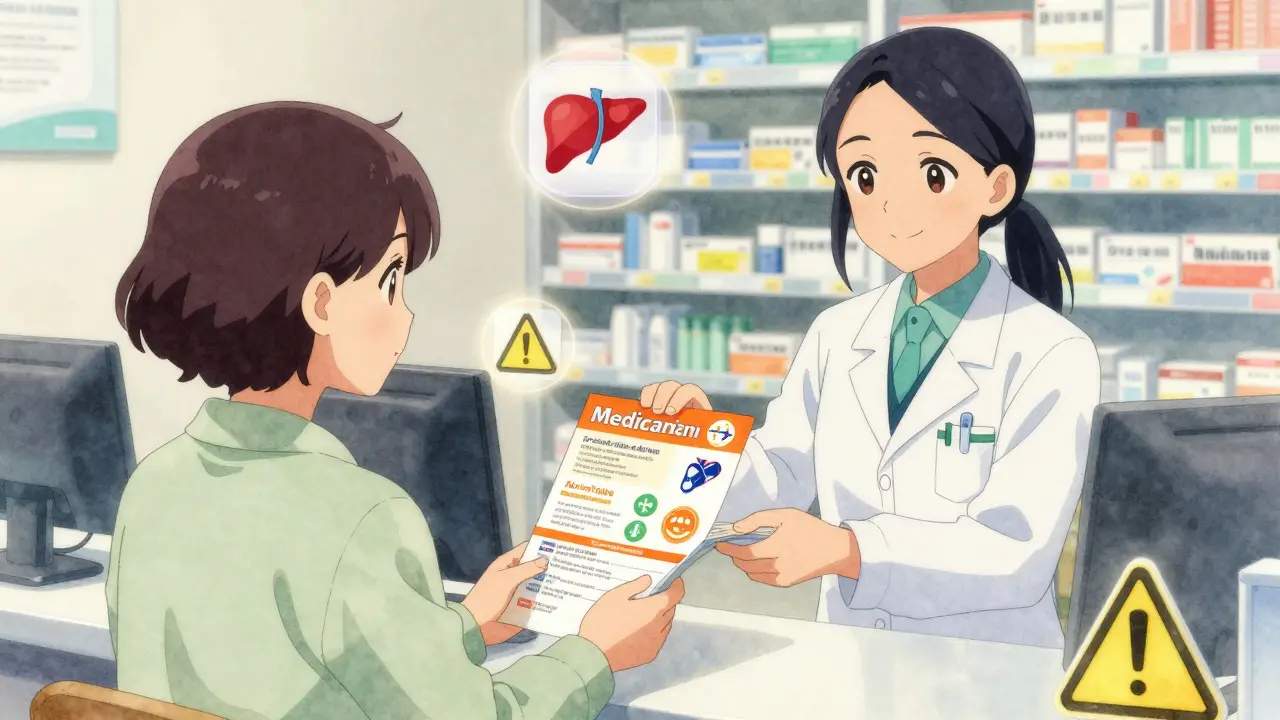
Every time you pick up a prescription for certain high-risk medications, you should get a Medication Guide-a plain-language handout from the FDA that explains serious risks you need to know before taking the drug. But if you’ve ever looked for one and couldn’t find it, you’re not alone. Many people don’t realize these guides exist, or how to get them. The good news? You have rights. And there are clear, simple ways to get the information you need to stay safe.
What Are FDA Medication Guides, and Why Do They Matter?
Medication Guides are official patient information sheets approved by the U.S. Food and Drug Administration. They’re not optional brochures. They’re legally required for about 305 prescription drugs that carry serious risks-like life-threatening side effects, dangerous interactions, or risks if you don’t take them exactly as directed.
These guides aren’t written for doctors. They’re written for you. The FDA requires them to use simple language, no medical jargon. They must include:
- The drug’s name (brand and generic)
- What it’s used for
- The most serious risks (like heart problems, liver damage, or suicidal thoughts)
- Common side effects you might experience
- How to take it correctly
- When to call your doctor or go to the ER
They’re not just paperwork. For drugs like certain antidepressants, blood thinners, or cancer treatments, reading the guide could literally save your life. The FDA only requires them when patient understanding directly affects safety-meaning if you don’t know the risks, you might use the drug dangerously.
How Do You Get a Medication Guide?
The easiest way is through your pharmacy. Every time you fill or refill a prescription for a drug that requires a Medication Guide, the pharmacist is legally required to give you one-unless you say no.
Here’s how it works:
- You bring your prescription to the pharmacy.
- The pharmacist pulls your medication from the shelf.
- They hand you the Medication Guide along with your pills.
This happens every single time-even for refills. It doesn’t matter if you’ve taken the drug for years. The guide must be provided again. That’s because new safety info can come out, or your health situation may have changed.
But what if you didn’t get one? Don’t assume it’s not needed. Ask for it. Say: “I didn’t get the Medication Guide for this drug. Can I have a copy?” Pharmacists are trained to provide them. If they hesitate, remind them it’s required by FDA regulation 21 CFR part 208.
Can You Get It Electronically?
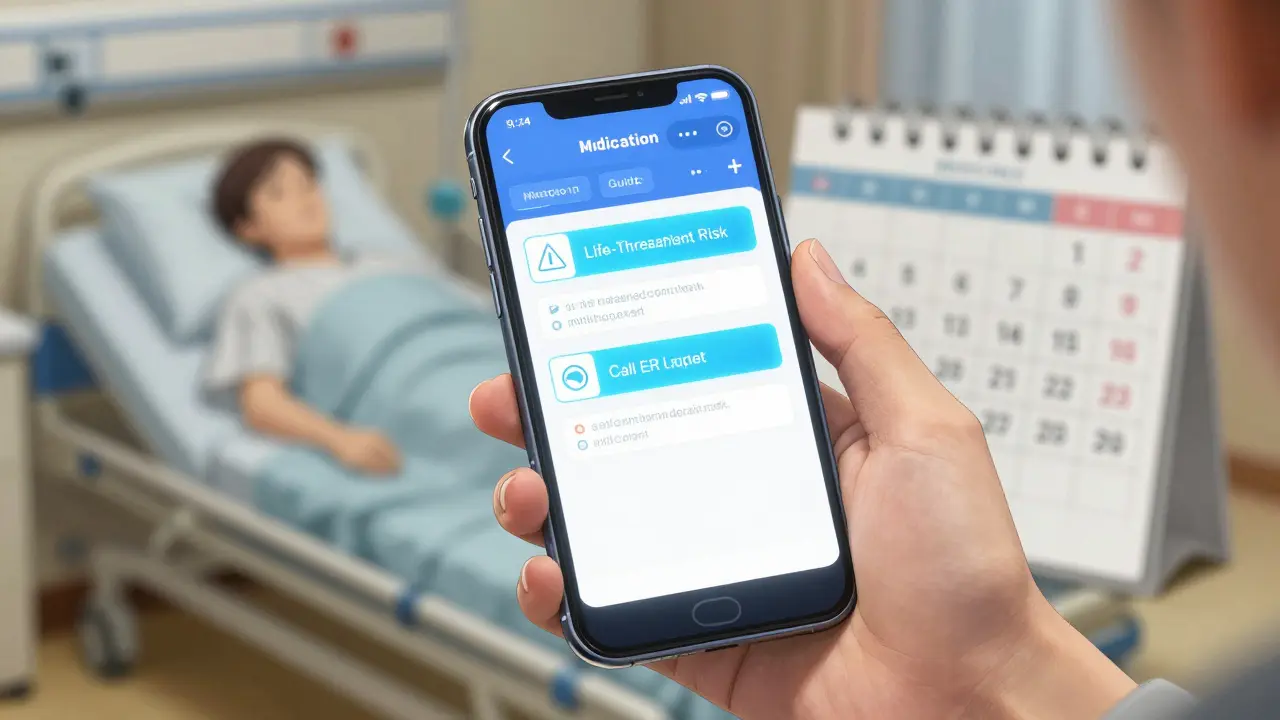
Yes. You have the right to choose. While paper is the default, you can ask for an electronic version instead. The FDA allows this under their Patient Labeling Resources guidelines. Many pharmacies now offer email or text delivery. Some even let you download it from their patient portal.
To get it digitally:
- Ask your pharmacist if they offer electronic delivery.
- Provide your email address or phone number.
- Confirm you want the Medication Guide sent to you instead of printed.
This is especially helpful if you lose paper copies, travel often, or prefer to keep all your health info in one digital folder. Just make sure you can access it when you need it-like before starting a new course of treatment.
What If Your Doctor or Pharmacist Says You Don’t Need It?
Some providers might tell you, “You’ve been on this drug for years-you don’t need the guide.” Or they might say, “It’s not necessary for you.” That’s not their call to make.
The FDA is clear: Patients have the right to request a Medication Guide regardless of what their doctor says. Even if your provider thinks you’re fine, the law says you get the information. If you’re told no, politely insist. Say: “I’d like to review the FDA-approved Medication Guide. Can you please provide it?”
This rule applies even if the drug is part of a Risk Evaluation and Mitigation Strategy (REMS). In those cases, providers must review the guide with you before you start treatment. But if they skip it, you can still ask for a copy afterward.
Where Else Can You Find Medication Guides?
Not every pharmacy gives them out automatically. Some smaller clinics or infusion centers might forget. Or you might need a guide for a drug you took months ago. In those cases, you can get them directly from the FDA.
The FDA maintains a free, public online database of all approved Medication Guides. Go to the FDA’s Medication Guides page and search by drug name. You’ll find PDFs of every guide approved since 2006. You can download, print, or save them anytime.
Another option: visit the manufacturer’s website. Most pharmaceutical companies list Medication Guides under the drug’s product page. Search for “[Drug Name] Medication Guide PDF” in your browser. You’ll usually find it in the “Resources” or “Patient Information” section.
What’s Changing Soon? The New Patient Medication Information (PMI)
The current system has big problems. A 2012 study found most Medication Guides are too long, too complex, and hard to read-even for people with average literacy skills. Some guides are 10 pages long. Others use tiny fonts. Many don’t even highlight the most critical risks.
The FDA is fixing this. In 2023, they proposed a new system called Patient Medication Information (PMI). Instead of messy, inconsistent guides, PMI will be a single, standardized one-page document for every drug that needs one. It will use clear headings, bolded warnings, and plain language approved by experts.
Best of all? All PMIs will be stored in a free, searchable FDA online repository. No more hunting through websites or calling pharmacies. Just search the drug name, and you’ll get the latest, official guide instantly.
Transition is happening slowly. Drugs approved after 2023 will get PMI right away. Older drugs have until 2028 to switch over. But when it’s done, getting your safety info will be faster, simpler, and more reliable than ever.
What If You’re in a Hospital?
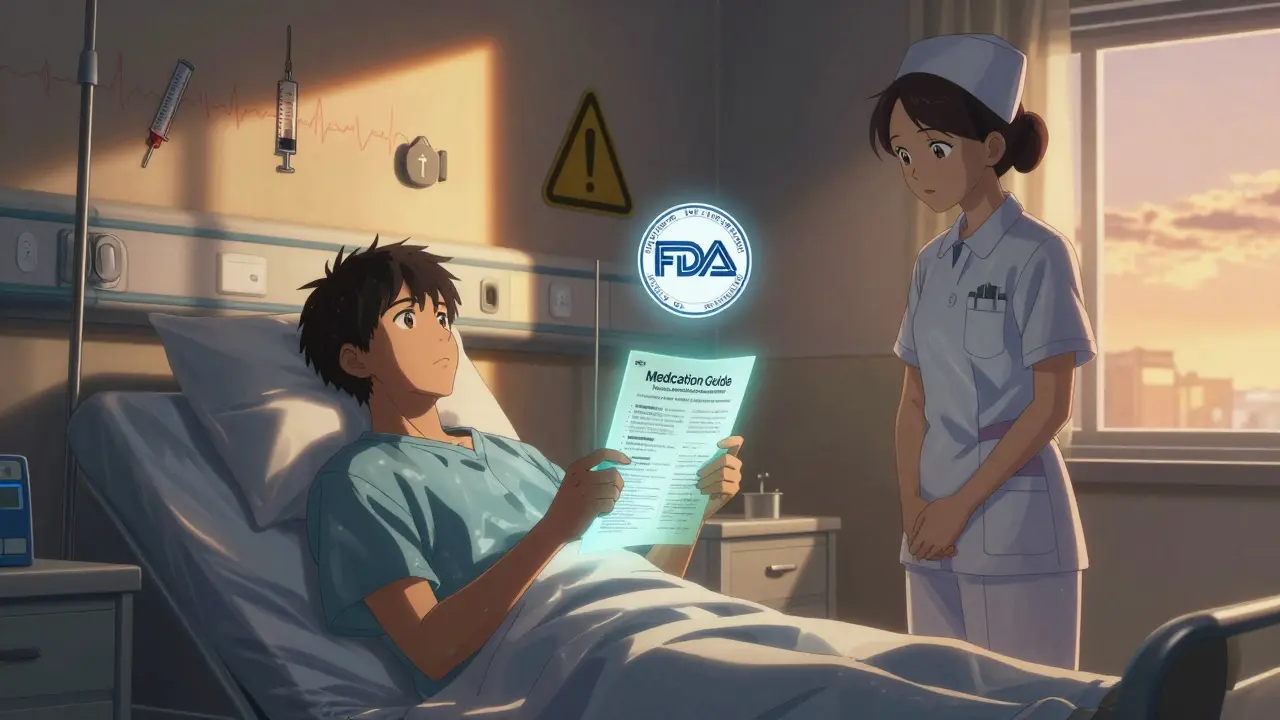
If you’re admitted to the hospital and given a drug intravenously or by a nurse, you won’t automatically get a Medication Guide. That’s because the FDA doesn’t require them when healthcare staff directly administer the drug.
But here’s the catch: you can still ask for one. If you’re being discharged with the same drug, the hospital must give you the guide before you leave. And if you’re taking the drug at home later-like an injection you give yourself-you’re entitled to the guide, no matter where you got it.
What Drugs Require a Medication Guide?
Not all prescriptions need one. The FDA only requires them when:
- The drug has serious side effects that could be life-threatening
- Patients must follow exact dosing rules for it to work
- Not knowing the risks could lead to serious harm
Examples include:
- Antidepressants like fluoxetine (Prozac)
- Blood thinners like warfarin
- Diabetes drugs like pioglitazone
- Immunosuppressants like cyclosporine
- Certain cancer treatments
There’s no public list of all 305+ drugs, but if you’re prescribed something new, and you’re not given a guide, ask. It’s better to be safe than sorry.
What Should You Do With the Guide?
Don’t toss it. Keep it with your other health records. Read it before you take the first dose. Highlight the warning sections. Show it to your family or caregiver. If you notice new side effects, refer back to it. If you’re unsure about something, call your pharmacist. They’re trained to explain these guides.
And if you ever feel like you’re not getting the information you need-speak up. Your safety matters more than convenience. You have the right to understand what you’re putting in your body.


I am a pharmaceutical expert with over 20 years of experience in the industry. I am passionate about bringing awareness and education on the importance of medications and supplements in managing diseases. In my spare time, I love to write and share insights about the latest advancements and trends in pharmaceuticals. My goal is to make complex medical information accessible to everyone.