
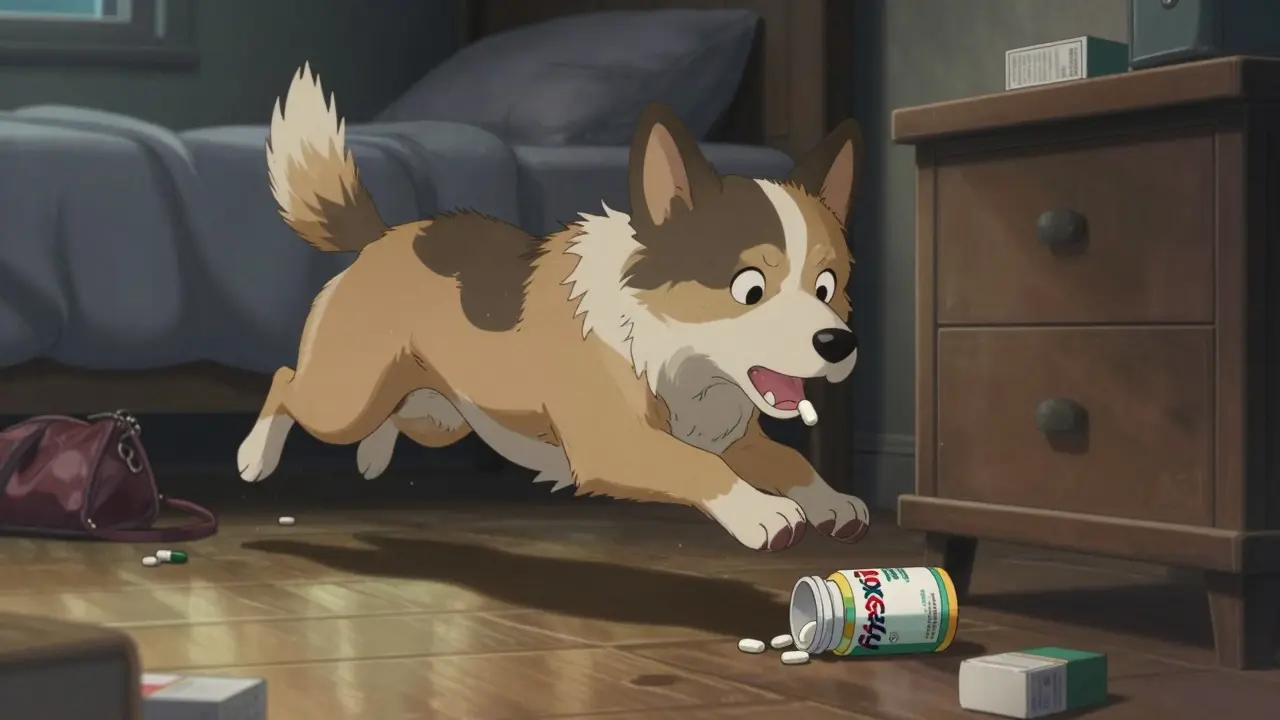
Every year, over 150,000 pets in the U.S. end up in emergency vet clinics because they swallowed something they shouldn’t have-and most of the time, it’s not chocolate or grapes. It’s human medication. A dog snatches a pill off the nightstand. A cat licks residue off a counter. A curious puppy digs through a purse. What seems like a small accident can turn deadly in minutes. The good news? You can spot the signs early. The better news? If you act fast, your pet has a 93% chance of survival.
What Happens When Pets Ingest Human Medications?
Pets don’t process drugs the same way people do. A dose that’s safe for you can be lethal for them. Dogs and cats have different liver enzymes, different body weights, and different sensitivities. For example, a single 37.5mg extended-release capsule of Effexor can kill a cat. A single ibuprofen tablet can cause stomach ulcers and kidney failure in a dog. And acetaminophen? It’s a silent killer in cats-even a tiny piece of a pill can turn their blood brown and stop their oxygen from circulating.The most common culprits? NSAIDs like ibuprofen and naproxen, antidepressants like Prozac and Lexapro, ADHD meds like Adderall, and sleep aids like Ambien. These aren’t rare meds-they’re in nearly every household. And pets? They’re drawn to them. The sweet coatings on pills, the smell of the bottle, the texture-they’re all irresistible.
Signs of Overdose: What to Look For
The symptoms vary wildly depending on the drug. But there are clear patterns. You don’t need to know the exact pill your pet swallowed. You need to know what your pet is doing-and how fast it’s changing.For antidepressants (SSRIs like Prozac, SNRIs like Effexor):
- High fever (103°F to 106°F)
- Restlessness, pacing, or vocalizing
- Tremors or muscle rigidity
- Dilated pupils
- Seizures (if untreated)
One study found that 78% of dogs with untreated SSRI overdose developed seizures. Cats are even more vulnerable to SNRIs-just one capsule can send their liver enzymes soaring past 1,200 U/L (normal is under 100). If your cat suddenly starts meowing nonstop, bumping into walls, or acting confused, it’s not just being dramatic. It’s in danger.
For ADHD meds (Adderall, Concerta, Ritalin):
- Heart rate over 220 beats per minute (normal dog range: 60-140)
- Body temperature above 105°F
- Severe shaking or tremors
- Dilated pupils
- Agitation or aggression
These meds hit fast. Symptoms can start in as little as 15 minutes. Dogs may act like they’re on a sugar rush-running in circles, panting hard, unable to sit still. But this isn’t excitement. It’s a toxic overload. Their hearts are racing at double the normal rate. Their bodies are overheating. If you see this, don’t wait. Go to the vet now.
For NSAIDs (ibuprofen, naproxen):
- Vomiting (92% of cases)
- Black, tarry stools (sign of internal bleeding)
- Lethargy
- Loss of appetite
- Increased thirst and urination (early kidney stress)
NSAIDs are the #1 cause of pet poisonings. A single 200mg ibuprofen tablet can be toxic to a 20-pound dog. Symptoms start in 1-6 hours. But the real danger? The damage builds over days. By the time your pet is vomiting and refusing food, their kidneys may already be failing. BUN levels above 120 mg/dL (normal: 10-25) mean it’s too late for simple treatment.
For acetaminophen (Tylenol):
- Cats: Brown or blue-tinged gums, trouble breathing, swelling in face or paws, lethargy
- Dogs: Vomiting, dark urine, jaundice (yellow eyes/skin), weakness
This one is terrifying because it’s silent. Cats can’t break down acetaminophen at all. Just 10mg per kg of body weight is deadly. A single 325mg tablet can kill a 10-pound cat. The gums turn brown because the blood can’t carry oxygen. If you notice that color-brown, not pink-you have less than an hour to get help.
For benzodiazepines (Xanax, Ambien):
- Dogs: Agitation, hyperactivity, tremors (paradoxical reaction)
- Cats: Liver failure, vomiting, jaundice, extreme lethargy
You’d think these drugs would calm your pet. But in dogs, they often do the opposite. In fact, 52% of dogs given these meds show agitation instead of sedation. Cats? Their livers can’t handle them. One case from I-20 Animal Hospital showed a cat with ALT levels over 1,200 U/L after eating just one Ambien. Normal? Under 100.
What to Do Immediately
Time is everything. If you suspect your pet swallowed something, follow this 5-minute checklist:- Look for evidence. Are there pill fragments? A broken bottle? Empty packaging? Write down what you see-even the name on the bottle helps.
- Check their temperature. Use a rectal thermometer. If it’s above 103.5°F, it’s likely a stimulant or antidepressant overdose.
- Check their gums. Press gently. Do they turn white or brown? Brown means acetaminophen. Pale or blue means oxygen is failing.
- Watch their pupils. Dilated pupils? That’s a red flag for ADHD meds or benzodiazepines.
- Time the symptoms. When did they start? If it’s been less than 2 hours, you might still have time to prevent absorption.
Don’t wait to see if they get better. Don’t try home remedies. Don’t induce vomiting unless a vet tells you to. Some drugs cause more damage if vomited back up.
Call the Pet Poison Helpline at 1-800-213-6680 or the ASPCA Poison Control app. They’re staffed 24/7. Average response time? Under a minute. They’ll tell you if it’s an emergency, what to do next, and where to go.

Why Some Pets Are at Higher Risk
Dogs make up 85% of cases. They’re curious, fast, and love snacks. Cats? They’re smaller, more sensitive, and harder to monitor. But their risks are different.Cats lack a key liver enzyme (glucuronyl transferase) that breaks down acetaminophen and some NSAIDs. That’s why a tiny dose kills them. Dogs, on the other hand, have trouble metabolizing NSAIDs-so even a small dose can wreck their kidneys.
Extended-release pills are the new threat. Effexor XR, Adderall XR, and other slow-release versions can poison a pet for 12-24 hours instead of 2-4. That means symptoms come on slower-and people miss the warning signs.
How to Prevent It
Prevention isn’t about being perfect. It’s about being smart.- Store all meds in closed cabinets-not on counters, nightstands, or in purses.
- Use child-proof containers even if you don’t have kids. Pets don’t care.
- Never give human meds to your pet without a vet’s order. Even ‘natural’ supplements can be deadly.
- Keep pill bottles out of reach. Dogs can open some child-proof caps. Cats can climb.
- Know the signs. Print this checklist. Keep it on your fridge.
Most owners don’t realize how fast things go wrong. A 2023 PetMD survey found 68% of people misread early symptoms-thinking tremors were shivering, or agitation was just excitement. That delay cost lives.
What Happens at the Vet
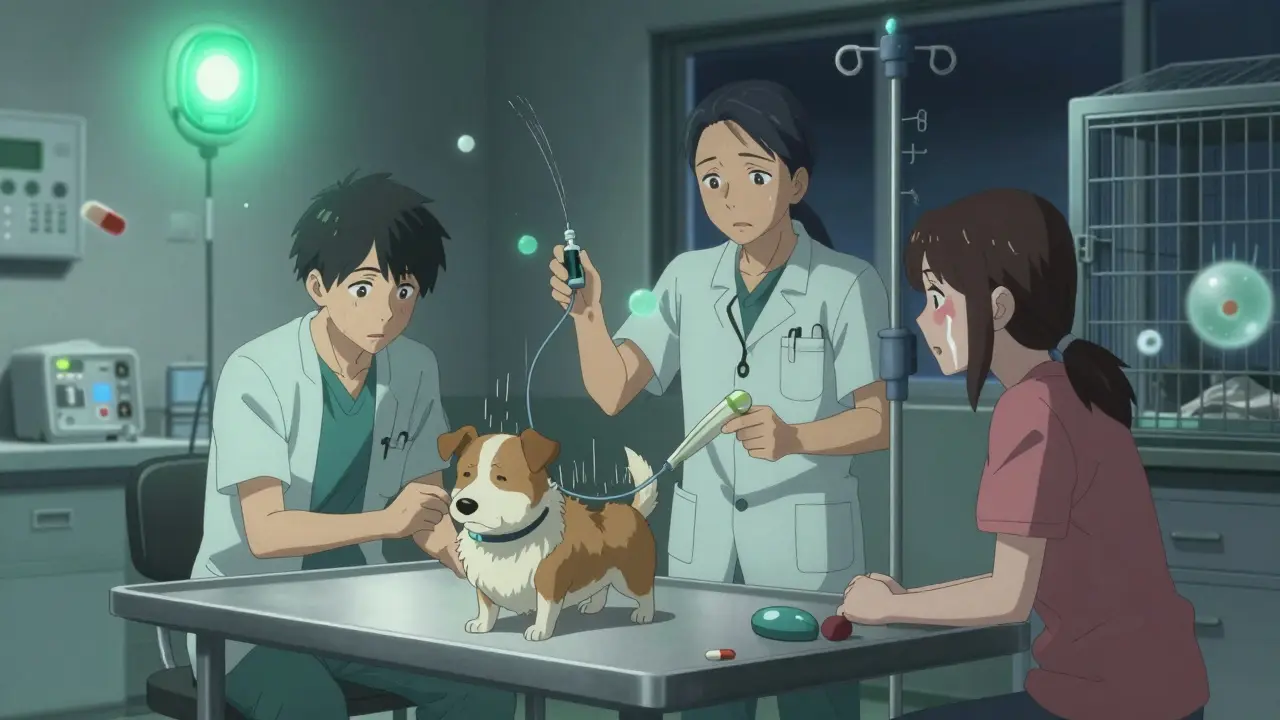
If you get there fast, the vet will likely:- Induce vomiting (if ingestion was under 2 hours)
- Give activated charcoal to absorb the toxin
- Start IV fluids to flush the kidneys
- Monitor heart rate, temperature, and bloodwork
- Use specific antidotes if available (like N-acetylcysteine for acetaminophen)
Success rates jump from 4% to 96% when treatment starts within 2 hours. That’s not luck. That’s speed.
Final Thought: You’re Their Best Defense
Pets don’t understand what pills are. They don’t know the difference between your medicine and their treat. You’re the only one who can protect them. Knowing the signs isn’t just helpful-it’s life-saving. A few minutes of learning could mean the difference between a vet bill and a funeral.Keep this information handy. Share it with family. Teach your kids. Because the next time a pill falls on the floor, you’ll know exactly what to do.
Can I give my pet human medication if it’s for the same condition?
No. Human medications are dosed for adult humans, not pets. Even if the drug is the same (like ibuprofen or acetaminophen), the dose, metabolism, and side effects are completely different. A pill that helps your headache can kill your dog. Always consult a veterinarian before giving any medication to your pet.
How quickly do symptoms appear after a pet ingests human medication?
It depends on the drug. Stimulants like Adderall can cause symptoms in as little as 15-30 minutes. Antidepressants usually show signs within 1-12 hours. NSAIDs and acetaminophen may take 6-72 hours to cause visible organ damage. But if you suspect ingestion, don’t wait for symptoms. Act immediately.
What should I do if my pet ate a pill but seems fine?
Call a poison control hotline immediately-even if your pet seems normal. Many toxins don’t show symptoms right away, but damage is already happening inside their body. The Pet Poison Helpline (1-800-213-6680) and ASPCA Poison Control are available 24/7. They’ll tell you if it’s an emergency and what steps to take.
Are some pets more at risk than others?
Yes. Dogs are more likely to ingest pills because they’re curious and fast eaters. Cats are more vulnerable to toxicity because their livers can’t process many human drugs. Older pets, pets with existing health issues, and small breeds are at higher risk. But any pet can be affected-no matter the size or breed.
Is there an app that can help identify pet poisoning symptoms?
Yes. The ASPCA Animal Poison Control app includes a symptom checker and instant access to poison control experts. It’s free and works offline. The American College of Veterinary Emergency and Critical Care also launched an AI-powered recognition tool in 2023 that helps identify medication toxicity with 89% accuracy based on symptoms and drug type.
What’s the most dangerous human medication for pets?
NSAIDs like ibuprofen are the #1 cause of pet poisonings, but acetaminophen is the deadliest for cats. A single 325mg tablet can be fatal. Effexor (venlafaxine) is extremely dangerous for both dogs and cats, especially in extended-release form. Adderall and other ADHD medications can cause fatal heart rates in dogs within minutes. No single drug is ‘the worst’-but all are dangerous if ingested.


Hi, I'm Caden Lockhart, a pharmaceutical expert with years of experience in the industry. My passion lies in researching and developing new medications, as well as educating others about their proper use and potential side effects. I enjoy writing articles on various diseases, health supplements, and the latest treatment options available. In my free time, I love going on hikes, perusing scientific journals, and capturing the world through my lens. Through my work, I strive to make a positive impact on patients' lives and contribute to the advancement of medical science.