
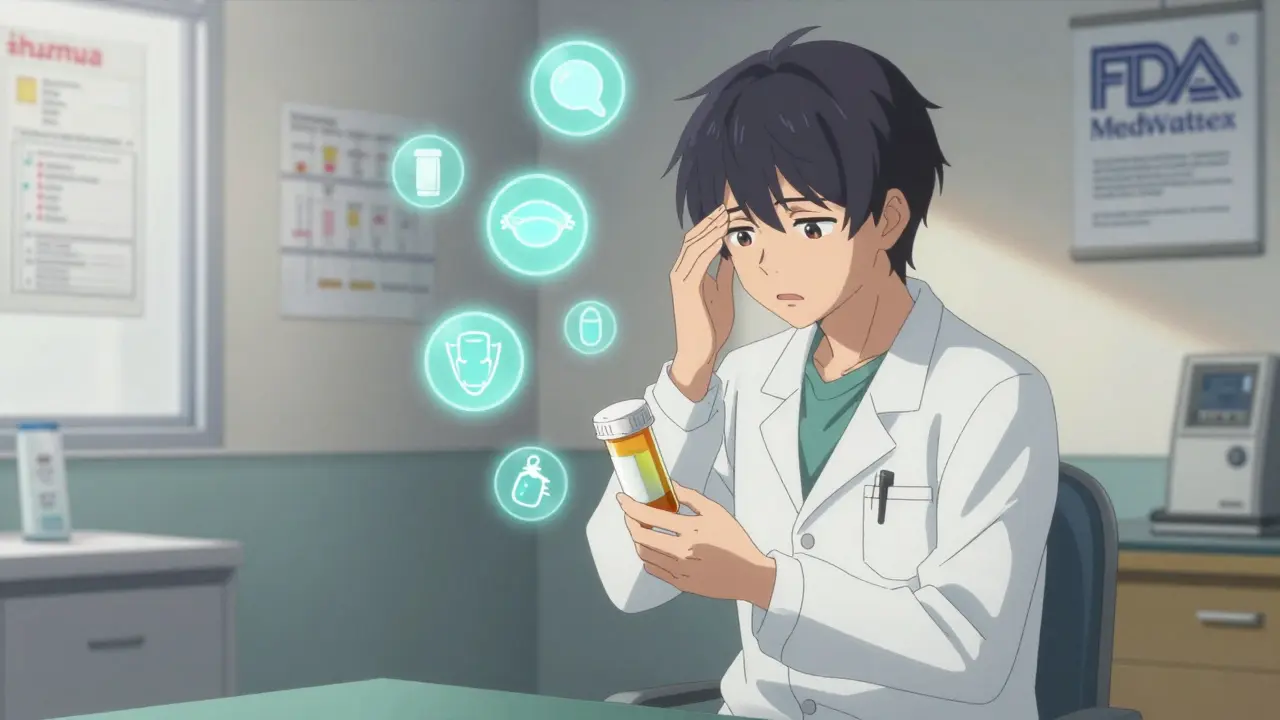
When you start a new medication, you’re told what to expect - nausea, dizziness, dry mouth. But what happens when the side effect isn’t listed? Or when it’s worse than anyone predicted? Too many people stay silent, thinking it’s just part of the deal. That’s dangerous. Speaking up about medication side effects isn’t just helpful - it’s a vital part of keeping drugs safe for everyone.
Why Your Voice Matters
Clinical trials test drugs on thousands of people. But real life? Millions take the same pill. And not everyone reacts the same way. That’s why the FDA gets over 2 million reports of side effects every year. Most come from doctors and pharmacists. But a growing number come from patients like you. A 2022 survey found that 68% of patients didn’t even know they could report side effects directly to the FDA. That’s a huge gap. If you don’t speak up, the system doesn’t see the problem. And if no one sees it, the drug stays on the market with hidden risks. Take the case of Paxlovid. Early on, patients started reporting a strange metallic taste - so common, many thought it was just a quirk. But enough reports came in through VAERS and MedWatch that the FDA added it to the official label. That’s the power of one person speaking up.What Counts as a Side Effect Worth Reporting
You don’t need to be a doctor to know something’s wrong. If it’s new, unexpected, or worse than you were told, it’s worth reporting. The FDA defines a serious side effect as one that:- Causes hospitalization
- Is life-threatening
- Leads to permanent disability
- Results in birth defects
- Requires medical intervention to prevent lasting harm
How to Report Side Effects - Step by Step
You have two main paths: talk to your provider first, then report to the FDA. Here’s how to do both.- Call or visit your doctor or pharmacist. Tell them exactly what you’re feeling - when it started, how bad it is, and whether it’s getting worse. Don’t say "I think it’s the medicine." Say: "I started this pill on Monday, and since then I’ve had constant headaches and blurred vision. I’m worried it’s related."
- Ask if they’ll report it. Many providers don’t report unless prompted. Don’t assume they will. Say: "Can you file a report with the FDA? I’d like to make sure this gets documented."
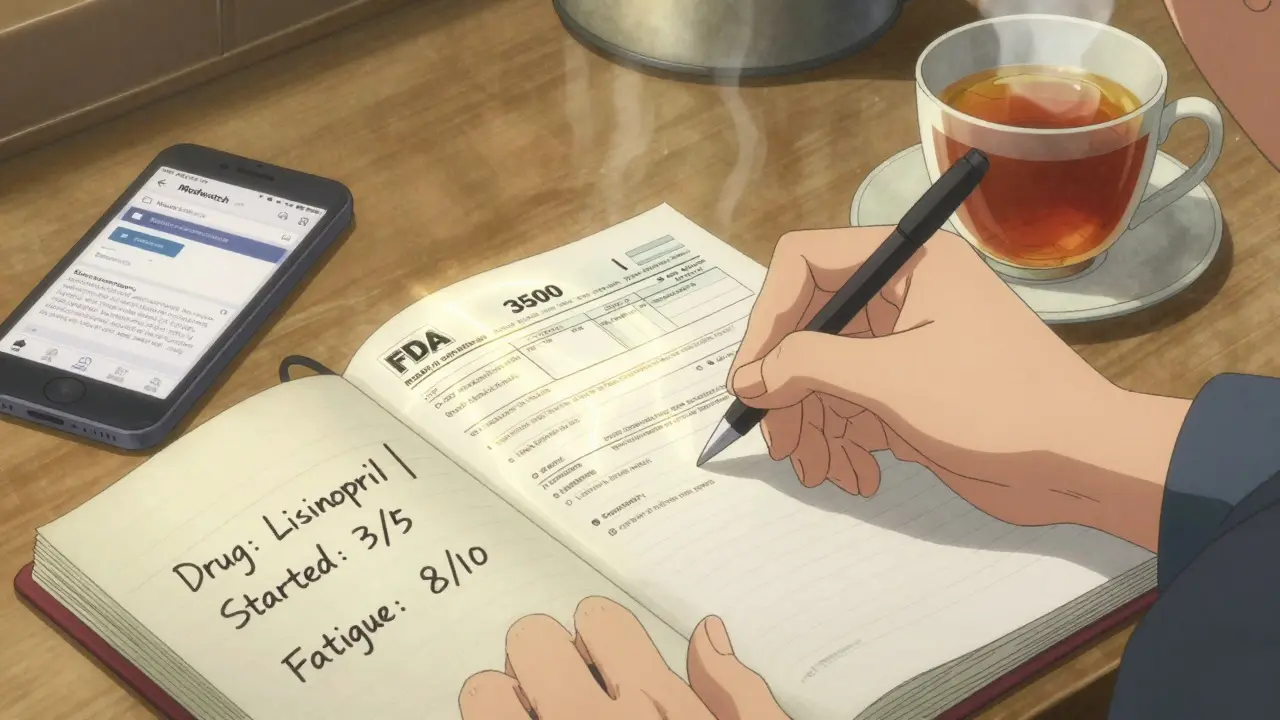
- Report it yourself. If your provider doesn’t, or if you’re not sure, you can file directly with the FDA. Go to fda.gov/medwatch and download Form 3500. Or call 1-800-FDA-1088. The form takes 10-15 minutes. You’ll need:
- The name of the medication (brand and generic)
- When you started and stopped taking it
- A clear description of the side effect
- Your contact info (they won’t share it)
- Keep a copy. Save the form, your call log, or the confirmation number. You might need it later.
And yes - you can report even if you’re not sure the drug caused it. The FDA says: "If you’re uncertain, report it anyway."
What Happens After You Report
Your report goes into a database with over 2 million others. The FDA doesn’t respond to each one individually. But they scan for patterns. If 50 people report the same rare reaction to the same drug, an alert goes out. That’s how the FDA pulls drugs off the market or adds black box warnings. In 2022, a nurse reported a rare blood clot condition after the Johnson & Johnson COVID vaccine. Within 15 days, the FDA issued a safety alert. That report saved lives. You won’t get a thank-you note. But your report might be the one that helps someone else avoid the same problem.Why People Don’t Speak Up - And How to Overcome It
A 2023 University of Michigan study found three big reasons people stay quiet:- "It’s probably normal." - 65% of patients think side effects are just part of taking medicine. But if everyone thinks that, nothing changes.
- "My doctor won’t listen." - 58% fear being dismissed. If you feel unheard, ask for a second opinion or go to a different provider. Your health isn’t up for debate.
- "I don’t know how." - 72% are unaware of reporting options. Now you do.
Here’s the truth: your report doesn’t need to be perfect. You don’t need lab results or medical jargon. Just say what happened. Date. Drug. Symptom. That’s enough to start a signal.

What Providers Should Do - And What You Can Ask For
Doctors and pharmacists are supposed to report side effects. But studies show only 1-10% of serious events are reported by professionals. Why? Time. Lack of training. Uncertainty. You can help change that. Ask your provider:- "Do you report side effects to the FDA?"
- "Can you show me where to report if I need to?"
- "Is this side effect something you’ve seen before?"
Hospitals like Mayo Clinic and Johns Hopkins boosted reporting by over 50% after adding automated alerts in their electronic records. That’s the future. But until then, you have to be the one to push.
What You Can Do Today
Don’t wait for a crisis. If you’re on medication, even if you feel fine:- Check the label. Since 2022, all prescription bottles must list 1-800-FDA-1088. That’s your direct line to the FDA.
- Keep a simple log: Drug name, date started, side effects, how bad they are (1-10 scale).
- Share this info with your pharmacist. They’re often the first to spot patterns.
- If you’re helping an older relative or someone with limited mobility, help them call or fill out the form. It’s a simple act of care.
Medication safety isn’t just the job of regulators or doctors. It’s a shared responsibility. Every report you file adds to the collective knowledge. It helps future patients. It helps your neighbor. It helps your child.
You don’t need to be an expert. You just need to speak up.
Can I report a side effect if I’m not sure it’s from the medication?
Yes. The FDA encourages reports even when you’re unsure. You don’t need proof - just suspicion. If you noticed a new symptom after starting a drug, report it. The system looks for patterns across thousands of reports, not individual certainty.
Do I need to give my real name when reporting?
No. You can report anonymously. The FDA collects your contact info only in case they need to follow up for more details. Your identity is protected by law and will not be shared with the drug manufacturer or used for any other purpose.
What if my doctor says the side effect is "normal" and won’t report it?
You can still report it yourself. Many patients report side effects directly to the FDA even when their provider doesn’t. If your doctor dismisses your concern, consider asking for a second opinion. Your symptoms matter, and you have the right to be heard.
How long does it take for the FDA to act on a report?
There’s no set timeline. The FDA reviews reports in batches, looking for clusters of similar events. One report won’t trigger action - but 50 or 100 might. That’s why consistent reporting matters. It can take months or years for a pattern to emerge, but every report adds to the evidence.
Are there other ways to report side effects besides the FDA?
Yes. For vaccines, use VAERS at vaers.hhs.gov. Drug manufacturers are also required to collect and report side effects - you can call the number on the medication’s packaging. But the FDA’s MedWatch system is the central hub that ties all reports together for national monitoring.


I am a pharmaceutical expert with over 20 years of experience in the industry. I am passionate about bringing awareness and education on the importance of medications and supplements in managing diseases. In my spare time, I love to write and share insights about the latest advancements and trends in pharmaceuticals. My goal is to make complex medical information accessible to everyone.