

| Subtype | Primary Symptom | Bowel Pattern | Management Focus |
|---|---|---|---|
| IBS-C | Constipation | Hard/Lumpy stools | Fiber and laxatives |
| IBS-D | Diarrhea | Loose/Watery stools | Anti-diarrheals and fluids |
| IBS-M | Alternating | Both extremes | Balanced, multimodal approach |
The Frustration of the "Bowel Seesaw"
Dealing with IBS-M (the clinical shorthand for mixed IBS) is like trying to balance a seesaw while someone is jumping on both ends. According to the Rome IV criteria, this diagnosis is given when you have recurring abdominal pain and at least 25% of your bowel movements shift between Bristol Stool Scale types 1-2 (hard lumps) and types 6-7 (liquid). Unlike Crohn's disease or ulcerative colitis, there is no visible inflammation or structural damage to your intestines. Instead, the problem lies in how your brain and gut communicate. This is often called visceral hypersensitivity-your gut is essentially "too loud," reacting strongly to things that shouldn't cause pain. Combined with dysbiosis, where the balance of bacteria in your gut is off, you end up with a digestive system that can't decide if it wants to speed up or slow down.Mastering the Low FODMAP Diet
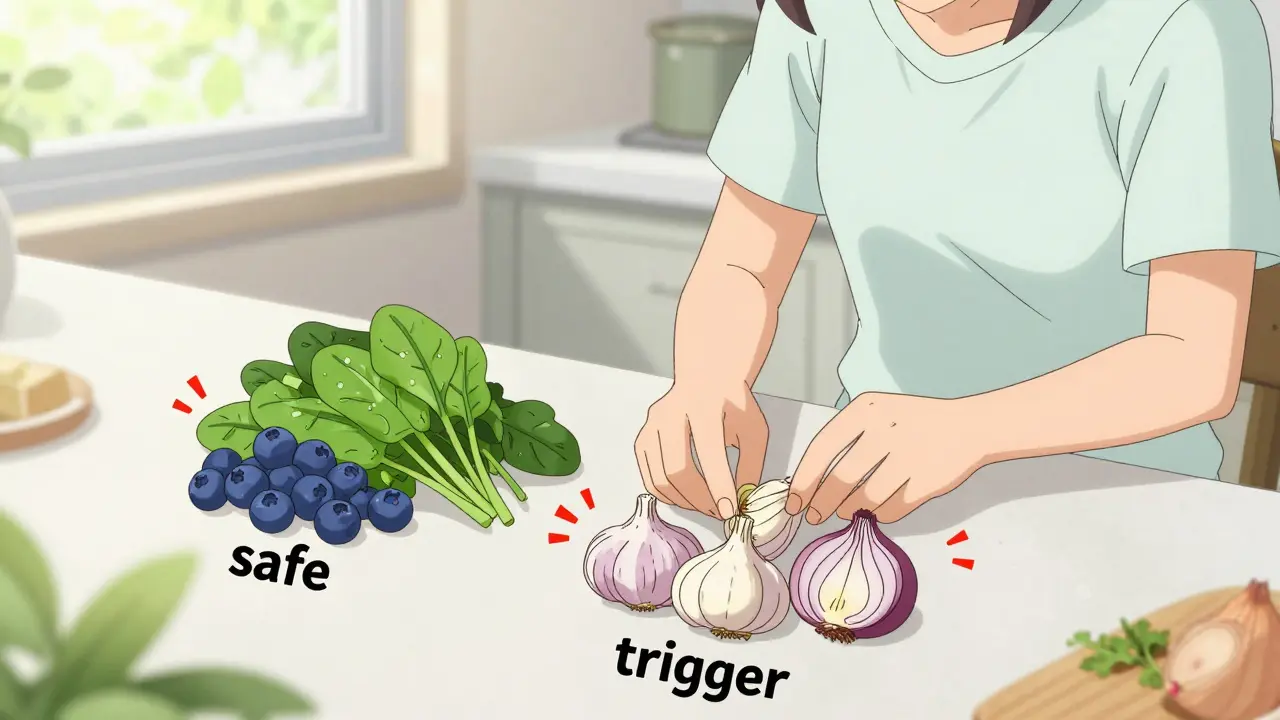
One of the most effective tools for stabilizing the gut is the low FODMAP diet, which is a dietary approach that restricts fermentable carbohydrates that can cause gas, bloating, and unpredictable bowel movements. FODMAPs are short-chain carbohydrates that aren't absorbed well in the small intestine; instead, they pull water into the gut (triggering diarrhea) and get fermented by bacteria (triggering gas and pain). For those with mixed symptoms, this diet isn't a forever-fix, but a diagnostic tool. You start with a strict elimination phase for 2-6 weeks to calm the system. Then, you systematically reintroduce foods to find your specific triggers. For example, you might find that garlic triggers a diarrhea flare, while high-fructose corn syrup leads to bloating and constipation. While about 70% of IBS patients see improvement with dietary changes, the success rate for IBS-M is slightly lower (around 50-60%) than for those with purely diarrhea-predominant symptoms. This is why a registered dietitian is crucial; blindly cutting out food groups can lead to nutritional deficiencies and "dietary fatigue," where you simply give up because the restrictions are too intense.Medication Strategy: The Balancing Act
When it comes to pills, the biggest mistake is treating the current symptom without considering the next one. If you take a heavy-duty anti-diarrheal like loperamide during a watery phase, you might swing violently into a constipation phase. Doctors often recommend a "toolbox" approach. This means having two different sets of tools ready, but using them with precision:- For the "Slow" Days: Gentle osmotic laxatives like polyethylene glycol can help move things along without causing the sudden urgency associated with stimulant laxatives.
- For the "Fast" Days: Low-dose anti-diarrheals used only during peak flares.
- For the Pain: Antispasmodics such as dicyclomine help relax the muscles in the gut, reducing that cramping feeling regardless of stool consistency.
The Mind-Gut Connection and Stress
Your gut is essentially your second brain. It's lined with millions of neurons that communicate directly with your head. For about 68% of people with IBS-M, stress is the primary trigger. When you're anxious, your body releases cortisol and adrenaline, which can speed up gut motility or cause spasms, sending you straight into a diarrhea phase. This is why Cognitive Behavioral Therapy (CBT) is highly recommended. It isn't about "fixing a mental problem" but about retraining how your brain processes the sensations coming from your gut. Studies have shown that CBT can reduce symptom severity by 40-50%, which is far more effective than just reading a pamphlet on gut health. Simple stress reduction-like mindful breathing or consistent sleep-can actually stop a flare before it starts by keeping the nervous system out of "fight or flight" mode.Practical Tracking: Stop Guessing, Start Knowing
Because the symptoms of IBS-M change so rapidly, relying on memory is a recipe for failure. You need a structured way to track your triggers. A food and symptom diary is essential. Instead of writing "I feel bad today," use specific metrics:- The Bristol Stool Scale: Assign a number (1-7) to every bowel movement. This tells you exactly where you are on the seesaw.
- Pain Scale: Rate your abdominal pain from 0-10.
- Trigger Mapping: Note the food, stress level, and time of day.

Common Pitfalls to Avoid
Many people fall into the trap of over-correcting. If you've been constipated for three days, the instinct is to take a strong laxative. However, in IBS-M, this can trigger a "rebound effect," leading to several days of urgent diarrhea. The goal is moderation, not total elimination of a symptom. Another common mistake is relying solely on over-the-counter (OTC) remedies. While peppermint oil capsules can help with bloating and pain, they don't address the underlying motility issues. If you're spending more than a few hours a week managing your gut, it's time to move from OTC attempts to a clinical management plan involving a gastroenterologist.Can IBS-Mixed ever be fully cured?
Currently, there is no permanent cure for IBS-M because it is a functional disorder involving the interaction between the nervous system and the gut. However, it can be managed so effectively that it no longer interferes with your daily life. Most people achieve this through a combination of a low FODMAP diet, stress management, and targeted medication.
Is it safe to take laxatives and anti-diarrheals in the same week?
It is common for IBS-M patients to use both, but it must be done carefully. The risk is creating a "cycle" where one medication triggers the opposite symptom. It is best to use these under a doctor's guidance, focusing on the lowest effective dose and using a symptom diary to time the transitions correctly.
Do probiotics help with alternating symptoms?
Probiotics can help address dysbiosis (imbalance of gut bacteria), but they aren't a one-size-fits-all solution. Some strains might help with constipation but worsen bloating. It is usually recommended to try one strain at a time for at least two weeks to see how your specific gut reacts before adding another.
How long does it take to see improvement with the low FODMAP diet?
Many people report a significant reduction in symptoms within 4 to 6 weeks of strict adherence to the elimination phase. However, the most important part is the reintroduction phase, which takes another 8-12 weeks to identify which specific foods are the culprits.
What is the difference between IBS-M and IBD?
IBS-M is a functional disorder, meaning the gut looks normal on a scan but doesn't work correctly. Inflammatory Bowel Disease (IBD), such as Crohn's or Ulcerative Colitis, involves actual inflammation, ulcers, and structural damage to the intestinal wall, which can be seen via colonoscopy or biopsy.
Hi, I'm Caden Lockhart, a pharmaceutical expert with years of experience in the industry. My passion lies in researching and developing new medications, as well as educating others about their proper use and potential side effects. I enjoy writing articles on various diseases, health supplements, and the latest treatment options available. In my free time, I love going on hikes, perusing scientific journals, and capturing the world through my lens. Through my work, I strive to make a positive impact on patients' lives and contribute to the advancement of medical science.