
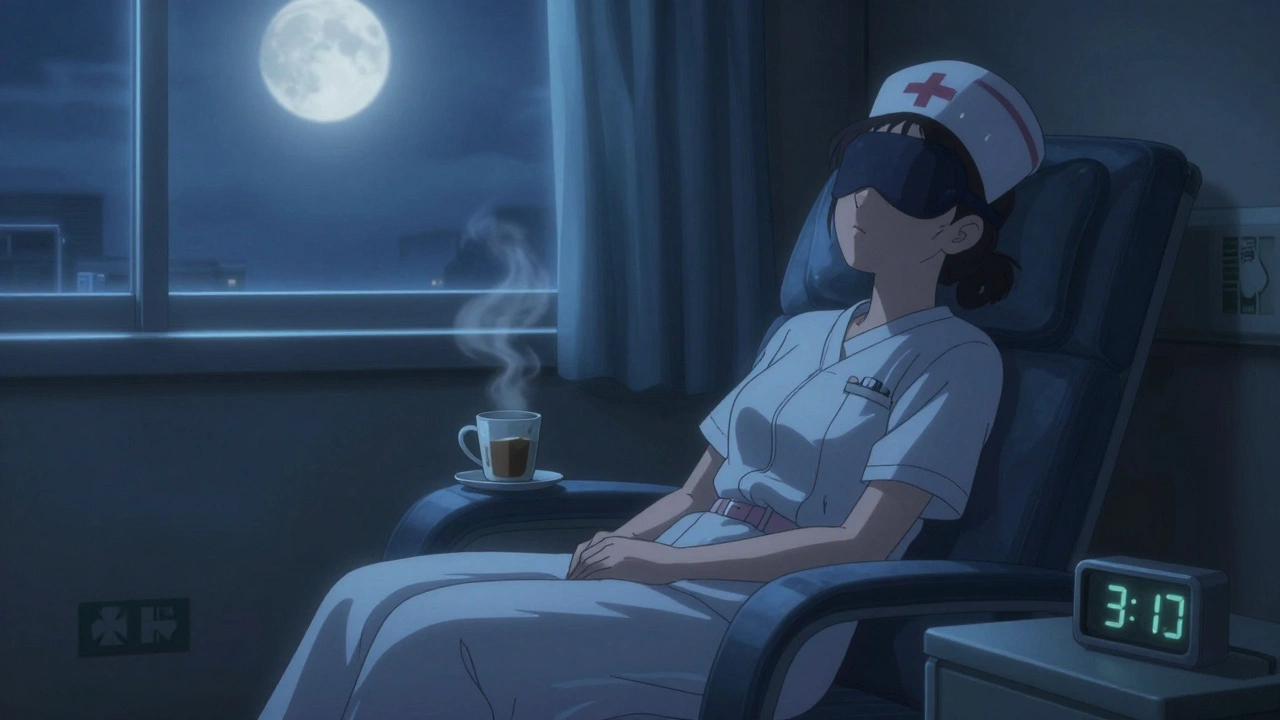
Working the night shift isn’t just inconvenient-it’s physically taxing. Your body is wired to sleep between 2 a.m. and 4 a.m., yet that’s when many healthcare workers, truck drivers, and emergency responders are expected to be fully alert. The result? Exhaustion, slower reactions, and higher chances of mistakes. But there’s a simple, science-backed fix: strategic napping.
Why Night Shifts Break Your Sleep Cycle
Your body runs on a 24-hour clock called the circadian rhythm. It tells you when to feel awake and when to feel tired. When you work nights, you’re fighting against that clock. Studies show that shift workers have a 40% higher risk of heart disease, a 30% higher risk of breast cancer, and double the chance of ulcers compared to day workers. Why? Because chronic sleep disruption throws off hormones, weakens immunity, and increases stress chemicals like cortisol. The problem isn’t just how much you sleep-it’s when. A 12-hour night shift means you’re likely trying to sleep during daylight hours, when your brain is still signaling wakefulness. Even if you get 7 hours in the morning, it’s not the same quality as nighttime sleep. That’s where strategic napping comes in-not as a luxury, but as a survival tool.What Is Strategic Napping?
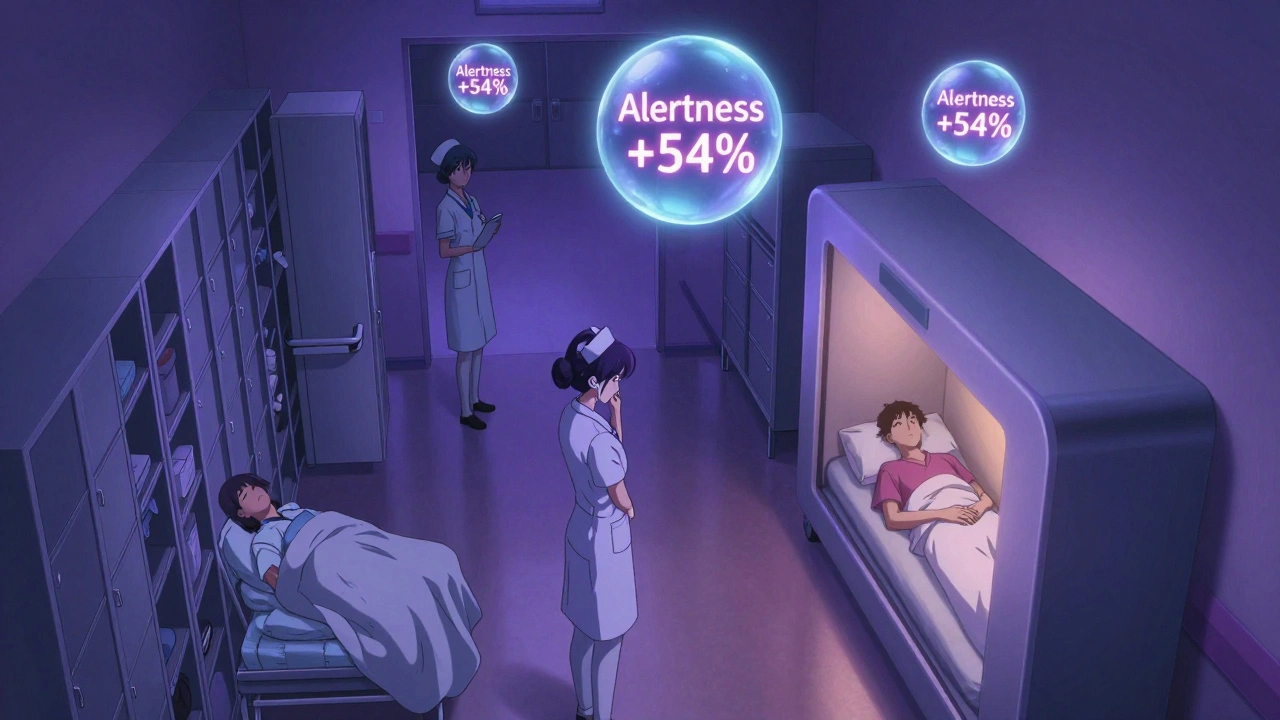
Strategic napping isn’t just closing your eyes for a few minutes. It’s a planned, timed, and controlled rest period designed to fight fatigue at its peak. Research from NASA, the CDC, and Yale shows that a 20- to 30-minute nap taken during the lowest point of alertness-usually between 2 a.m. and 4 a.m.-can boost reaction time by 18%, cut cortisol levels by 22%, and reduce drowsy driving incidents by 44%. The magic number? 26 minutes. That’s what NASA found in its 1995 pilot study with pilots. After a 26-minute nap, alertness jumped 54% and performance improved 34%. Why not longer? Because naps over 30 minutes push you into deep sleep. Waking up from deep sleep causes sleep inertia-a foggy, groggy state that can last 30 minutes or more. That’s worse than not napping at all.How Strategic Napping Beats Caffeine and Light Therapy
Many shift workers rely on coffee to stay awake. But caffeine only masks fatigue. It doesn’t restore your brain. A 2009 study compared caffeine (200mg, about two cups of coffee) to a 26-minute nap during the final two hours of a night shift. The nap group had 32% better sustained attention. Caffeine helped-but it couldn’t match the brain reset a nap provides. Light therapy helps adjust your internal clock over days, but it doesn’t fix immediate tiredness. Sleep banking-sleeping extra before your shift-helps a little, but it’s 19% less effective than napping during the shift itself. Strategic napping works fast, right when you need it.Where and When to Nap
Timing matters more than you think. The best window is between 2 a.m. and 4 a.m. That’s when your body naturally hits its lowest alertness level, according to the International Shift Work Society. Napping outside this window-say, at 8 p.m. or midnight-won’t give you the same benefit. Location is just as important. A quiet, dark room with a comfortable temperature cuts how long it takes to fall asleep by 37%. In hospitals where nurses had access to dedicated nap rooms-soundproofed, with blackout curtains and recliners-89% more people actually napped compared to those using break rooms or on-call rooms. You don’t need a fancy setup. Even a dimly lit corner with an eye mask and earplugs can work. But if your workplace doesn’t provide a proper space, you’re fighting an uphill battle.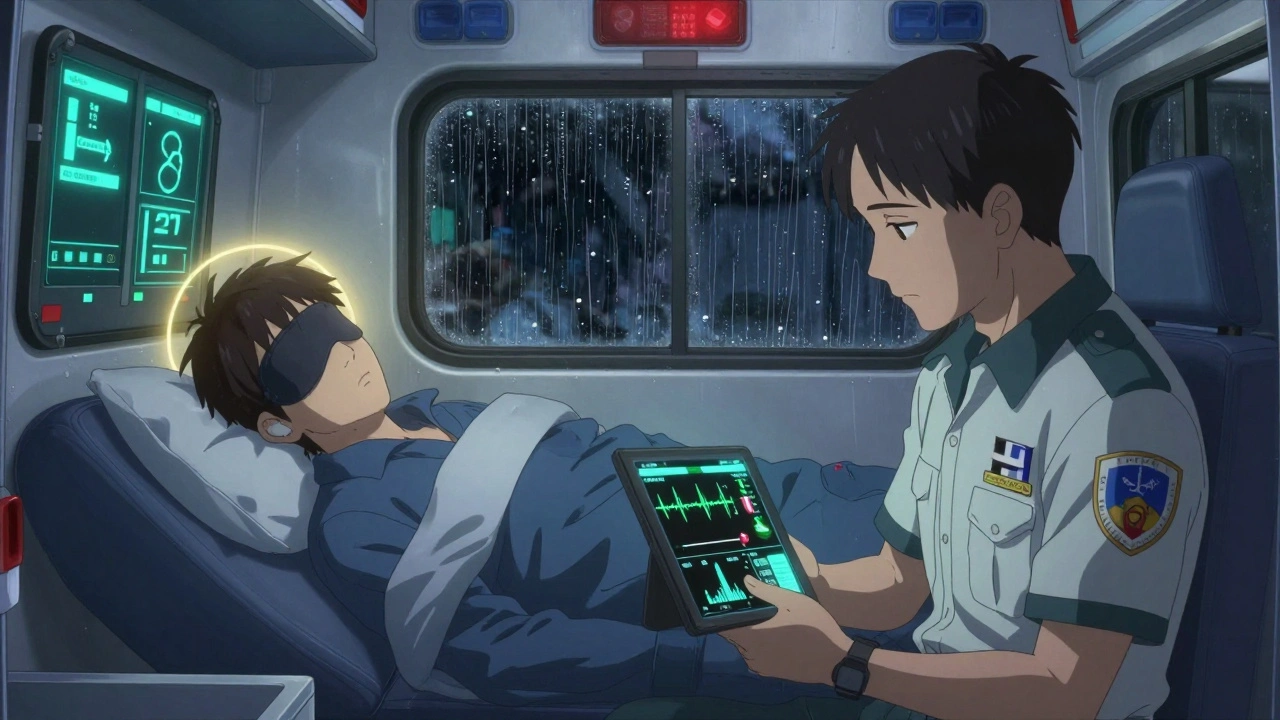
Real Results: Nurses, EMTs, and Truck Drivers
In a CDC study across six hospital units, nurses who napped between 1 a.m. and 3 a.m. reported a 7.3 out of 10 improvement in alertness. One unit that implemented 20-minute naps at 3 a.m. saw medication errors drop by 37% in six months. On Reddit, nurses shared stories like: “I used to miss doses because I was too tired. After napping, I stopped making those mistakes.” EMTs in a 2023 survey of 312 workers said they had 29% fewer near-miss crashes on the way home after being allowed to nap during shifts. Truck drivers in Australia and Canada report similar results-especially after 8+ hours behind the wheel. But here’s the catch: only 1 in 6 hospital units have formal napping policies. Why? Managers worry about staffing. Nurses feel guilty. Some fear being seen as lazy.Why So Many Programs Fail
The biggest barrier isn’t science-it’s culture. In surveys, 83% of nurse managers say staffing shortages make napping impossible. 67% of night-shift workers say they feel stigmatized for napping. One nurse told researchers: “I wanted to nap, but I didn’t want my team to think I couldn’t handle the job.” Successful programs don’t just allow naps-they schedule them. No “if you have time” approach. Instead, they block 20-30 minutes between 2-4 a.m. as protected rest time. Staff are trained on why it works. Managers lead by example. And the environment is made safe and comfortable. The European Union requires rest facilities for night workers. California passed a law in 2022 mandating nap opportunities for healthcare workers on 12-hour shifts. The U.S. is catching up. OSHA’s 2024 draft guidelines list strategic napping as a “best practice.” The American Nurses Association now officially recommends it.How to Build a Successful Nap Routine
If you’re a shift worker, here’s how to make napping work for you:- Time it right. Nap between 2 a.m. and 4 a.m. Avoid napping before 1 a.m. or after 5 a.m.-it won’t help as much.
- Keep it short. Set a timer for 20-30 minutes. Longer naps = sleep inertia.
- Make it dark and quiet. Use earplugs, an eye mask, or noise-canceling headphones. Even a closet with a blanket can work if it’s dark.
- Wake up gently. After your nap, expose yourself to bright light (even natural daylight if you’re going home). Light tells your brain it’s time to wake up.
- Don’t feel guilty. This isn’t laziness. It’s science. Your brain needs this reset to stay sharp.
What’s Next for Shift Workers
The future of shift work is changing. Wearable tech is now being tested to predict when you’re most likely to crash-and suggest the perfect nap time. One pilot study showed a 27% increase in nap effectiveness when guided by biometric data like heart rate variability. Laws are catching up, too. The U.S. Healthcare Worker Fatigue Prevention Act of 2024 is moving through Congress. If passed, it would require employers to provide nap breaks for night-shift staff. By 2030, 78% of occupational health experts predict strategic napping will be standard in high-risk industries. Right now, it’s still rare. But the data is clear: if you work nights, skipping a nap isn’t bravery-it’s a risk you don’t have to take.How to Talk to Your Manager About Napping
If your workplace doesn’t allow naps, start with facts. Show them:- Strategic napping reduces errors by up to 37% (CDC, 2015)
- It cuts drowsy driving incidents by 44% (CDC Stacks, 2015)
- For every $1 spent on nap programs, employers save $2.30 in reduced accidents and errors (Joint Commission, 2011)
- It’s recommended by the American Nurses Association and OSHA
Final Thought: Napping Isn’t a Hack-It’s a Necessity
Your body isn’t broken. It’s just doing what it’s supposed to do: sleeping at night. Working against that isn’t strength. It’s a recipe for burnout, illness, and mistakes. Strategic napping isn’t about taking a break-it’s about staying alive and sharp when it matters most. If you’re on the night shift, you deserve to work safely. And you don’t need to wait for your employer to catch up. Start small. Protect your nap. Your brain-and your patients, your passengers, your family-will thank you.Can I nap longer than 30 minutes if I have time?
No. Naps longer than 30 minutes increase the chance of entering deep sleep, which causes sleep inertia-a groggy, disoriented state that can last 30 minutes or more. This makes you less alert than before the nap. Stick to 20-30 minutes for the best balance of rest and quick recovery.
Is caffeine better than a nap for staying awake on night shifts?
Caffeine helps temporarily, but it doesn’t restore your brain like a nap does. Studies show a 26-minute nap improves sustained attention 32% more than a 200mg caffeine dose during the final hours of a night shift. Caffeine can also interfere with your next sleep cycle, making it harder to recover after your shift.
What if my workplace doesn’t have a nap room?
You don’t need a fancy room. Find a quiet, dark spot-a break room with the lights off, a parked car, or even a supply closet. Use an eye mask, earplugs, and a blanket. Set a 25-minute alarm. Even a 15-minute nap in the right conditions can help. The goal isn’t perfection-it’s protection.
Will napping during my shift mess up my sleep at home?
Not if you keep it short and timed right. A 20-30 minute nap between 2-4 a.m. won’t interfere with your post-shift sleep. In fact, it may help you sleep better afterward by reducing sleep pressure. Avoid napping after 5 a.m.-that’s too close to when you plan to sleep.
Do I need special training to nap effectively?
You don’t need formal training, but understanding sleep inertia helps. Know that grogginess after a nap is normal if you oversleep. Keep naps under 30 minutes. Use light exposure (turn on a bright light or go outside) right after waking to reset your alertness. If your workplace offers a short sleep education session, take it-it makes a big difference.
Is strategic napping only for healthcare workers?
No. It works for anyone on night or rotating shifts: truck drivers, firefighters, police officers, factory workers, airport staff, and even remote workers on odd hours. The science applies to anyone fighting circadian misalignment. The biggest barrier isn’t the job-it’s whether the environment supports it.
How long does it take to see results from strategic napping?
You’ll feel the difference after the first nap. Reaction time, focus, and mood improve immediately. For workplace outcomes like fewer errors or accidents, teams typically see measurable results within 4-6 weeks of consistent napping. In one hospital, medication errors dropped 37% in just six months.
Can napping help with long-term health risks from shift work?
Strategic napping reduces immediate fatigue and lowers accident risk, but it doesn’t fix the root cause of circadian disruption. Long-term health risks like heart disease or cancer are tied to years of misaligned sleep. Napping helps you survive the shift-but for long-term health, you also need consistent sleep hygiene, light management, and possibly schedule adjustments over time.


Hi, I'm Caden Lockhart, a pharmaceutical expert with years of experience in the industry. My passion lies in researching and developing new medications, as well as educating others about their proper use and potential side effects. I enjoy writing articles on various diseases, health supplements, and the latest treatment options available. In my free time, I love going on hikes, perusing scientific journals, and capturing the world through my lens. Through my work, I strive to make a positive impact on patients' lives and contribute to the advancement of medical science.