
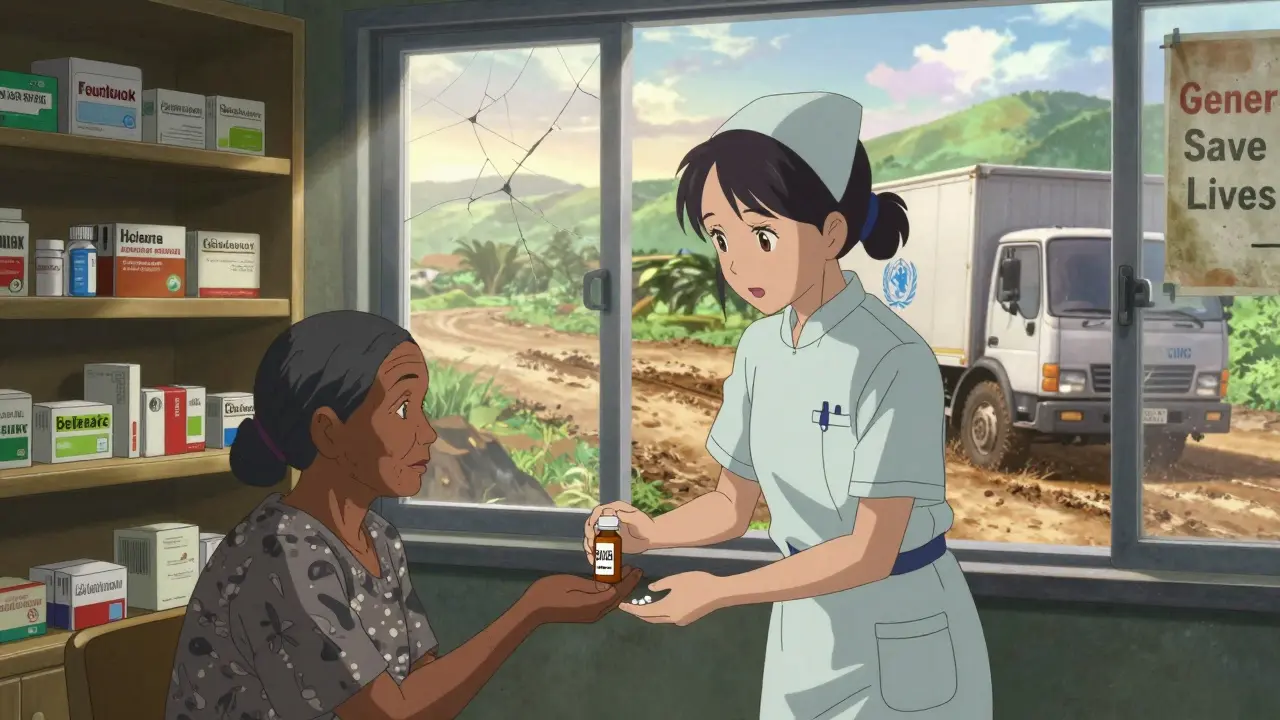
Every year, 100 million people are pushed into extreme poverty because they can’t afford basic medicines. In low-income countries, a single course of antibiotics or antimalarial drugs can cost more than a week’s wages. This isn’t just a health crisis-it’s an economic one. And the solution isn’t hidden in some lab in Switzerland or Boston. It’s already here: generic drugs.
What Generics Really Are (And Why They Matter)
A generic drug is not a copy. It’s not a knockoff. It’s the exact same medicine, with the same active ingredients, same dosage, same safety profile, and same effectiveness as the branded version. The only difference? Price. Generics can cost 80% less than the original drug. That’s not a marketing claim-it’s what the World Health Organization (WHO) has documented for over two decades.
Take HIV treatment. In the early 2000s, a year’s supply of antiretroviral drugs in the U.S. cost over $10,000. In South Africa, thanks to generic versions from Indian manufacturers like Cipla and Sun Pharma, the same treatment dropped to under $100 a year. Millions of lives were saved. This isn’t an exception. It’s the rule. When generics enter the market, prices collapse. And for people who pay out-of-pocket-nearly 90% of patients in low-income countries-that collapse means the difference between life and death.
The Stark Reality: Why Generics Aren’t Reaching Everyone
Here’s the uncomfortable truth: even though generics exist, 2 billion people still can’t access essential medicines. Why? It’s not because they’re not made. It’s because they’re not delivered.
In the U.S., unbranded generics make up 85% of all prescriptions. In low- and middle-income countries? Only 5%. That’s not a typo. It’s a crisis. Why such a gap? Three big reasons:
- Regulatory delays: In many African and Asian countries, drug approval processes take years. A generic drug approved in India or Brazil might sit on a shelf for 3-5 years while paperwork crawls through government offices.
- Supply chain chaos: Roads are bad. Refrigeration fails. Stockouts are common. A clinic might have the right medicine on paper, but the shelf is empty because it never arrived from the regional warehouse.
- Out-of-pocket payments: Even if a generic costs $2, it’s still too much for someone living on $2 a day. And since public health systems are underfunded, patients have no safety net.
Take the case of Tanzania. A 2023 study found that 68% of public health clinics ran out of essential medicines in a single month. The problem wasn’t lack of supply-it was poor logistics. The medicines were in the capital city, but no trucks could reach rural clinics during the rainy season.
Who’s Making Generics? And Why It’s Not Enough
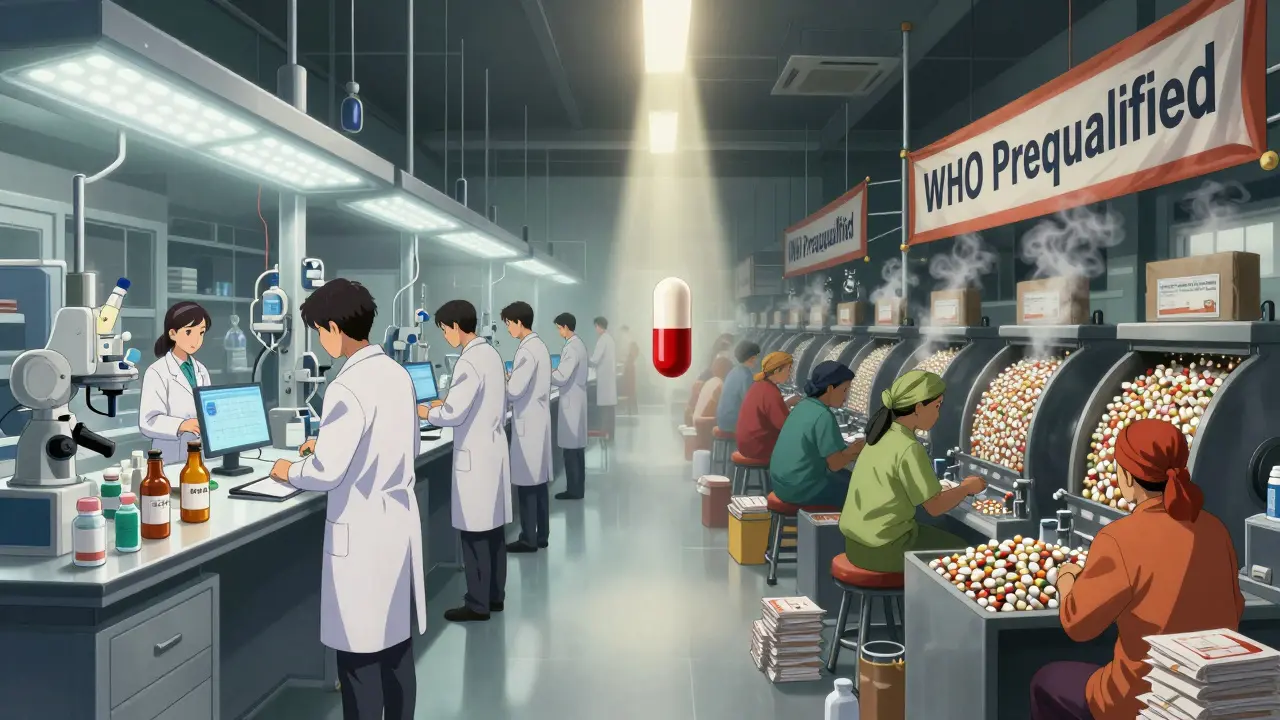
Five companies-Cipla, Hikma, Sun Pharma, Teva, and Viatris-produce about 90% of the generic drugs needed for HIV, TB, and malaria in low-income countries. They’re not charities. They’re businesses. And they’re doing more than most people realize.
But here’s the catch: a 2024 report from the Access to Medicine Foundation found that these companies had clear strategies to expand access for only 41 out of 102 essential drugs. And even then, few of those strategies included price reductions for the poorest patients. They’ll sell to governments or NGOs at a discount. But if you’re a single mother in rural Nepal or a farmer in northern Nigeria who has to pay cash at the local pharmacy? You’re still out of luck.
Meanwhile, big pharmaceutical companies like Pfizer and Novartis have “inclusive business models” that reach all 48 low-income countries. But their own reports are vague. They say they’re helping. But they won’t say how many patients actually got the medicine. Transparency is missing. And without data, you can’t fix the problem.
The Hidden Barriers: Taxes, Tariffs, and Bureaucracy
Generics are cheap. But they don’t stay cheap when governments add layers of cost.
In many African countries, import tariffs on medicines can be as high as 15%. Add VAT, customs fees, and distribution markups, and the final price can double-or triple. The Geneva Network says this is madness. Eliminate tariffs and taxes on essential medicines, they argue, and you instantly cut costs without needing a single new factory.
And then there’s patent manipulation. Even after a drug’s patent expires, some countries extend exclusivity through “data exclusivity” rules-meaning generic makers can’t even submit their applications until years after the patent ends. This isn’t about protecting innovation. It’s about protecting profits. Dr. Jonathan D. Quick, former president of Management Sciences for Health, put it bluntly: “The demand for extra safeguards like market exclusivity impedes low-income countries’ ability to produce generic pharmaceuticals.”
Success Stories: When It Actually Works
It’s not all doom. There are places where generics are working-and they’re proving it can be done.
Thailand started producing its own generics in the early 2000s. Today, it supplies antiretroviral drugs to over 1 million people across Southeast Asia. Rwanda partnered with Indian manufacturers and built a national logistics system. Medicine availability in public clinics jumped from 42% to 87% in five years. Kenya now has a national generics procurement agency that negotiates bulk prices directly with manufacturers.
And then there’s the PAMAfrica consortium-a collaboration between Merck KGaA, Novartis, and African governments-to test new antimalarial drugs in real-world settings. These trials aren’t just about science. They’re about building local capacity. Training local pharmacists. Creating local manufacturing. That’s the real win.
What Needs to Change-Now
The tools are here. The science is proven. The cost savings are undeniable. So why aren’t we doing more?
Here’s what needs to happen:
- Abolish tariffs and taxes on essential medicines. Every country that still charges them is essentially taxing life-saving drugs.
- Simplify approval processes. If a generic is approved by the WHO or the U.S. FDA, it should be accepted automatically in low-income countries. No need to retest everything from scratch.
- Invest in supply chains. No medicine helps if it never leaves the warehouse. Governments need to fund refrigerated trucks, digital inventory systems, and trained logistics staff.
- Shift from out-of-pocket to public funding. If 90% of people pay for medicine themselves, you’re setting up a system designed to fail. Universal health coverage isn’t a luxury-it’s the baseline.
- Include LMICs in clinical trials. Only 43% of global clinical trials happen in low- and middle-income countries. That means drugs are tested mostly on white, wealthy populations. But genetics, metabolism, and disease patterns vary. We need trials in Uganda, not just Boston.
The Bottom Line
Generics aren’t magic. But they’re the closest thing we have to a miracle cure for global health inequality. They’ve already saved millions from HIV, TB, and malaria. They can do the same for diabetes, hypertension, and cancer-if we stop letting bureaucracy, greed, and indifference get in the way.
The WHO wants 80% of essential medicines to be available everywhere. Right now, most countries are stuck at 50% or lower. The gap isn’t about technology. It’s about willpower.
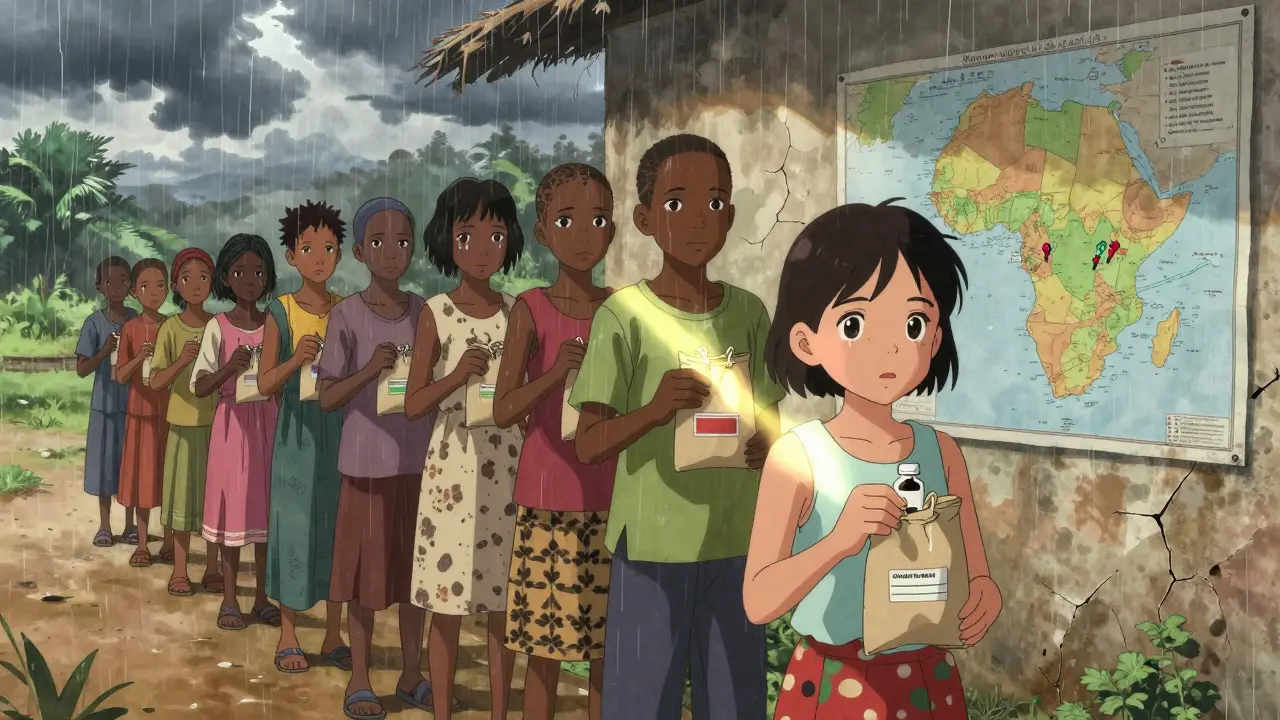
Someone in a village in Malawi shouldn’t have to choose between feeding their child and buying a $50 course of antibiotics. That’s not a health issue. That’s a moral failure. And it’s one we can fix-with generics, better policy, and real commitment.
Are generic drugs safe in low-income countries?
Yes-if they’re quality-assured. The WHO maintains a prequalification list of generic manufacturers that meet international standards. Many generics made in India, South Africa, and Brazil are produced in FDA- or EMA-approved facilities. The problem isn’t safety-it’s access. Unbranded generics (not approved by any authority) make up only 5% of the market, but fear of fake drugs leads many patients to pay more for unproven branded products. Always check for WHO prequalification or national regulatory approval.
Why don’t governments just buy more generics?
Many do-but they can’t afford the logistics. Even if a government buys 10,000 doses of a generic drug, they may not have trucks, refrigeration, or trained staff to deliver them to rural clinics. In some places, medicines sit in warehouses for months because the local health system lacks basic infrastructure. It’s not a lack of money for drugs-it’s a lack of money for systems.
Do generic drugs work as well as branded ones?
Yes, by law. In every country with a functional regulatory system, generics must prove bioequivalence-they deliver the same amount of active ingredient into the bloodstream at the same rate as the original. Studies across Africa and Asia show identical cure rates for HIV, TB, and malaria treatments using generics versus branded drugs. The only difference? Price.
Can low-income countries make their own generics?
Yes, and some already do. India, South Africa, Brazil, and Thailand have strong generic manufacturing industries. The TRIPS Agreement allows developing countries to produce generics under certain conditions, especially for public health emergencies. The challenge isn’t legal-it’s technical and financial. Building a drug factory requires expertise, clean rooms, regulatory oversight, and investment. But it’s possible-and it’s happening.
Why do some people in LMICs prefer branded drugs?
Because they’ve been told to. For decades, pharmaceutical companies marketed branded drugs as superior, even in places where generics were the only option. Pharmacists often recommend branded drugs because they earn higher margins. Patients trust names they’ve seen on TV or heard from doctors-even if those drugs cost 10 times more. Education and transparency are key to changing this.
How can I help improve access to generics?
Support organizations that fund generic procurement, like the Global Fund or Médecins Sans Frontières. Advocate for policies that remove tariffs on medicines. Push for transparency from pharmaceutical companies-ask them to report how many patients actually receive their drugs. And don’t assume generics are inferior. They’re often the only reason someone survives.


Hi, I'm Caden Lockhart, a pharmaceutical expert with years of experience in the industry. My passion lies in researching and developing new medications, as well as educating others about their proper use and potential side effects. I enjoy writing articles on various diseases, health supplements, and the latest treatment options available. In my free time, I love going on hikes, perusing scientific journals, and capturing the world through my lens. Through my work, I strive to make a positive impact on patients' lives and contribute to the advancement of medical science.