

Working nights doesn’t just mean you’re awake when everyone else is asleep. For millions of people, it means your body is fighting a losing battle against biology. If you’ve ever struggled to sleep during the day after a 12-hour night shift, felt drowsy behind the wheel on your way home, or woke up exhausted even after eight hours in bed-you’re not just tired. You might have shift work sleep disorder (SWSD).
What Exactly Is Shift Work Sleep Disorder?
SWSD isn’t just poor sleep habits. It’s a medically recognized circadian rhythm disorder. Your body runs on a 24-hour internal clock, mostly guided by light and darkness. When you work nights, your brain still thinks it’s nighttime when you’re supposed to be awake-and daytime when you’re trying to sleep. This misalignment throws off hormones like melatonin and cortisol, which control sleep and alertness.
According to the National Institute for Occupational Safety and Health (NIOSH), about 15 million Americans work night, evening, or rotating shifts. Of those, nearly 3 in 10 report moderate to severe sleepiness during work hours. That’s more than triple the rate of day workers. The American Academy of Sleep Medicine officially classified SWSD in 2005, and since then, research has shown it’s not just about feeling groggy-it’s linked to serious health risks like heart disease, diabetes, and even certain cancers.
Why Your Body Won’t Cooperate
Your brain’s master clock, the suprachiasmatic nucleus (SCN), gets its cues from sunlight. When you’re exposed to artificial light at night-like from screens, fluorescent bulbs, or even streetlights on your commute-it tells your brain to stay alert. That suppresses melatonin production by up to 85%. Meanwhile, your cortisol levels, which should be low at night, stay high during your sleep hours, making it harder to fall asleep or stay asleep.
Studies show that even after years on night shifts, only 2-5% of workers fully adapt. The rest are stuck in a cycle of partial adjustment. That means you’re probably losing 1 to 4 hours of sleep per night. Over time, that adds up. One study found shift workers get about 1.5 fewer hours of sleep daily than day workers. That’s like losing a full night of rest every week.
Signs You Might Have SWSD
It’s not just about being tired. SWSD shows up in specific ways:
- Difficulty falling asleep or staying asleep during the day
- Excessive sleepiness during work hours-nodding off, making mistakes, or feeling foggy
- Fatigue that doesn’t go away after sleeping
- Trouble concentrating or remembering things
- Mood swings, irritability, or depression
- Headaches or digestive issues (like nausea or constipation)
- Weaker immune response-catching colds more often
These symptoms need to last at least a month to meet clinical criteria. But many people suffer for years before realizing it’s not normal. Reddit threads from night-shift nurses and ER techs are full of stories like: “I use blackout curtains, white noise, and still wake up after 4 hours. My partner says I’m always grumpy.”
Who’s Most at Risk?
SWSD doesn’t hit everyone the same way. Some people adapt better than others-and it’s not just about willpower.
Research from the University of Munich found that “night owls” (people naturally inclined to stay up late) adapt 37% better than “morning larks.” Age matters too. Workers between 50 and 64 are more than twice as likely to develop SWSD compared to those aged 18-29. Women are 28% more likely than men to experience it, possibly due to hormonal differences.
Industries with the highest rates? Healthcare (35% of workers), manufacturing (28%), and transportation (22%). But it’s also common in retail, emergency services, and even customer support centers running 24/7.
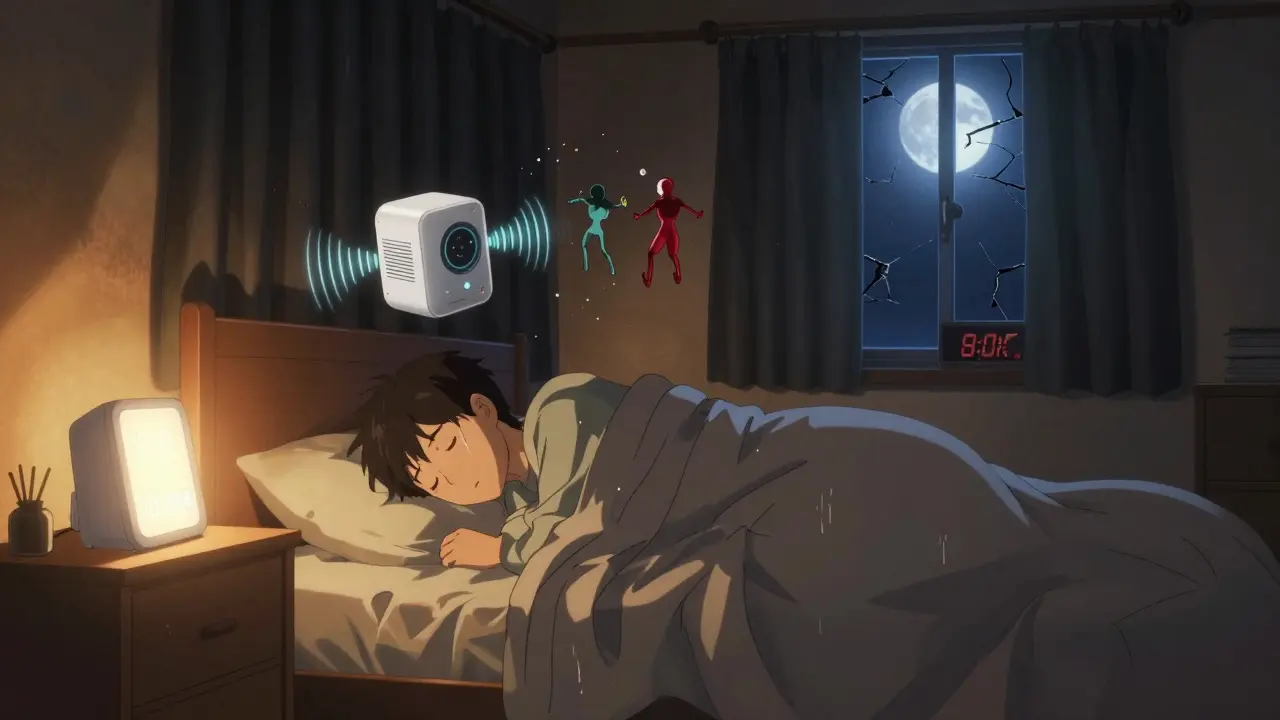
How to Manage SWSD-Practical Steps That Work
You can’t change your schedule overnight. But you can change how you respond to it. Here’s what actually helps, based on clinical guidelines and real-world results.
1. Control Light Exposure
Light is your biggest ally-or enemy. During your night shift, get bright light exposure. Use a 10,000 lux light box for 30-60 minutes every 2 hours. It tricks your brain into thinking it’s daytime. Wear blue-light-blocking glasses on your commute home. They help your body start producing melatonin earlier.
At home, make your bedroom a cave. Use blackout curtains, cover LED lights, and install a white noise machine. Even small amounts of light can disrupt sleep. One study showed that just 10 lux (a dim nightlight) reduced melatonin by 50%.
2. Time Your Sleep Like a Pro
Don’t wait until you’re exhausted to sleep. Aim for a consistent sleep window-even on your days off. If you work 11 p.m. to 7 a.m., try to sleep from 8 a.m. to 4 p.m. every day. Your body craves routine. Skipping sleep on your days off throws off your rhythm and makes the next shift harder.
3. Use Caffeine Wisely
Don’t skip coffee, but don’t overdo it. Limit caffeine to the first half of your shift. One study found that workers who had 100-200 mg of caffeine (about 1-2 cups of coffee) in the first 4 hours of their shift were 30% less likely to make errors. But avoid caffeine in the last 4 hours before sleep. It stays in your system for 6-8 hours.
4. Try Strategic Napping
Before your shift, take a 20-30 minute nap. It boosts alertness without leaving you groggy. If your job allows, nap during a break. A 2021 study in the American Journal of Critical Care found that nurses who napped during shifts reported 68% better alertness and fewer mistakes.
5. Consider Melatonin
Take 0.5 to 5 mg of melatonin 30 minutes before your daytime sleep. It helps signal to your brain that it’s time to rest. Studies show it improves sleep quality and duration by 20-30% in shift workers. Don’t use it every day-just on nights when you need a reset.
6. Talk to Your Employer
Only 22% of shift workers have access to dark, quiet sleeping areas at work, even though NIOSH recommends them. Ask if your workplace can install dim lighting, reduce noise, or offer flexible scheduling. Some hospitals now use circadian lighting systems that mimic daylight patterns during night shifts.
What Doesn’t Work
Many people try quick fixes that don’t help-or make things worse.
- Alcohol might make you sleepy, but it fragments sleep and reduces deep sleep stages.
- Sleeping pills can be habit-forming and don’t fix the root problem-circadian misalignment.
- Just “trying harder” to sleep won’t work. Your biology is the issue, not your discipline.
The New Medications on the Scene
In May 2023, the FDA approved sodium oxybate for SWSD-related excessive sleepiness. It’s a powerful wake-promoting agent that helps regulate sleep-wake cycles. It joins modafinil and armodafinil, which have been used for years. These aren’t magic pills-they don’t fix your schedule-but they can help when combined with behavioral changes.

Long-Term Health Risks You Can’t Ignore
The International Agency for Research on Cancer labeled shift work as “probably carcinogenic” in 2007. Why? Chronic circadian disruption affects immune function, hormone balance, and cell repair. Studies link long-term night shifts to higher risks of breast cancer, prostate cancer, colorectal cancer, and heart disease.
One case study from a Midwest manufacturing plant showed a worker with undiagnosed SWSD caused a $2.3 million equipment failure due to fatigue. That’s not just a personal cost-it’s a business and safety risk.
When to Seek Help
If you’ve been struggling for more than a month and your sleep hygiene is already solid, it’s time to see a sleep specialist. They can use sleep logs or actigraphy (a wrist monitor that tracks movement and light exposure) to confirm SWSD. Many clinics now offer free screenings for shift workers.
Don’t wait until you’re in a car accident, making dangerous mistakes at work, or feeling constantly depressed. SWSD is treatable. But only if you recognize it as a medical issue-not just “bad luck.”
Final Thought: It’s Not Just You
You’re not lazy. You’re not failing. Your body is wired to sleep at night. Working against that isn’t a personal flaw-it’s a physiological challenge. The fact that you’re reading this means you’re already taking the first step: understanding what’s happening.
Shift work is part of modern life. But no one should have to pay for it with their health. With the right tools, you can protect your sleep, your safety, and your future.
Can shift work sleep disorder be cured?
SWSD can’t be fully “cured” if you continue working nights, because your schedule conflicts with your biology. But symptoms can be managed effectively. With consistent light exposure, sleep scheduling, melatonin, and caffeine use, most people reduce their sleepiness and improve sleep quality significantly. Some workers who switch to day shifts see complete resolution of symptoms.
Is SWSD the same as insomnia?
No. Insomnia is difficulty sleeping regardless of schedule. SWSD is specifically tied to working outside normal hours. If your sleep problems only happen when you work nights and go away when you’re off, it’s likely SWSD. If you struggle to sleep even on days off, it might be another sleep disorder.
How long does it take to adjust to night shifts?
Most people never fully adjust. Studies show only 2-5% of night workers achieve complete circadian adaptation, even after years. The rest live with partial adaptation, meaning they’re always slightly out of sync. That’s why management strategies-not adaptation-are the focus of treatment.
Do blackout curtains really help with daytime sleep?
Yes, and they’re one of the most effective tools. Even small amounts of light-like from streetlights or a phone charger-can suppress melatonin. Blackout curtains reduce light exposure by up to 99%, helping your body produce more melatonin and sleep more deeply. Combine them with eye masks and earplugs for best results.
Can I use melatonin every day?
It’s safe for short-term daily use, but not ideal long-term. Using melatonin every day can make your body less responsive to it over time. Use it strategically: before important shifts, after schedule changes, or when you’re struggling. Avoid using it on days off unless you’re trying to reset your rhythm.
Why do I feel more tired after a few days off?
Because your sleep schedule got thrown off. If you sleep in late, go out at night, or expose yourself to bright light during the day, your body starts shifting back to a day rhythm. When you return to night shifts, your system is confused again. That’s why consistency-even on days off-is critical.


I am a pharmaceutical expert with over 20 years of experience in the industry. I am passionate about bringing awareness and education on the importance of medications and supplements in managing diseases. In my spare time, I love to write and share insights about the latest advancements and trends in pharmaceuticals. My goal is to make complex medical information accessible to everyone.