
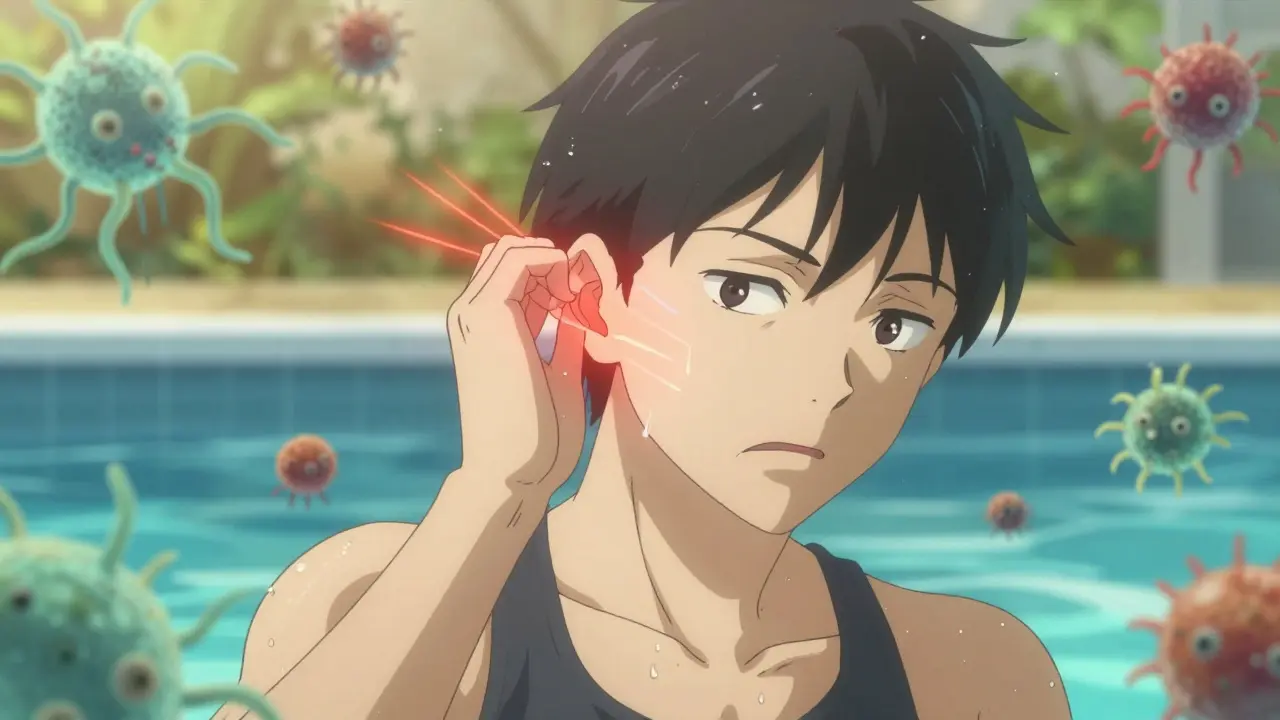
What Is Swimmer’s Ear, Really?
Swimmer’s ear, or otitis externa, isn’t just a sore ear after a swim. It’s an infection in the skin lining your ear canal - the tube that runs from your outer ear to your eardrum. This isn’t an inner ear infection like otitis media. It’s a surface infection, and it thrives in warm, wet places. That’s why it’s so common after swimming, especially in lakes, pools, or oceans where bacteria like Pseudomonas aeruginosa and Staphylococcus aureus hang out. About 98% of cases are bacterial. Fungal cases? Rare - just 2%.
The name comes from who gets it most: kids 7 to 12 and young adults 15 to 25. Boys are diagnosed more often than girls. And it’s not just swimmers. Anyone who spends time in water - surfers, divers, even people who shower with their heads tilted - can get it. The real trigger? Moisture trapped in the ear canal. That’s the perfect breeding ground.
How Do You Know It’s Swimmer’s Ear - Not Just an Earache?
Not all ear pain is the same. If you’ve ever pulled on your earlobe and felt a sharp, shooting pain, that’s a red flag. Swimmer’s ear causes intense pain when you tug on the outer ear or press on the bump in front of the ear (the tragus). In fact, 97% of people with this infection feel worse when you touch those areas. That’s a key way doctors tell it apart from middle ear infections.
You’ll also notice drainage. At first, it’s clear. Then, within a day or two, it turns yellow or green - pus. Your ear might feel full, like it’s plugged. Hearing can drop by 20 to 30 decibels - enough to make conversations fuzzy. You might even feel a little dizzy if the swelling is bad. The ear canal looks red and swollen, sometimes so swollen it’s almost closed shut.
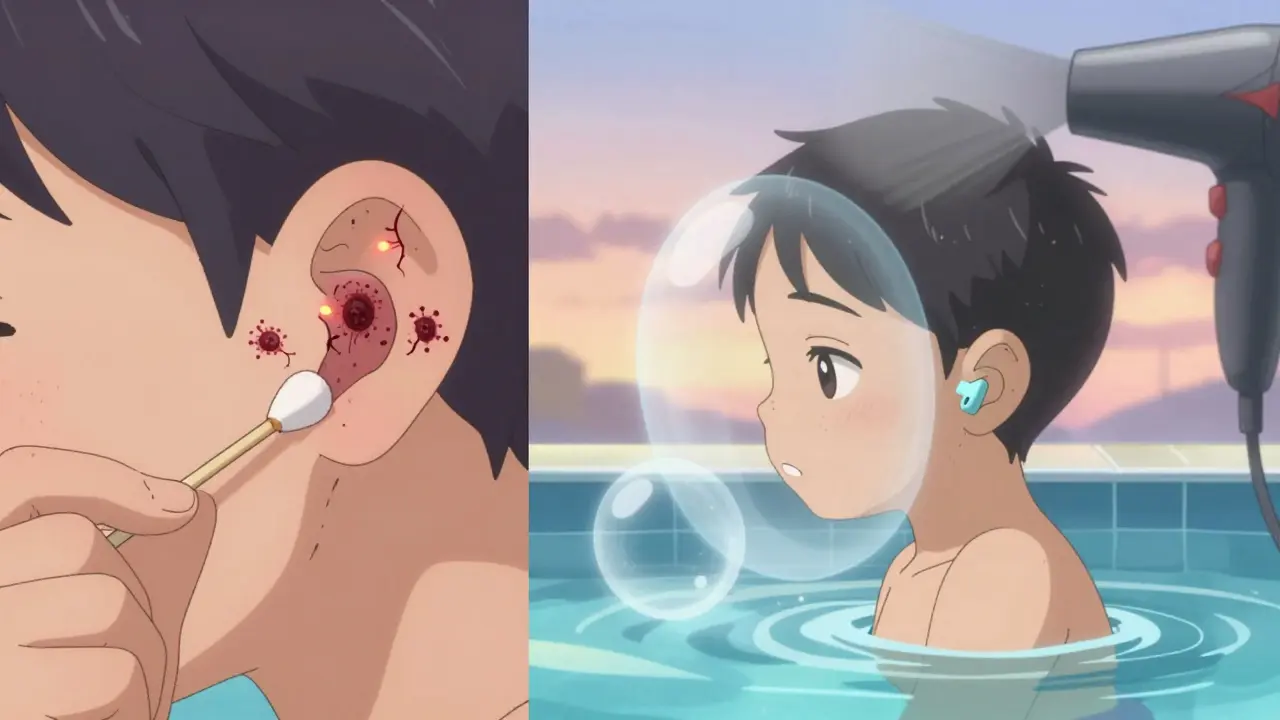
And here’s something most people don’t realize: if you’ve been using cotton swabs, Q-tips, or even your fingernail to clean your ears, you’ve increased your risk by 65%. That’s because you’re not cleaning - you’re scratching the skin inside. Tiny cuts let bacteria in. Even scratching with a hairpin or earbud can do it.
Why Summer Is Peak Season for Swimmer’s Ear
More than 80% of cases happen between June and August. Why? Warmer water, more swimming, and longer days mean more time in the pool or lake. But it’s not just the water. Humidity traps moisture in the ear canal longer. Sweat mixes with chlorine or salt, and suddenly your ear canal is a warm, damp petri dish.
Competitive swimmers are at the highest risk. Those who swim more than four days a week are 7.2 times more likely to get it. But even weekend swimmers aren’t safe. One study found that people who stayed in the water for more than 20 minutes after swimming had a 37% higher chance of infection. It’s not how deep you go - it’s how long the water stays in.
How to Treat Swimmer’s Ear - Fast and Right
Good news: swimmer’s ear almost always clears up with the right treatment. First-line therapy? Prescription ear drops. Not pills. Not sprays. Drops. The most common are combinations like ciprofloxacin and hydrocortisone (brand name Cipro HC). These fight bacteria and reduce swelling at the same time. Used correctly, they cure 92% of cases in under a week.
Here’s how to use them right:
- Warm the bottle in your hand for a minute. Cold drops can make you dizzy.
- For adults: pull the top of your ear up and back. For kids under 3: pull it down and back.
- Put in 10 drops. Stay lying on your side for 5 minutes. This lets the medicine soak in.
- Don’t plug your ear with cotton - just let it drain naturally.
Doing it wrong? You’re wasting your time. Studies show people who don’t follow the position and timing get 40% less benefit. One study using dye showed that proper positioning increased how much medicine reached the infected area by 83%.
For fungal cases - the 2% - doctors use clotrimazole drops. You’ll need to use them for two weeks. Pain? Take acetaminophen for mild pain. If it’s severe, your doctor might prescribe a short course of oxycodone. But don’t skip the drops for painkillers alone. The infection won’t go away without them.

What Not to Do - The Big Mistakes People Make
Here’s what most people do that makes things worse:
- Using cotton swabs. Even once. It’s not cleaning - it’s pushing debris deeper and scratching the skin.
- Trying to dry your ear with a hairdryer on high heat. That can burn the skin. Use cool air, 12 inches away, for 30 seconds.
- Ignoring the ‘no water’ rule. You can’t swim, take a shower, or even wash your hair without protection. Use earplugs or cotton balls with petroleum jelly.
- Stopping drops early because the pain went away. The infection might still be there. Finish the full 7-day course.
And don’t assume it’s a middle ear infection. About 25% of cases are misdiagnosed. That means people get antibiotics for the wrong problem - and the real infection keeps growing. The tragus test (pressing the bump in front of the ear) is the fastest way to tell. If it hurts, it’s likely swimmer’s ear.
Prevention: The Real Game-Changer
Most cases are preventable. And the cheapest, most effective method? A simple mix of 70% isopropyl alcohol and 30% white vinegar. Use it right after swimming - within 30 minutes. Pour one teaspoon into each ear, let it sit for a minute, then tilt your head to drain. This solution dries out the canal and kills bacteria. A 2022 study with 1,200 swimmers showed it cuts infection risk by 72%.
Earplugs help too. Custom silicone ones cost $45 to $120 but block 68% of water. Foam plugs? Only 42% effective. If you swim often, the custom ones pay for themselves in avoided doctor visits.
And here’s a trick from Reddit’s top-rated post: one swimmer used a hairdryer on cool, low setting, held 12 inches from the ear, for 30 seconds after every swim. No infections for four years.
When to See a Doctor - And What They’ll Do
See a doctor if:
- Pain gets worse after 2 days of drops
- You have fever or swelling around the ear
- Drainage is bloody or foul-smelling
- You’ve had three or more episodes in a year
Doctors might use a special tool called an otoscope to look inside. If the canal is swollen shut, they might insert a tiny wick - a sponge-like strip soaked in medicine - to help the drops reach the infection. In January 2023, the FDA approved a new hydrogel wick that holds medicine longer than traditional drops. It’s changing how severe cases are treated.
Telehealth is making diagnosis easier. Apps like TytoCare let you take a picture of your ear with a smartphone otoscope. Studies show they’re 89% accurate - close to in-person exams. That means you can get diagnosed and start treatment in hours, not days.
The Hidden Costs - And Why Prevention Saves Money
Swimmer’s ear costs the U.S. healthcare system $547 million a year. An ER visit? $312. A doctor’s office visit? $117. Preventive drops cost less than $10 a bottle. Custom earplugs? A one-time $100 investment. Multiply that by the number of swimmers who get infected each year - and you’re talking about billions saved.
And it’s not just money. It’s time. People miss work. Kids miss school. One patient wrote on Yelp: “No one told me I couldn’t shower for 7 days. I had to use cotton balls with petroleum jelly and missed two workdays.” That’s avoidable.
What’s Next? New Treatments on the Horizon
Doctors are watching for rising resistance to ciprofloxacin - it’s now resistant in nearly 9% of cases. New drugs like cadazolid are in trials and show 96% effectiveness. Even more exciting? Treatments that don’t kill all the bacteria. Researchers are testing a therapy using harmless skin bacteria (like Staphylococcus hominis) to crowd out the bad ones. Early results suggest it could cut recurrence rates from 14% down to 6%.
Climate change is making this worse. Longer swimming seasons mean more exposure. But better education could offset most of that increase. The key isn’t just better medicine - it’s better habits.
Final Takeaway: Dry, Don’t Dig
Swimmer’s ear is annoying, painful, and expensive - but it’s not mysterious. It’s simple: water + scratch = infection. Prevention is cheap, easy, and works. Treat it fast with the right drops. And never, ever put anything smaller than your elbow in your ear.


I am a pharmaceutical expert with over 20 years of experience in the industry. I am passionate about bringing awareness and education on the importance of medications and supplements in managing diseases. In my spare time, I love to write and share insights about the latest advancements and trends in pharmaceuticals. My goal is to make complex medical information accessible to everyone.