
Sulfonamide Allergy Cross-Reactivity Checker
Enter details about your allergy experience and select which medications you're interested in. This tool will help you determine if these medications are likely safe for you based on the latest medical evidence.
Important: This tool is for informational purposes only. Always consult with your healthcare provider before making any medication decisions.
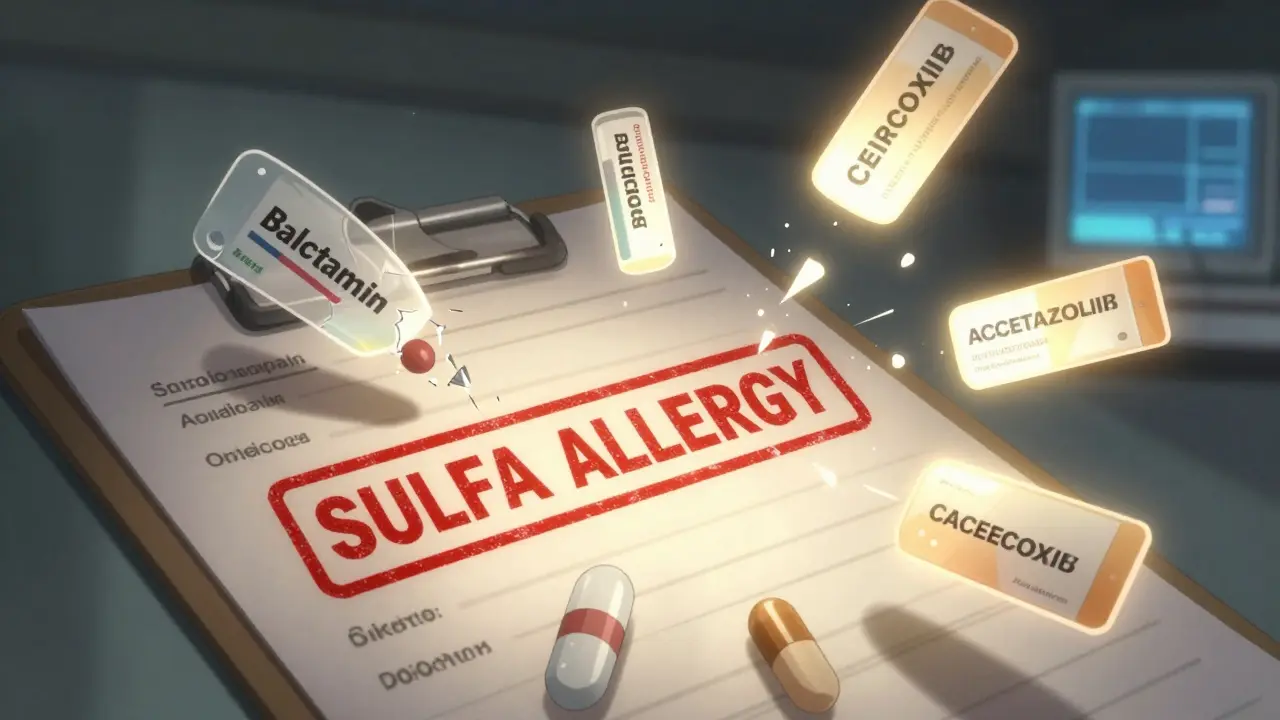
Many people carry a label in their medical record: sulfa allergy. It sounds simple - avoid anything with "sulfa" in the name. But here’s the problem: that label might be wrong. And worse, it could be putting you at risk.
About 3 to 12% of people say they’re allergic to sulfonamide drugs. But studies show only 0.3 to 0.5% actually have a true IgE-mediated allergy. The rest? They had a rash, a stomach ache, or a fever after taking an antibiotic - and someone wrote "sulfa allergy" on their chart. That’s it. No testing. No follow-up. Just a label that sticks for life.
Here’s what that means in real life: you’re denied medications that are safe, effective, and sometimes the only option. You get stronger, more expensive antibiotics with worse side effects. You might avoid blood pressure pills, diuretics, or even glaucoma drops - all because they "contain sulfa." But here’s the truth: most of those drugs are completely safe for you.
What Is a Sulfonamide, Anyway?
Sulfonamide is a chemical group - SO2NH2. It’s not a single drug. It’s a building block found in dozens of medications. Some are antibiotics. Others treat high blood pressure, glaucoma, seizures, or inflammation. The difference between them isn’t just in how they work - it’s in their structure.
Antibiotic sulfonamides - like sulfamethoxazole (in Bactrim), sulfadiazine, and sulfacetamide - have two key parts: an arylamine group at the N4 position and a nitrogen ring at N1. These are what trigger immune reactions in rare cases. When the body breaks these down, they form reactive molecules that stick to proteins and look like invaders. That’s how an allergy starts.
Nonantimicrobial sulfonamides - like hydrochlorothiazide, furosemide, celecoxib, and acetazolamide - don’t have those exact parts. They’re built differently. Their metabolism doesn’t create the same reactive byproducts. So even though they have the same basic chemical group, your immune system doesn’t see them as the same threat.
What You Can Actually Take
If you’ve been told you have a sulfa allergy, here’s what’s safe:
- Hydrochlorothiazide - a common blood pressure and water pill. Studies show only 1.1% of people with sulfonamide antibiotic allergies react to it - same as people without any allergy.
- Furosemide - used for swelling and heart failure. No increased risk.
- Celecoxib (Celebrex) - a painkiller for arthritis. Multiple studies confirm it’s safe.
- Acetazolamide - used for glaucoma, altitude sickness, and seizures. No cross-reactivity.
- Metformin - diabetes medication. Not a sulfonamide at all. Completely safe.
Even if you had a rash from Bactrim 20 years ago, you can likely take these without issue. A 2022 review of over 10,000 patients found that only 1.3% of those with "sulfa allergy" had any reaction to nonantibiotic sulfonamides - and most of those reactions were mild, not true allergies.
What to Avoid - and Why
Not all sulfonamides are created equal. Here’s what you should still avoid if you have a confirmed antibiotic allergy:
- Sulfamethoxazole-trimethoprim (Bactrim, Septra) - the most common culprit.
- Sulfadiazine - used for urinary infections and toxoplasmosis.
- Sulfasalazine - used for Crohn’s and rheumatoid arthritis. Contains the arylamine group.
- Sulfacetamide eye drops - topical, but still carries the same risk structure.
- Dapsone - used for leprosy, dermatitis herpetiformis, and Pneumocystis pneumonia prevention. This one’s tricky. It shares structural similarities with antibiotic sulfonamides. Studies show a 13% reaction rate in people with prior sulfa antibiotic allergies.
Don’t confuse sulfonamides with sulfates (like magnesium sulfate), sulfites (in wine or dried fruit), or elemental sulfur (in topical acne treatments). These are chemically unrelated. You can safely take them even with a true sulfonamide allergy.
Why This Mislabeling Hurts You
When you’re labeled "sulfa allergic," doctors reach for alternatives. Often, those are broader-spectrum antibiotics like fluoroquinolones (Cipro, Levaquin). These carry black box warnings from the FDA for tendon rupture, nerve damage, and aortic aneurysm. They’re more expensive. They wreck your gut bacteria. And they fuel antibiotic resistance.
A 2021 study found that patients with a "sulfa allergy" label were 78% more likely to get a different antibiotic - and 33% of those were unnecessarily broad-spectrum. That’s not just bad for you. It’s bad for everyone.
On the personal side, people are denied life-improving meds. One patient in Melbourne went 15 years without hydrochlorothiazide for high blood pressure because of a childhood rash. She ended up on three other drugs that gave her dizziness and fatigue. Only after an allergist did a graded challenge did she get the right treatment - and her blood pressure stabilized within weeks.
What to Do If You Think You Have a Sulfa Allergy
Don’t assume. Don’t panic. Do this:
- Look at your history. What exactly happened? A mild rash after five days? That’s likely not an allergy. A swelling of the face or trouble breathing within an hour? That’s serious - and needs evaluation.
- Ask your doctor to clarify the label. "Sulfa allergy" is too vague. Write down: "Rash on day 6 after taking Bactrim. No swelling, no breathing issues. No hospitalization." That’s low-risk.
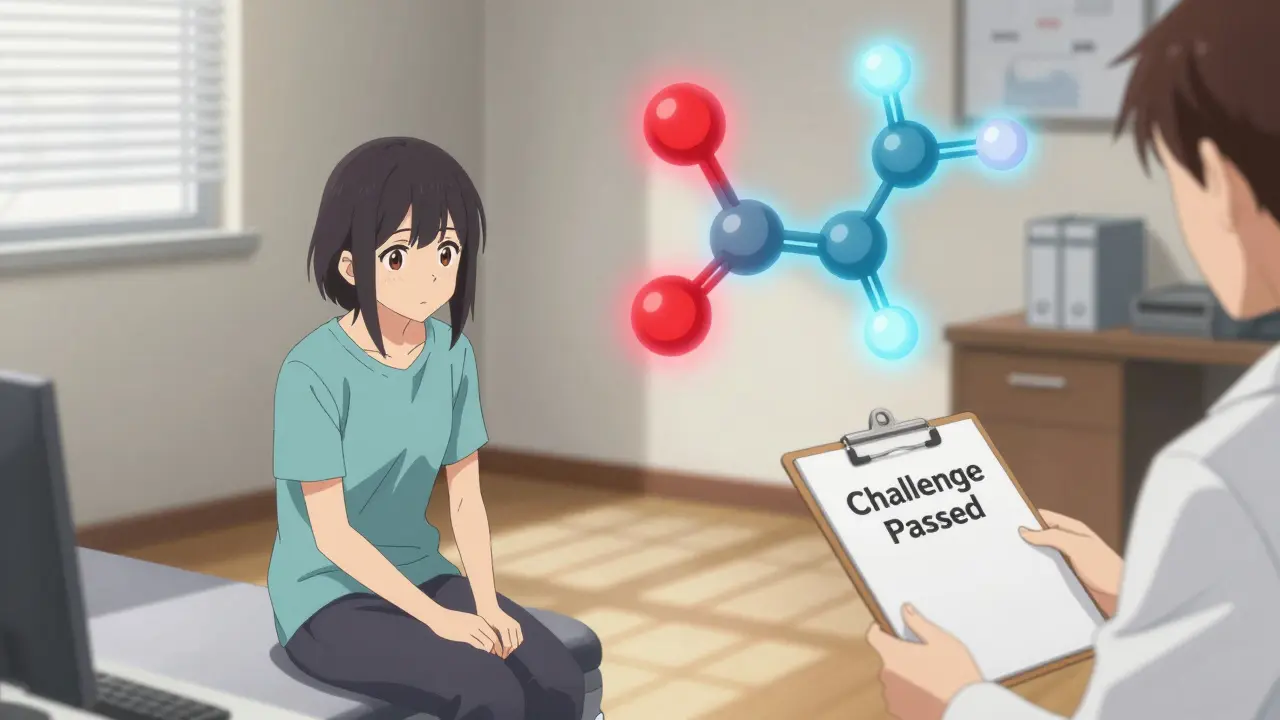
- Ask for a referral to an allergist. For low-risk cases, a simple oral challenge under supervision can prove you’re safe. Studies show 94% of people with vague "sulfa allergy" labels pass the challenge.
- Get it documented. If you’re cleared, ask your doctor to update your record to say: "No true sulfonamide antibiotic allergy. Tolerated sulfamethoxazole challenge on [date]."
Many clinics now use tools like the SULF-RISK score - a simple checklist that helps predict who’s truly at risk. It looks at reaction type, timing, severity, and whether you’ve had reactions to other drugs. It’s accurate over 90% of the time.
What’s Changing in 2026
Big changes are happening. The FDA now requires drug labels for nonantibiotic sulfonamides to state: "This product does not contain the structural elements associated with sulfonamide antibiotic allergies." That’s huge. It’s forcing clarity.
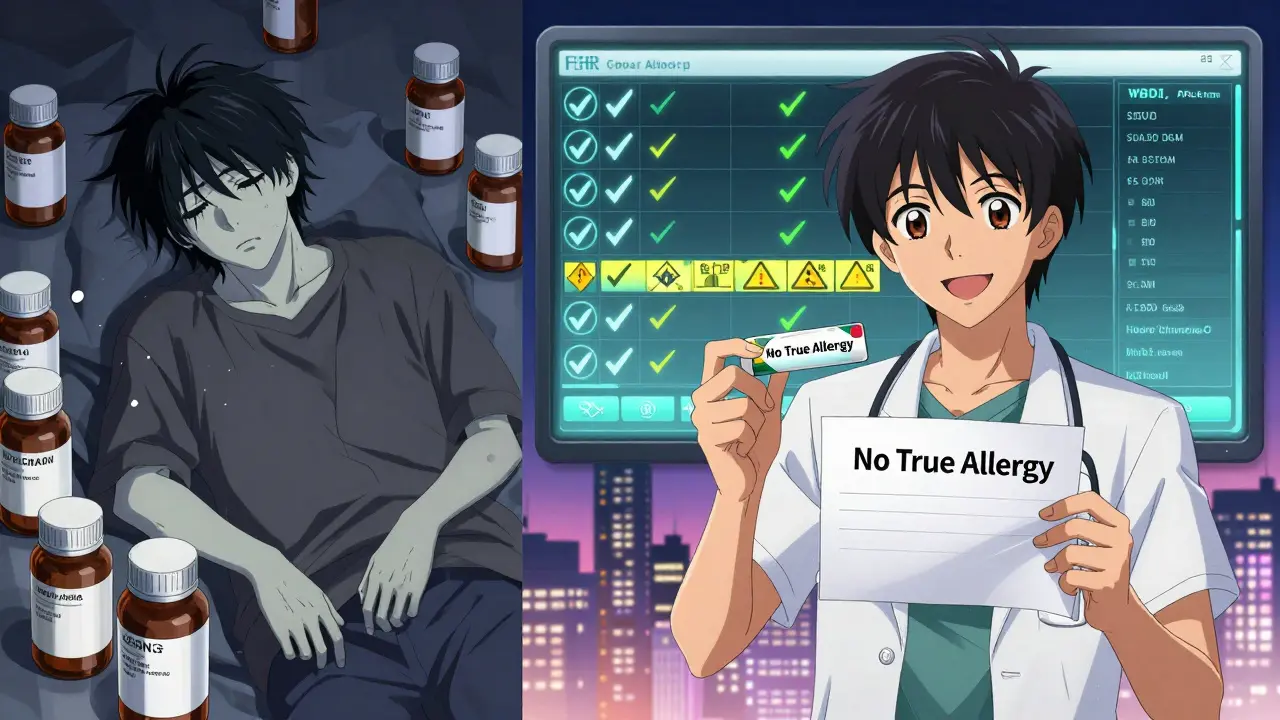
Hospitals are updating their EHR systems. Epic and Cerner now flag "sulfa allergy" and prompt doctors: "Is this an antibiotic? Does the patient have a history of severe reaction?" In 2023, 68% of U.S. hospitals had these alerts - up from 22% in 2019. They’re cutting down unnecessary avoidance by over half.
The Sulfonamide Allergy De-labeling Initiative, launched in 2023 by leading allergy and infectious disease groups, is training doctors nationwide to test and remove false labels. By 2025, 75% of major health systems plan to have automated protocols in place - meaning fewer people will be stuck with outdated, dangerous labels.
Real Stories, Real Impact
Reddit user "HypertensivePatient87" wrote: "My doctor refused hydrochlorothiazide for 10 years because of a rash I had as a kid. I was on a different pill that made me dizzy all day. I finally saw an allergist. Turned out I was fine. Now I take the right med. My blood pressure is normal. I sleep better. Why didn’t anyone test me before?"
A 2022 case series followed 47 patients with "sulfa allergy" who needed sulfonamide antibiotics for Pneumocystis pneumonia prophylaxis. Most were HIV-positive or immunocompromised. None had severe reactions. 91.5% tolerated the drug after a supervised challenge.
Meanwhile, a 2021 report in the Journal of Clinical Pharmacy and Therapeutics described a patient who got a rash after taking celecoxib. At first, it looked like cross-reactivity. But further testing showed they were also taking naproxen - a known trigger for skin reactions in sensitive people. The celecoxib? Fine.
These aren’t rare cases. They’re the norm.
Bottom Line
If you’ve been told you have a sulfa allergy, you probably don’t. Not the way you think. Most people labeled "sulfa allergic" can safely take hydrochlorothiazide, furosemide, celecoxib, and acetazolamide. The only drugs you need to avoid are the antibiotic sulfonamides - and even then, only if you had a true, immediate, or severe reaction.
Don’t let a vague label from decades ago control your treatment now. Ask questions. Get tested. Get your record updated. The right medication could be just one appointment away.


Hi, I'm Caden Lockhart, a pharmaceutical expert with years of experience in the industry. My passion lies in researching and developing new medications, as well as educating others about their proper use and potential side effects. I enjoy writing articles on various diseases, health supplements, and the latest treatment options available. In my free time, I love going on hikes, perusing scientific journals, and capturing the world through my lens. Through my work, I strive to make a positive impact on patients' lives and contribute to the advancement of medical science.