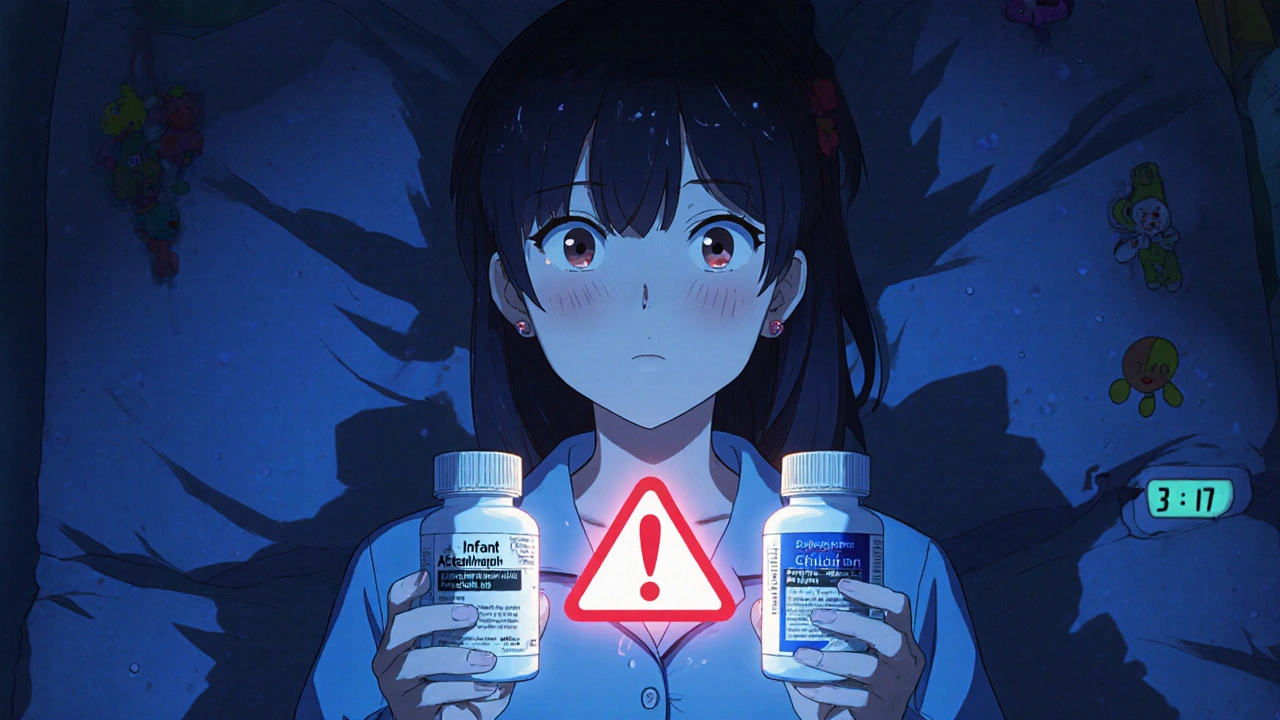
Infant medication safety depends on accurate dosing, correct concentrations, and proper measuring tools. Learn how to avoid deadly errors with acetaminophen, ibuprofen, and other liquid meds for babies under 1 year.

When your child is sick, pediatric liquid meds, oral formulations designed for children’s weight, age, and swallowing ability. Also known as children's liquid medications, they’re often the only safe and practical way to give drugs like antibiotics, fever reducers, or antihistamines to toddlers and infants. Unlike pills, these liquids let you adjust the dose precisely — but that also means mistakes are easy to make. A teaspoon from a kitchen spoon isn’t the same as a calibrated syringe. One wrong measurement can mean underdosing — and a lingering infection — or overdosing, which can land your child in the ER.
Liquid antibiotics for kids, commonly prescribed for ear infections, strep throat, or pneumonia. Also known as pediatric suspensions, are among the most frequently used pediatric liquid meds. Drugs like amoxicillin, cefaclor, and erythromycin come in sweetened flavors, but they’re not candy. Some, like clindamycin, carry serious risks like C. difficile diarrhea, especially if not taken exactly as directed. And don’t assume that because a medicine looks similar to another, it’s safe to swap. A bottle of ibuprofen for children isn’t interchangeable with acetaminophen, even if both are red and taste like cherry. Dosing syringes, precision tools designed to deliver exact milliliter amounts. Also known as oral syringes, are the gold standard for giving these medicines. They’re far more accurate than cups or spoons, and most pharmacies give them free with prescriptions. Never use a kitchen spoon — even the "teaspoon" on your measuring set can be off by 20% or more. Always check the label: is the dose in mg/kg? Is it every 8 hours or every 12? And never give adult medicine to a child, even if you cut it in half. Even herbal supplements like Dong Quai can interfere with blood thinners — and while that’s more common in adults, kids on chronic meds for heart or kidney conditions can also be at risk from unexpected interactions.
What you’ll find in the articles below are real, practical guides from parents and clinicians who’ve been there. You’ll learn how to avoid common dosing errors, spot signs of bad reactions, understand why some liquid meds work better than others for specific infections, and how to store them safely so they don’t lose potency. There’s no fluff — just clear, step-by-step advice on what to do when your child needs medicine, and what to watch out for when they’re taking it.
Infant medication safety depends on accurate dosing, correct concentrations, and proper measuring tools. Learn how to avoid deadly errors with acetaminophen, ibuprofen, and other liquid meds for babies under 1 year.