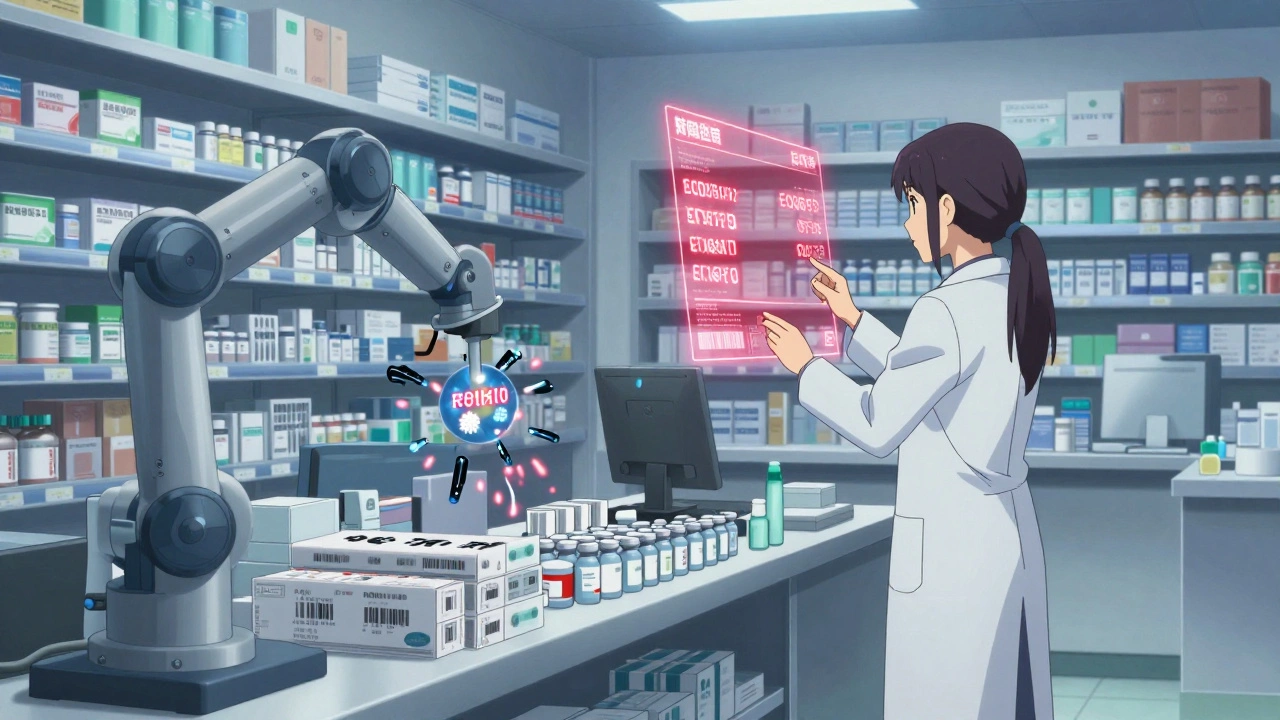
Pharmacy workflow and error prevention systems use automation, barcode scanning, and AI to cut medication errors by up to 90%. Learn how these tools work, which ones are best for your setting, and why simply buying software isn't enough.

When you pick up a prescription, you probably don’t think about the machines that counted your pills, checked for drug interactions, or labeled your bottle. But behind the counter, pharmacy automation, the use of technology to handle medication dispensing and management tasks. Also known as automated dispensing systems, it’s now a standard part of hospitals, retail pharmacies, and long-term care facilities. These systems aren’t just fancy gadgets—they’re critical tools that reduce mistakes, free up pharmacists for patient care, and keep people safer.
One of the biggest wins with pharmacy automation, the use of technology to handle medication dispensing and management tasks is medication safety, the practice of preventing errors in prescribing, dispensing, and taking medicines. Human error is still the leading cause of wrong doses and bad interactions. A pharmacist might miss a drug interaction after 12 hours on shift. A robot won’t. Systems like pharmacy robots, automated machines that count, package, and label pills with high precision check every prescription against the patient’s full history—allergies, other meds, kidney function—and flag anything risky before it leaves the counter. That’s not theory. Studies show automated systems cut dispensing errors by up to 80% in hospitals.
It’s not just about robots. pharmacy workflow, the sequence of steps pharmacists and staff follow to fill prescriptions has changed too. Software now tracks inventory in real time, auto-reorders stock before it runs out, and even alerts staff when a patient hasn’t picked up a refill in weeks. Some systems connect directly to electronic health records so a doctor’s order goes straight to the dispenser—no paper, no phone calls, no typos. Even small pharmacies are adopting compact automated units that handle blister packs or unit-dose packaging, making it easier to manage meds for seniors on multiple drugs.
What you’ll find in this collection isn’t a sales pitch for machines. It’s a look at how automation actually works in real clinics and pharmacies—and what it means for you. You’ll read about how pharmacy automation helps prevent overdoses, why some systems fail, how staff adapt to new tech, and what happens when the power goes out. These aren’t abstract ideas. They’re stories from the front lines of patient care, where a single miscounted pill can change a life. The posts here cover everything from robotic arms in big hospitals to simple barcode scanners in neighborhood shops. Each one shows how technology, when used right, doesn’t replace pharmacists—it lets them do what they do best: care for people.
Pharmacy workflow and error prevention systems use automation, barcode scanning, and AI to cut medication errors by up to 90%. Learn how these tools work, which ones are best for your setting, and why simply buying software isn't enough.