Antiemetics and QT Prolongation: What You Need to Know About Drowsiness and Heart Risks

Antiemetics and QT Prolongation: What You Need to Know About Drowsiness and Heart Risks

When you're throwing up or feeling nauseous, antiemetics can be a lifeline. But not all of them are safe for everyone. Some can mess with your heart rhythm, and others can knock you out cold. If you're on one of these drugs - especially if you're older, have heart issues, or are taking other meds - you need to know the real risks.

What Are Antiemetics and Why Do They Matter?

Antiemetics are drugs that stop nausea and vomiting. They come in different types: serotonin blockers like ondansetron and granisetron, dopamine blockers like droperidol, haloperidol, and metoclopramide, and newer options like palonosetron and olanzapine. Each works differently, and each carries different risks.

The biggest danger isn't just the nausea - it's what these drugs can do to your heart. Many antiemetics can prolong the QT interval on an ECG. That's the time it takes for your heart to recharge between beats. When that interval gets too long, it can trigger a dangerous rhythm called torsades de pointes. It's rare, but it can be fatal.

QT Prolongation: The Real Risk Behind the Numbers

QT prolongation isn't just a lab result. It's a red flag. Clinically, it's defined as a QTc longer than 500 milliseconds, a jump of more than 60 ms from your baseline, or an increase of over 25% from your normal. But here's the catch: not everyone with a prolonged QT will have a problem. Still, if you're already at risk - low potassium, heart disease, taking other QT-prolonging drugs - even a small change can be dangerous.

Studies show that 91% of people who had serious QT-related reactions were also taking another drug that affects the heart. And 60% of those cases involved IV ondansetron. That’s not a coincidence.

Ondansetron: The Most Common Culprit

Ondansetron is the go-to drug in emergency rooms and hospitals for nausea. But it’s also the most studied for QT issues. At doses above 8 mg IV, it clearly lengthens the QT interval. In one study of 85 patients, the average QTc increase was 20 milliseconds after ondansetron - small, but enough to matter in high-risk people.

Even though many doctors think it’s safe, research from Annals of Emergency Medicine and EMCrit Project calls it the antiemetic with the highest risk of torsades. It blocks potassium channels in the heart - the same way some heart rhythm drugs do. And unlike other options, there are documented cases of torsades after ondansetron, especially when given IV or combined with other meds.

Droperidol and Haloperidol: Overhyped or Overblown?

Droperidol used to have a black box warning because of QT concerns. But recent data says the fear is bigger than the risk. At antiemetic doses - 0.625 to 2.5 mg IV - studies like DORM-1 and DORM-2 found no increase in torsades compared to placebo or midazolam. Even at 10-20 mg, QT changes were minimal and rarely led to serious events.

Haloperidol is similar. At the standard 1 mg dose for nausea, it’s very low risk. It only becomes dangerous at higher cumulative doses, like those used for psychosis, not vomiting. So if you’re getting 1 mg for post-op nausea, don’t panic. The real risk comes from stacking it with other drugs or giving it to someone with existing heart problems.
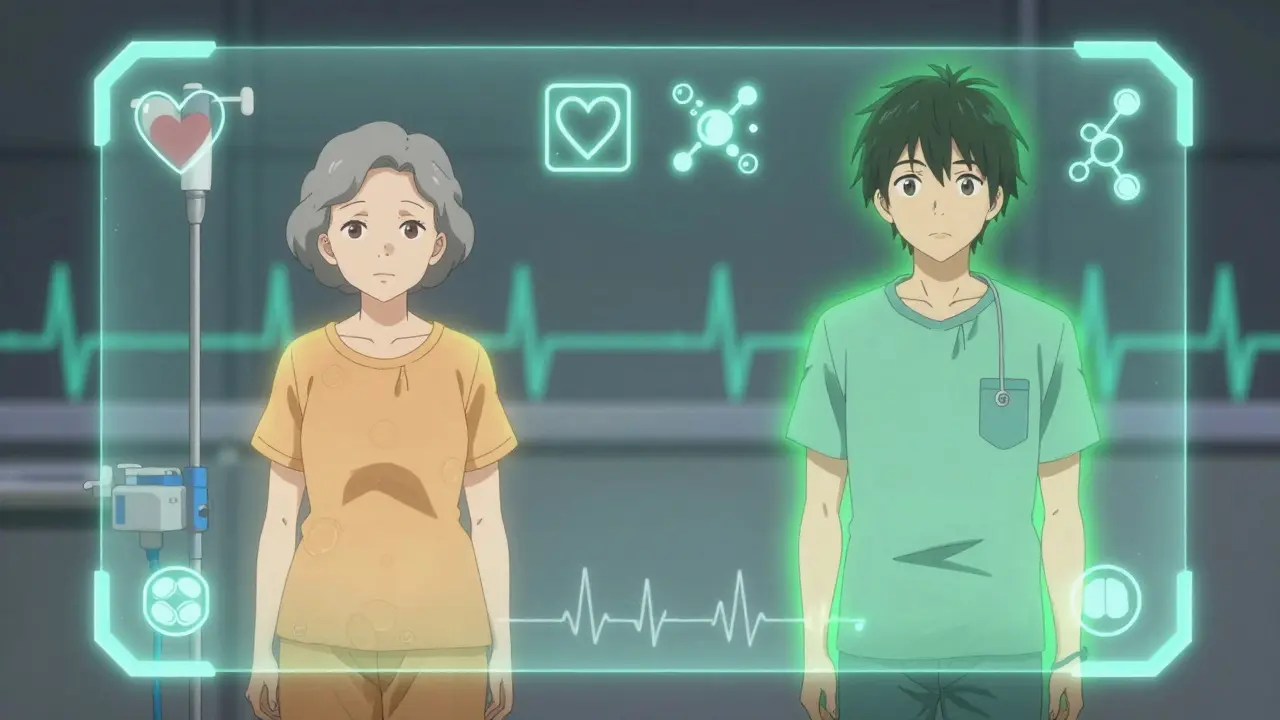
Two patients side by side: one at risk with amber warning aura, another safe with green aura, surrounded by medical icons.

Palonosetron: The Quiet Winner

If you're worried about QT prolongation, palonosetron might be your best bet. Unlike ondansetron, it doesn’t affect the QT interval at all - even at high doses. It also lasts longer (about 40 hours), so you need fewer doses. And it works better than ondansetron for preventing nausea after chemo or surgery.

It’s not cheap, but for high-risk patients - the elderly, those on multiple meds, or with heart conditions - it’s worth the cost. Australian Prescriber and EMCrit Project both recommend it as a safer alternative when QT safety matters.

Drowsiness: The Other Side of the Coin

Some antiemetics make you sleepy. Others don’t. And that matters - especially if you’re driving, working, or caring for someone.

Promethazine? High sedation risk. You’ll feel like you’ve been hit by a truck. Prochlorperazine? Low sedation. You can still function. Metoclopramide? Moderate drowsiness, plus it can cause muscle spasms because it crosses into the brain.

Olanzapine - an antipsychotic used off-label for nausea - causes drowsiness too, but less than older drugs. And it doesn’t touch the QT interval. That makes it a good option for people who need strong anti-nausea effects without heart or movement side effects.

What About Domperidone and Other Options?

Domperidone doesn’t cross the blood-brain barrier, so it doesn’t cause drowsiness. But it can still prolong QT - especially in older adults or those with kidney problems. A trial in healthy volunteers showed no effect up to 80 mg/day, but that doesn’t mean it’s safe for everyone. In Australia, it’s restricted because of heart risks.

For patients who can’t use QT-prolonging drugs, safer choices include:

  • Dimenhydrinate (Dramamine) - mild QT effect, but sedating
  • Meclizine - low QT risk, used for motion sickness
  • Benzodiazepines - not antiemetics per se, but help with nausea from anxiety
  • Transdermal granisetron - less QT impact than oral or IV
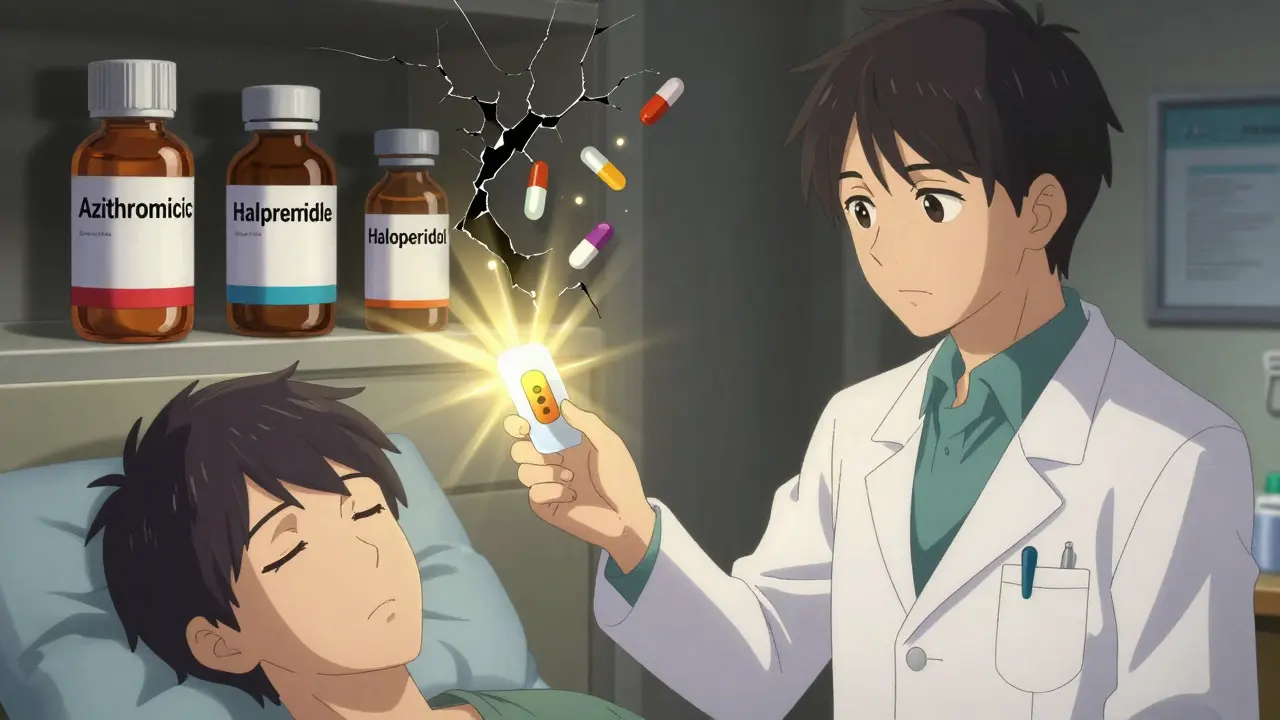
A pharmacist giving a transdermal patch to a patient, with risky drugs fading into shadow behind them.

Who’s at Highest Risk?

Not everyone needs to avoid these drugs. But if you fit any of these profiles, be extra careful:

  • You’re over 65
  • You have heart disease, a prior arrhythmia, or a family history of sudden cardiac death
  • Your potassium or magnesium is low
  • You’re on other QT-prolonging drugs - antibiotics like azithromycin, antidepressants like citalopram, or antifungals like fluconazole
  • You’re getting IV antiemetics, especially ondansetron

If you're healthy, young, and taking a single oral dose of an antiemetic? Your risk is very low. But if you’re on multiple meds or have a heart condition? That’s when things get dangerous.

What Should You Do?

Don’t stop your meds. But do ask these questions:

  1. Is there a safer alternative? (Palonosetron, olanzapine, or transdermal granisetron are better choices if QT is a concern.)
  2. Am I on other drugs that affect my heart? (Tell your doctor everything - even supplements.)
  3. Do I need IV or can I take it orally? (Oral ondansetron has almost no QT risk.)
  4. Am I getting electrolytes checked? (Low potassium is a silent trigger.)
  5. Am I being monitored? (If you’re high risk, a simple ECG before and after the dose can catch problems early.)

Many doctors still default to ondansetron because it’s cheap and fast-acting. But in 2026, we have better tools. Palonosetron, for example, is more effective, lasts longer, and doesn’t mess with your heart. It’s not always covered by insurance, but if you’re at risk, it’s worth pushing for.

Bottom Line

Antiemetics save lives - but they can also hurt them if used carelessly. QT prolongation isn’t a myth. Drowsiness isn’t just a side effect - it’s a safety issue. The key isn’t avoiding these drugs entirely. It’s matching the right drug to the right patient.

For healthy people: ondansetron is fine. For older adults or those with heart issues: skip the IV, avoid stacking drugs, and choose palonosetron or olanzapine. For those who need to stay alert: avoid promethazine and go with prochlorperazine or domperidone (with caution).

The best antiemetic isn’t the strongest one. It’s the one that works without putting your heart at risk.

Can ondansetron cause sudden heart problems?

Yes, but it’s rare. Ondansetron can prolong the QT interval, especially at high IV doses (over 8 mg). In people with existing heart conditions, low potassium, or who are taking other QT-prolonging drugs, this can trigger torsades de pointes - a dangerous heart rhythm. Most cases happen in hospitals, not at home. Oral doses under 8 mg carry much lower risk.

Is droperidol safe for nausea?

At standard antiemetic doses (0.625-2.5 mg IV), droperidol is very safe. Studies show no increase in torsades risk compared to placebo. The old black box warning was based on fear, not data. The real danger comes with doses above 10 mg or when combined with other heart-affecting drugs.

Which antiemetic causes the least drowsiness?

Prochlorperazine and palonosetron cause the least drowsiness. Promethazine and ondansetron (in some people) are more sedating. Olanzapine causes drowsiness but is effective and heart-safe. For daytime use, avoid promethazine and choose prochlorperazine or transdermal granisetron.

Is palonosetron better than ondansetron?

Yes, in most cases. Palonosetron lasts longer (up to 40 hours), works better for delayed nausea, and doesn’t prolong the QT interval. It’s more expensive, but for high-risk patients - the elderly, those on multiple meds, or with heart conditions - it’s the safer, more effective choice. Many hospitals are switching to it for this reason.

Should I get an ECG before taking antiemetics?

If you’re over 65, have heart disease, are on other QT-prolonging drugs, or have low potassium, yes. A simple ECG before and after a dose can catch dangerous QT changes early. For healthy people on a single oral dose, it’s usually not needed. But if you’re unsure, ask your doctor.

Can I take antiemetics with antibiotics?

Be very careful. Many antibiotics - like azithromycin, clarithromycin, and moxifloxacin - also prolong the QT interval. Combining them with ondansetron or droperidol increases your risk of dangerous heart rhythms. Always tell your doctor what you’re taking, even over-the-counter meds and supplements.

Author
  1. Caden Lockhart
    Caden Lockhart

    Hi, I'm Caden Lockhart, a pharmaceutical expert with years of experience in the industry. My passion lies in researching and developing new medications, as well as educating others about their proper use and potential side effects. I enjoy writing articles on various diseases, health supplements, and the latest treatment options available. In my free time, I love going on hikes, perusing scientific journals, and capturing the world through my lens. Through my work, I strive to make a positive impact on patients' lives and contribute to the advancement of medical science.

    • 3 Jan, 2026
Comments (16)
  1. Philip Leth
    Philip Leth

    Man, I had no idea ondansetron could mess with your heart like that. I’ve had it a dozen times after chemo and never thought twice. Guess I got lucky. But now I’m gonna ask my oncologist about palonosetron - if it lasts longer and doesn’t fry my rhythm, why not?

    • 3 January 2026
  2. Joy F
    Joy F

    Let’s not pretend this is about pharmacology - this is a corporate profit play disguised as clinical guidance. Ondansetron is cheap, generic, and ubiquitous because Big Pharma pushed it for decades while burying the QT data. Palonosetron? Expensive. Patent-protected. And suddenly, it’s the ‘gold standard’? Wake up. The same entities that sold us OxyContin are now selling us ‘safer’ antiemetics - same playbook, different symptoms.


    They don’t care if you live or die. They care if your insurance pays for the branded version. And if you’re elderly, poor, or uninsured? You’re still getting the dangerous stuff because the system is designed to optimize margins, not mortality.


    Don’t be fooled by ‘evidence-based’ jargon. This isn’t science. It’s capitalism with a stethoscope.

    • 3 January 2026
  3. Ian Detrick
    Ian Detrick

    It’s funny how we treat meds like they’re all good or all bad. Reality’s messier. Ondansetron isn’t evil - it’s a tool. Like a chainsaw. Use it wrong, you lose a finger. Use it right, you cut down a tree. The key isn’t avoiding it - it’s knowing who you’re giving it to.


    Young, healthy, oral dose? Fine. Elderly, on five other meds, low K+, IV push? That’s a different story. Medicine isn’t about blanket bans. It’s about matching the tool to the task - and the patient.


    Palonosetron’s great for high-risk folks. But if you’re a 30-year-old with food poisoning and no heart issues? Save the cash. Ondansetron’s still your best friend.

    • 3 January 2026
  4. Angela Goree
    Angela Goree

    THIS is why America’s healthcare is broken! They let Big Pharma poison people with cheap drugs while charging $1,200 for a single dose of palonosetron - and then act like it’s the ‘responsible’ choice! It’s a scam! The government should ban ondansetron outright - it’s a death trap disguised as a cure!


    And don’t even get me started on how they let these drugs be sold over the counter in other countries - we’re the only ones letting this happen! Wake up, people! This isn’t medicine - it’s genocide by prescription!

    • 3 January 2026
  5. Kerry Howarth
    Kerry Howarth

    Good breakdown. The real takeaway? Context matters. A single oral 8mg dose of ondansetron in a healthy 28-year-old? Negligible risk. IV 16mg in a 78-year-old on amiodarone and furosemide? High risk. Don’t overgeneralize. Don’t underreact. Assess the whole picture.

    • 3 January 2026
  6. Tiffany Channell
    Tiffany Channell

    Of course they downplay the danger. Every drug that kills people quietly gets rebranded as ‘safe’ after a few lawsuits. The fact that 91% of torsades cases involved polypharmacy proves nothing - it just means the system is designed to fail. They don’t want you to know the truth: these drugs are poison unless you’re a perfectly healthy lab rat.


    And don’t tell me ‘oral is safe.’ The liver metabolizes it. The heart doesn’t care how it got there. It’s still in your bloodstream. Still blocking channels. Still ticking time bomb.

    • 3 January 2026
  7. Angela Fisher
    Angela Fisher

    They’re hiding something. Why else would the FDA allow this? Why does palonosetron cost 20x more? Why did droperidol get a black box warning and then suddenly it’s ‘fine’? This isn’t science - it’s control. They want you dependent on expensive meds so you can’t switch to natural remedies. Ginger tea. Acupressure. CBD. All cheaper. All safer. But they don’t profit from those.


    And don’t even get me started on how hospitals push IV ondansetron like it’s water. It’s not about your nausea - it’s about turning you into a patient who needs more drugs, more tests, more visits. They’re not healing you. They’re monetizing your fear.


    Check your potassium. Check your ECG. But also - question why this system exists at all. The real antiemetic? Trust no one. Not the doctor. Not the drug rep. Not the FDA. The only safe drug is the one you never take.


    And if you’re reading this? You’re already part of the problem. You’re still on the grid. Still trusting the machine. Wake up.


    PS: I’ve been off all meds for 3 years. No nausea. No drugs. Just water, lemon, and prayer. 🙏

    • 3 January 2026
  8. Sarah Little
    Sarah Little

    Wait - so you’re saying palonosetron doesn’t prolong QT? That’s fascinating. But what about its effect on the 5-HT3 receptor density over time? And has anyone studied the long-term neuroadaptive changes in patients on chronic palonosetron? I’ve seen case reports of delayed emesis rebound after 3+ weeks of use - could this be a compensatory upregulation? Also, what’s the pharmacokinetic profile in patients with hepatic impairment? The literature is sparse.


    And if we’re talking about drowsiness, what about the H1 receptor affinity of olanzapine versus prochlorperazine? Is the sedation truly ‘less’ or just differently mediated? And is there a metabolite profile that correlates with CNS penetration? I’d love to see the CYP2D6 phenotyping data.

    • 3 January 2026
  9. JUNE OHM
    JUNE OHM

    OMG I just found out my grandma got ondansetron after her surgery and she’s got AFib 😭 I’m calling her doctor RIGHT NOW. I knew something felt off. Why do they even give this stuff? I’m so mad. 🤬 I’m gonna post this on TikTok so everyone knows. #OndansetronIsADanger #QTProblems #SaveOurGrandmas 💔🩺

    • 3 January 2026
  10. Shanahan Crowell
    Shanahan Crowell

    Love this thread. Everyone’s got a point - from the conspiracy guy to the jargon nerd. But here’s what I’ve seen in ER: the real hero isn’t the drug. It’s the person asking the right questions. ‘What else are they on?’ ‘Any heart history?’ ‘Can we try oral first?’ Those questions save lives. Not the brand name. Not the price tag. The curiosity.


    So if you’re a patient - ask. If you’re a provider - listen. If you’re a family member - push. That’s the real antiemetic.

    • 3 January 2026
  11. Brittany Wallace
    Brittany Wallace

    I’ve been a nurse for 18 years. I’ve seen people get torsades from ondansetron. I’ve also seen people saved by it when nothing else worked. Medicine isn’t black and white. It’s a thousand shades of gray - and sometimes, you have to pick the least bad option.


    Palonosetron? Yes, better for high-risk. But it’s not magic. And sometimes, you don’t have it on formulary. Or the patient’s insurance denies it. Or it’s 3 AM and the pharmacy’s closed.


    So we do what we can. We check electrolytes. We get a baseline ECG. We avoid stacking. We document. We monitor. And we pray.


    There’s no perfect drug. Only perfect vigilance.

    • 3 January 2026
  12. Michael Burgess
    Michael Burgess

    Big shoutout to the doc who wrote this - finally, someone broke it down without sounding like a textbook. I’ve been on metoclopramide for gastroparesis and had the whole ‘spasms and zombie mode’ thing. Switched to olanzapine 5mg at night - no QT issues, no muscle twitches, and I can actually watch TV without falling asleep on the couch. Game-changer.


    Also, domperidone? I ordered it from Canada. Took it for 6 months. No drowsiness, no heart issues. My cardiologist didn’t even blink. Said ‘if it works and your labs are clean, keep going.’ So yeah - sometimes the ‘off-label’ stuff is the real MVP.


    Bottom line: don’t fear meds. Fear ignorance. Educate yourself. Ask questions. And if your doctor rolls their eyes? Find a new one.

    • 3 January 2026
  13. Lori Jackson
    Lori Jackson

    It’s appalling how casually physicians prescribe these drugs without even checking a basic ECG. This isn’t just negligence - it’s malpractice dressed in white coats. The fact that IV ondansetron is still standard in ERs is a national disgrace. We’ve known about QT risks since the 90s. Why are we still playing Russian roulette with cardiac rhythms? Because laziness is cheaper than liability.


    And don’t even get me started on the ‘oral is safe’ myth. The liver doesn’t care if it’s IV or PO - it’s still bioavailable. The heart doesn’t know the difference. You’re just delaying the inevitable.


    Those who survive? Lucky. Those who don’t? Just statistics. And the system keeps running.

    • 3 January 2026
  14. Wren Hamley
    Wren Hamley

    So if palonosetron doesn’t prolong QT, why isn’t it first-line everywhere? Is it just cost? Or is there something else? Like… maybe it’s less effective for acute vomiting? Or maybe the studies are funded by the manufacturer? I mean - I trust the data, but I also trust skepticism.


    Also, transdermal granisetron? That’s wild. I’ve never heard of it for nausea. Is that like a patch? How long does it take to kick in? Does it work for motion sickness? I need more details. This is the kind of stuff I want to know before I end up in the ER.

    • 3 January 2026
  15. innocent massawe
    innocent massawe

    Thanks for sharing this. In Nigeria, we don’t have palonosetron or even ondansetron in many places. We use metoclopramide or promethazine - and people get drowsy, yes. But we don’t have ECG machines in most clinics. So we just watch for fainting or irregular pulse. If they look okay, we give it. It’s not perfect. But it’s what we have.


    Knowledge like this helps. Even if we can’t change the system, we can at least talk about it.

    • 3 January 2026
  16. Kerry Howarth
    Kerry Howarth

    One thing I’d add: don’t forget hydration. Low potassium? Often from vomiting itself. Fix the fluid, fix the K+, and suddenly your QT risk drops 70%. Sometimes the best ‘antidote’ isn’t another drug - it’s a glass of electrolyte water.

    • 3 January 2026
Write a comment