
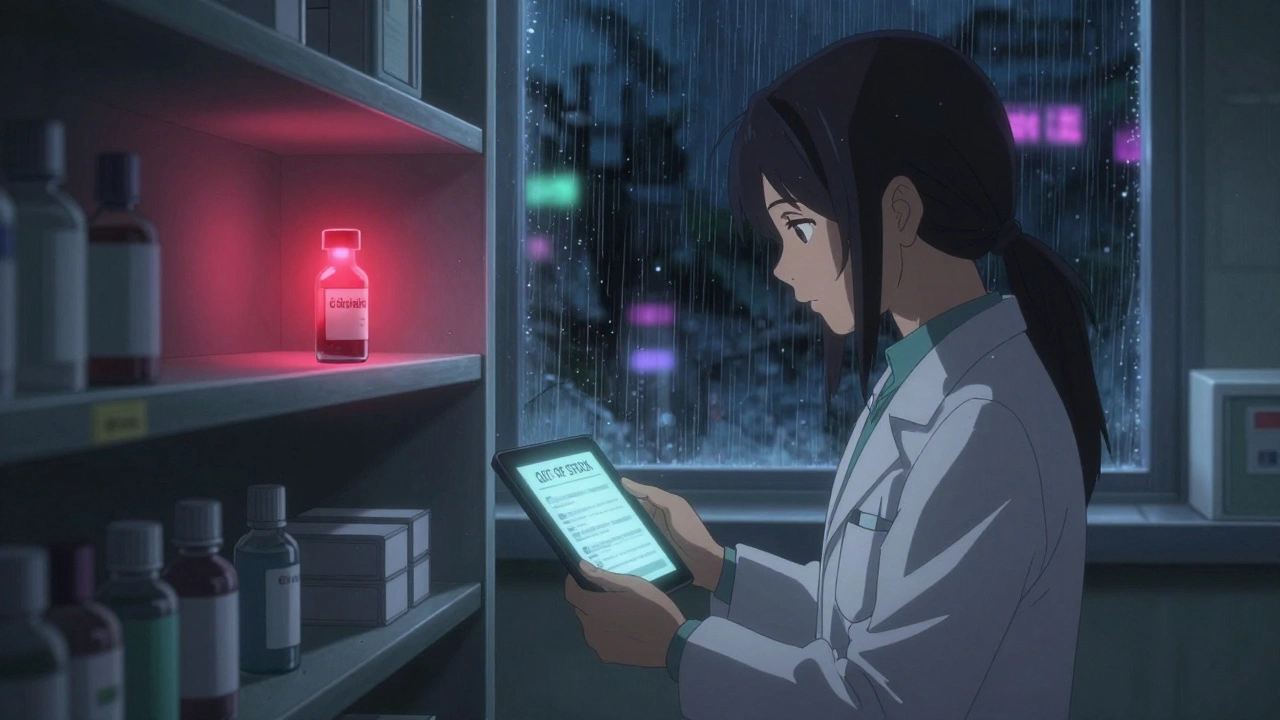
Right now, if you’re waiting for a prescription for chemotherapy, an IV fluid, or even a common ADHD medication, you might be in for a long wait. As of December 2025, over 270 medications are still in short supply across the U.S., and for many patients, this isn’t just an inconvenience-it’s a threat to their health. The problem isn’t new, but it’s getting worse in some areas and showing no signs of easing up anytime soon.
What’s Actually in Short Supply?
The most critical shortages right now are in generic sterile injectables. These are drugs that must be made in ultra-clean environments, and even a tiny contamination can shut down a whole production line. Right now, these are the top medications you won’t easily find:- 5% Dextrose Injection (small bags) - Used for hydration and delivering other IV drugs. Shortage started in February 2022, expected to last until August 2025.
- 50% Dextrose Injection - Used for low blood sugar emergencies. Shortage began in December 2021, with no clear end date yet.
- Cisplatin - A cornerstone chemotherapy drug for testicular, ovarian, and lung cancers. A quality failure at a major Indian plant in 2022 cut supply by half, and it’s still rationed in hospitals.
- Vancomycin - A last-resort antibiotic for serious infections. Shortages have returned after a brief improvement in early 2025.
- Levothyroxine - The main treatment for hypothyroidism. Demand has spiked 25% since 2023, and manufacturing delays are catching up.
- Glucagon - Used in emergencies for severe low blood sugar in diabetics. Limited manufacturers mean even small disruptions cause nationwide gaps.
- GLP-1 agonists (e.g., semaglutide, tirzepatide) - Popular for weight loss and diabetes. Demand has grown 35% annually since 2020, and production can’t keep up.
These aren’t obscure drugs. They’re used in hospitals every day. When they disappear, doctors scramble. Nurses spend hours tracking down alternatives. Patients delay treatments or get switched to less effective options.
Why Are These Drugs So Hard to Find?
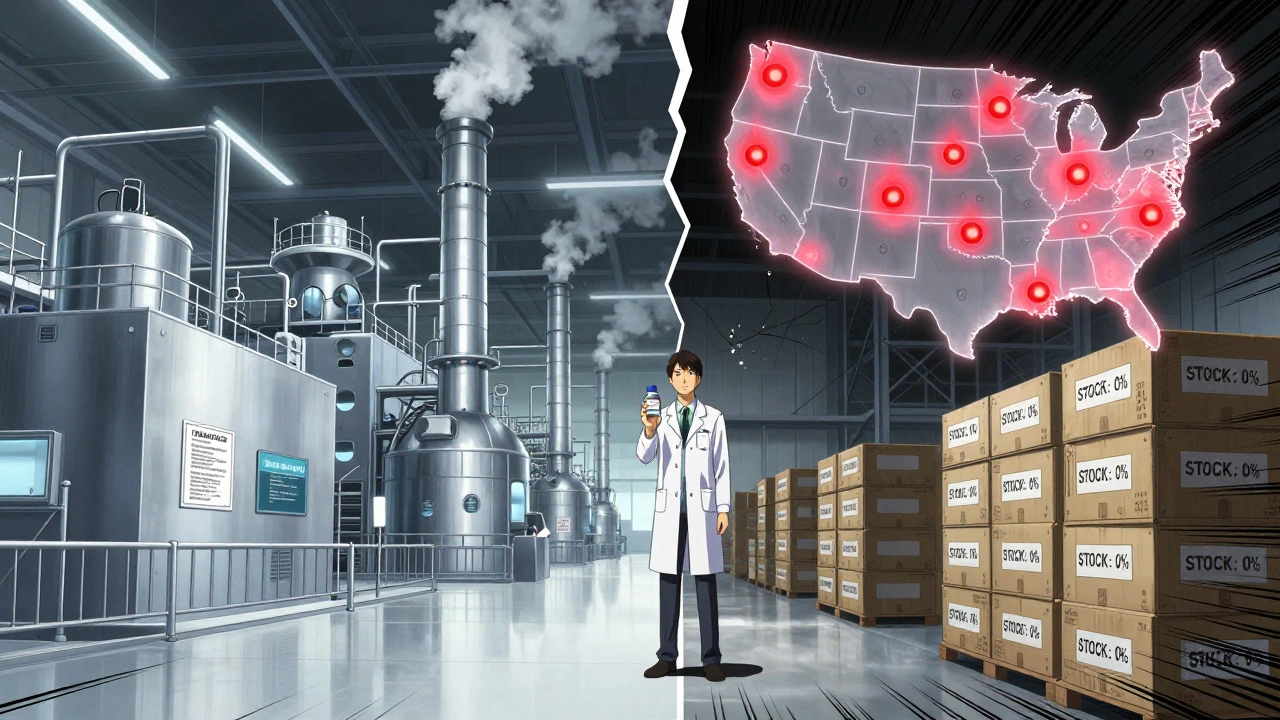
It’s not one problem-it’s a chain of failures. About 80% of the raw ingredients for U.S. drugs come from just two countries: India and China. In India, quality control issues are common. A single FDA inspection in 2022 shut down a plant making half of the country’s cisplatin. In China, geopolitical tensions and export restrictions can freeze supply overnight.Most of these drugs are generics. That means they’re cheap-sometimes less than $1 per dose. Manufacturers make only 5-8% profit on them. Compare that to brand-name drugs like GLP-1s, which can have 30-40% margins. Why would a company invest millions to fix a line making $1 pills when they can make more money on a $1,000 weight-loss shot?
On top of that, the U.S. doesn’t keep enough backup stock. Only 28% of hospitals have even a 30-day reserve of critical drugs. Most rely on just-in-time delivery, which works fine until it doesn’t. When a factory in India shuts down, or a ship gets delayed, there’s no buffer.
Who’s Getting Hurt?
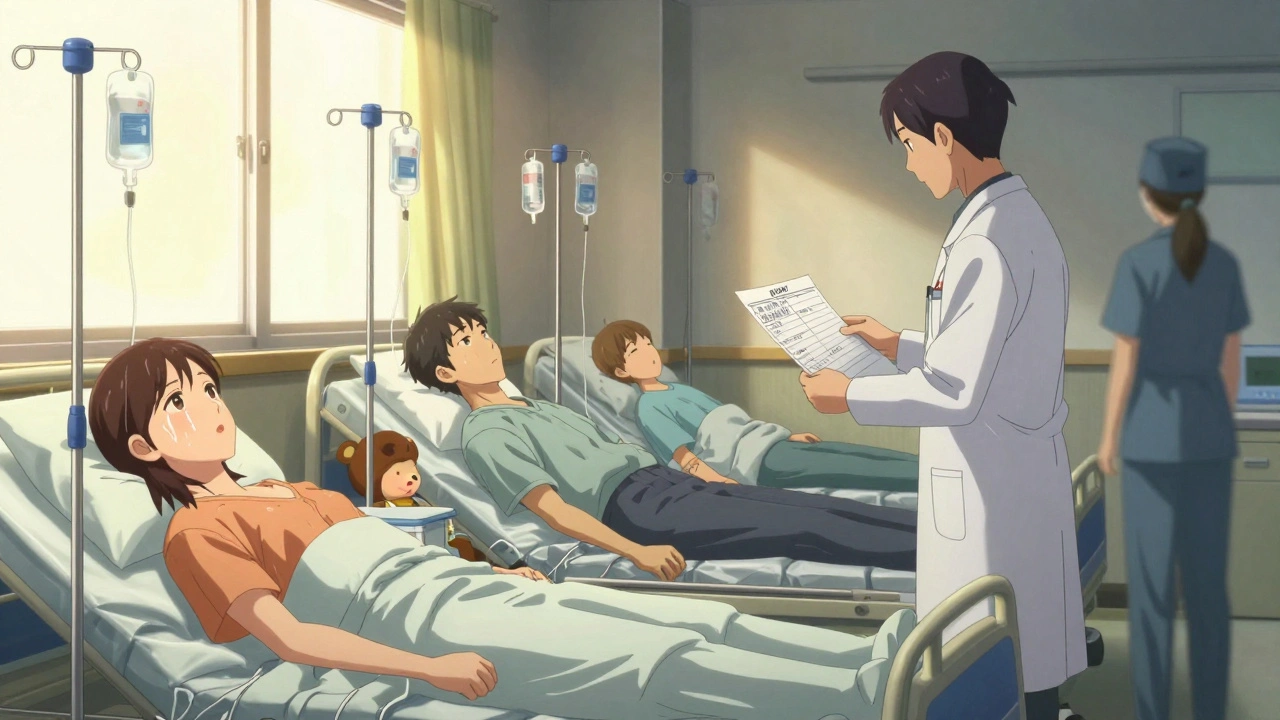
Patients aren’t just inconvenienced-they’re at risk. A 2024 survey found that 31% of cancer patients had their treatment delayed because of drug shortages. The average delay? Nearly 15 days. For someone with aggressive cancer, that’s life or death.Doctors are forced to make impossible choices. A hospital in Ohio recently rationed cisplatin, giving it only to patients with testicular cancer-the group that benefits most-while others got less effective alternatives. Pharmacists report that 67% of medication errors in hospitals last year were linked to substitutions made during shortages.
Even routine care is affected. A diabetic who can’t get glucagon when their blood sugar crashes could go into a coma. A child with severe dehydration can’t get IV fluids and ends up in the ER. An elderly patient with thyroid disease might go weeks without levothyroxine and develop heart problems.
What’s Being Done?
The FDA says it prevents about 200 potential shortages every year by stepping in early. In January 2025, they launched a new portal where doctors and pharmacists can report shortages not yet on the official list. In just three months, they got over 1,200 reports-and acted on 87% of them.Some states are trying new approaches. New York is building an online map showing which pharmacies still have scarce drugs. Hawaii now allows Medicaid to use drugs approved in Europe or Canada when U.S. versions aren’t available.
The American Society of Health-System Pharmacists has published guidelines for stretching supplies: using smaller doses, switching from IV to oral forms when safe, and auditing inventory daily. But these are band-aids. They don’t fix the system.
What’s the Real Solution?
Experts agree: we need to stop treating drug shortages like emergencies and start treating them like infrastructure failures. Right now, the U.S. depends on foreign factories to make life-saving pills. That’s like relying on one airport to handle all flights into the country.Three changes could make a real difference:
- Pay manufacturers to make generics at home. The government could offer subsidies or guaranteed contracts to U.S.-based plants that produce critical generics. Right now, it’s cheaper to outsource-even if it’s riskier.
- Build national stockpiles. Just like we keep emergency fuel or medical masks, we need strategic reserves of essential drugs. Ten thousand doses of cisplatin sitting in a warehouse could save lives during a crisis.
- Force transparency. Manufacturers should be required to tell the FDA months in advance if they plan to stop making a drug or if a factory is having trouble. Right now, many wait until the last minute-or don’t say anything at all.
The Congressional Budget Office warns that without these steps, drug shortages will stay above 250 through 2027. If new tariffs on Chinese and Indian pharmaceuticals go through, that number could jump to 350 or more.
What Can You Do?
If you’re on a medication that’s in short supply:- Don’t panic-but don’t wait. Talk to your doctor or pharmacist now about alternatives.
- Ask if your drug is on the ASHP Drug Shortages Database. It’s updated weekly.
- If you’re using a GLP-1 or ADHD drug and can’t refill, ask about generic versions or other classes of medication.
- Keep a 30-day supply on hand if possible. Some pharmacies will let you stock up early if you explain the situation.
- Report a shortage to your pharmacist or hospital. If enough people report the same issue, it gets flagged to the FDA faster.
Drug shortages aren’t going away. But they’re not inevitable. They’re the result of choices-about where we make medicines, how much we pay for them, and whether we treat them like commodities or lifelines. The next time you fill a prescription, remember: someone else might be waiting for that same pill. And the system is still broken.
What are the most commonly scarce medications in 2025?
The most commonly scarce medications in 2025 include 5% and 50% Dextrose injections, cisplatin (a chemotherapy drug), vancomycin (an antibiotic), levothyroxine (for thyroid conditions), glucagon (for severe low blood sugar), and GLP-1 agonists like semaglutide used for weight loss and diabetes. These are all essential, widely used drugs, and shortages are affecting hospitals, clinics, and home patients.
Why are generic drugs more likely to be in short supply than brand-name drugs?
Generic drugs have very low profit margins-often just 5-8%-because they’re priced to compete with each other. Manufacturers have little incentive to invest in quality upgrades or maintain backup production lines. Brand-name drugs, by contrast, can have 30-40% margins, so companies can afford to keep multiple factories running, even if one has problems.
Can I get a shortage drug from another country?
Legally, you can’t import FDA-approved drugs from other countries for personal use unless it’s under very limited exceptions. However, some states like Hawaii now allow Medicaid to use foreign-approved versions of drugs during shortages. This is a new policy, and it’s only for specific, critical medications under medical supervision.
How long do drug shortages usually last?
It varies. Some last a few weeks; others, like 5% Dextrose, have lasted over three years. On average, shortages that started in 2022 or earlier are still unresolved. The FDA reports that resolution times have improved by 15% since 2023, but the underlying causes-like overseas manufacturing dependence-haven’t changed.
Is there a way to know if my pharmacy has the drug I need?
Yes. The ASHP Drug Shortages Database lists which drugs are scarce and sometimes notes which manufacturers still have supply. Some states, like New York, are launching online maps showing which pharmacies have stock. Always call ahead, and ask your pharmacist to check multiple locations or distributors.
Are there safe alternatives if my drug is unavailable?
In many cases, yes. Pharmacists can often substitute a therapeutically equivalent drug-like switching from one antibiotic to another in the same class. But this isn’t always safe or possible, especially with chemotherapy or insulin. Always consult your doctor before switching. Never take someone else’s medication.


I am a pharmaceutical expert with over 20 years of experience in the industry. I am passionate about bringing awareness and education on the importance of medications and supplements in managing diseases. In my spare time, I love to write and share insights about the latest advancements and trends in pharmaceuticals. My goal is to make complex medical information accessible to everyone.