
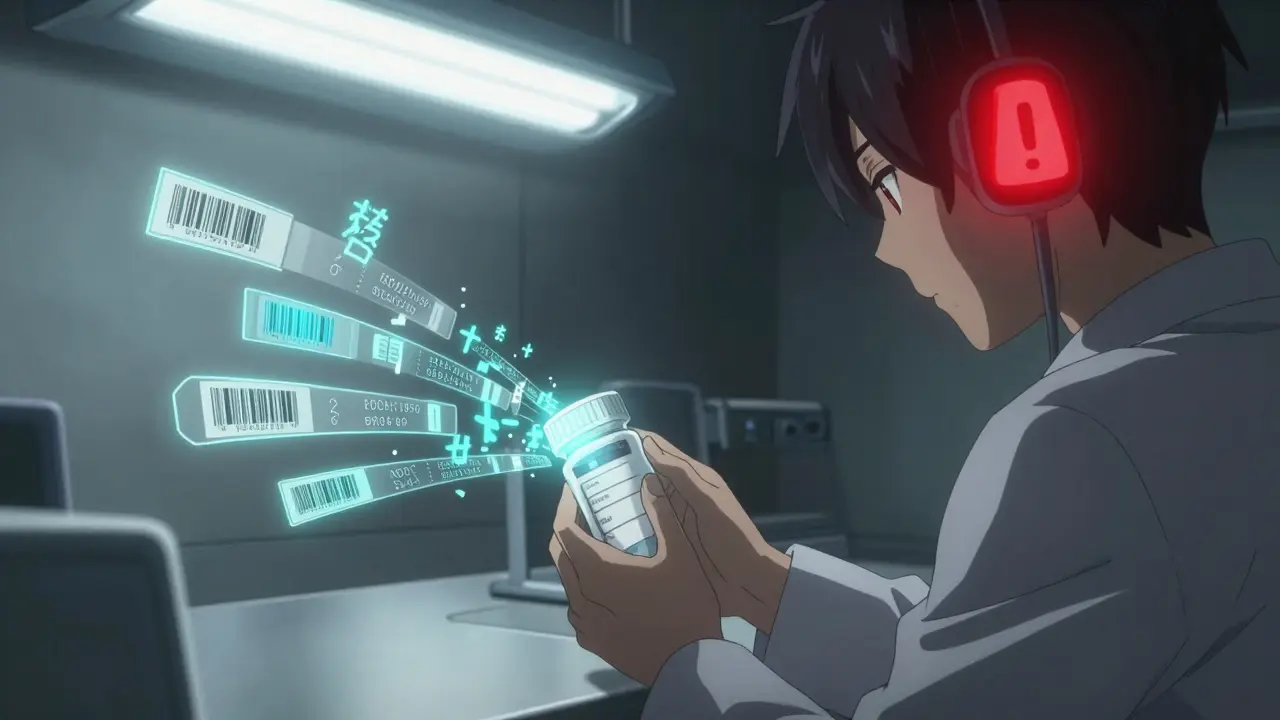
Every year, millions of prescription drugs move through a complex web of manufacturers, wholesalers, and pharmacies before reaching your medicine cabinet. But somewhere along that path, a fake pill could slip in - one that contains no active ingredient, the wrong chemical, or even toxic substances. The DSCSA was created to stop that.
What Is the DSCSA and Why Does It Matter?
The Drug Supply Chain Security Act (DSCSA) is a U.S. federal law passed in 2013 to build a digital trail for every prescription drug package. Before DSCSA, tracking drugs was a mess. Each state had its own rules, paper records were easy to forge, and if a bad batch showed up, recalls took weeks - if they happened at all. Now, every bottle, vial, or blister pack must have a unique serial number, lot number, expiration date, and National Drug Code (NDC) printed in both human-readable text and a machine-scannable barcode. This isn’t just a label - it’s a digital fingerprint. When a pharmacy receives a shipment, it scans the barcode and checks the serial number against the manufacturer’s database in seconds. If it doesn’t match, the system flags it as suspect. The FDA estimates this system cuts counterfeit drugs by 95%. That’s not a guess. It’s based on real data from early adopters like CVS and McKesson, who saw suspect product investigations drop by 75% after going fully digital.How the DSCSA Track-and-Trace System Works
Think of the drug supply chain like a relay race. Each team member - manufacturer, repackager, wholesaler, pharmacy - must pass along three key pieces of electronic information:- Transaction Information (TI): What the product is (NDC, serial number, lot, expiration).
- Transaction History (TH): Who owned it before and when.
- Transaction Statement (TS): A legal certification that the transfer was legitimate.
Who Has to Comply? And Who’s Falling Behind?
The law applies to everyone in the chain: manufacturers, repackagers, wholesale distributors, and dispensers - that means pharmacies, hospitals, and clinics. Big players like Walgreens, CVS, and McKesson spent hundreds of millions upgrading systems. By 2023, 98% of manufacturers and 95% of wholesalers were fully compliant. But small pharmacies? They’re struggling. A 2023 survey by the National Community Pharmacists Association found 68% of independent pharmacies said DSCSA compliance was their biggest tech challenge. The average cost to upgrade? Around $185,000. That’s more than most small pharmacies make in a year. Many are still using old scanners that can’t read 2D barcodes or software that doesn’t talk to their inventory system. Chain pharmacies, which handle 70% of U.S. prescriptions, are at 91% compliance. Independent pharmacies? Only 58%. That gap is dangerous. A single non-compliant pharmacy can become a backdoor for counterfeit drugs to enter the system.
The Real Problems: Data Mismatches and System Chaos
Even when systems are installed, they don’t always work together. The biggest headache? Data mismatches. A wholesaler sends a shipment with serial number 1234567890. The pharmacy’s system expects 1234567890ABC. Or the lot number is formatted differently. Or the expiration date is in MM/DD/YYYY instead of YYYY-MM-DD. These tiny differences cause verification failures. One pharmacy owner in Ohio told a trade journal his team spends 2-3 days a week chasing down mismatched serial numbers. That delays patient care. It also means more drugs sit in limbo - potentially exposed to tampering. Vendors like TraceLink, SAP, and Oracle sell software to fix this, but their systems don’t always talk to each other. The FDA calls this “interoperability.” In plain terms: it’s like trying to text someone who only speaks Mandarin when you only know Spanish. You both have phones, but no common language.What Happens When a Fake Drug Is Found?
Finding a suspect product isn’t the end - it’s the beginning of an investigation. When a pharmacy scans a package and gets a red flag, the law requires them to:- Immediately quarantine the product.
- Verify the serial number against the manufacturer’s database.
- Conduct forensic tests if needed (like checking chemical composition).
- Report the incident to the FDA within 24 hours.
How This Compares to Europe’s System
Europe’s Falsified Medicines Directive (FMD) also requires serialization, but it’s built differently. The EU uses a central database - every scan is sent to a single national hub. The U.S. doesn’t have that. Instead, each company keeps its own data and shares it directly with its trading partners. That means the U.S. system is more flexible - companies can choose their own software. But it’s also harder to police. In Europe, if a fake drug pops up, regulators can instantly see where it entered the system. In the U.S., investigators have to chase down 50 different companies. The EU also requires tamper-evident packaging - a seal you can see and feel. The DSCSA doesn’t. So a fake pill could still be in a real-looking bottle. That’s why verification through scanning is so critical.
What’s Next? OTC Drugs and Beyond
Right now, DSCSA only covers prescription drugs. But the FDA is already looking at over-the-counter (OTC) medications - especially high-risk ones like insulin, asthma inhalers, and painkillers. FDA Commissioner Dr. Robert Califf said in March 2023 that extending the system to OTCs is “under evaluation.” If that happens, it could affect millions of consumers who buy drugs without a prescription. Long-term, experts predict DSCSA-compliant systems will save $2.3 billion a year by cutting down on recalls and drug diversion. Right now, stolen drugs are a $20 billion problem in the U.S. - often sold online or in shady clinics. DSCSA makes it harder to move stolen goods without detection.What You Can Do as a Patient
You don’t need to understand EPCIS or serial numbers. But you can protect yourself:- Buy medications only from licensed pharmacies - avoid online sellers that don’t require a prescription.
- Check the packaging. Does it look different? Is the label blurry? Is the bottle sealed?
- If something seems off, report it. Talk to your pharmacist or call the FDA’s MedWatch hotline.
Final Thoughts: A System Built to Save Lives
The DSCSA isn’t glamorous. It’s not a flashy app or a new drug. It’s a quiet, complex, digital backbone holding up the entire U.S. drug supply chain. It’s expensive. It’s messy. But it’s working. Since 2019, the number of counterfeit drug incidents reported to the FDA has dropped by 82%. That’s not coincidence. It’s the result of billions in investment, thousands of trained staff, and millions of scanned barcodes. By the end of 2024, every prescription drug in America will have a digital identity. If a fake tries to slip in, the system will know - and it will stop it. This isn’t just about compliance. It’s about trust. Trust that the medicine you take will heal you - not hurt you.What is the DSCSA deadline for full track-and-trace compliance?
The full implementation deadline for the DSCSA track-and-trace system is November 27, 2024. By that date, all manufacturers, wholesalers, repackagers, and dispensers must be able to electronically verify and trace prescription drug packages at the unit level using serialized data. The FDA is offering a one-year stabilization period after this date to allow for system fixes, but full compliance is expected.
How does DSCSA prevent counterfeit drugs?
DSCSA prevents counterfeit drugs by requiring every prescription package to have a unique serial number, lot number, expiration date, and NDC - all in a scannable barcode. When a pharmacy receives a shipment, it scans the barcode and checks the serial number against the manufacturer’s database in real time. If the number doesn’t match or the product has been flagged as suspect, the system blocks the transaction. This makes it nearly impossible for fake drugs to enter the legal supply chain undetected.
Does DSCSA apply to over-the-counter (OTC) drugs?
As of 2025, DSCSA only applies to prescription drugs. However, the FDA has publicly stated it is evaluating whether to extend track-and-trace requirements to certain high-risk over-the-counter medications, such as insulin, asthma inhalers, and painkillers. No official timeline has been set, but expansion is likely in the next few years.
Why are small pharmacies struggling with DSCSA compliance?
Small pharmacies face high costs and technical complexity. Upgrading to DSCSA-compliant scanners, software, and IT infrastructure can cost $150,000-$200,000 - a massive expense for a single-location business. Many still use outdated systems that can’t read 2D barcodes or integrate with new verification platforms. Unlike large chains, they often lack dedicated compliance teams or IT support.
What happens if a pharmacy finds a suspect drug?
If a pharmacy identifies a suspect drug - such as one with a mismatched serial number or no verification record - it must immediately quarantine the product, verify its authenticity with the manufacturer, and report it to the FDA within 24 hours. Failure to do so can result in regulatory action, fines, or loss of licensure. The system is designed to catch and isolate fake drugs before they reach patients.
How accurate is the DSCSA system?
The system is highly accurate. Companies like McKesson report processing over 1.2 billion serialized transactions since 2020 with 99.98% accuracy. However, interoperability issues between different vendors’ software can cause false rejections - where legitimate products are flagged due to data formatting mismatches. These are technical glitches, not system failures, and are being resolved as companies update their systems.
Can patients verify a drug’s authenticity themselves?
Currently, patients cannot directly verify a drug’s serial number. The verification process happens between pharmacies and manufacturers behind the scenes. But patients can help by only purchasing from licensed pharmacies, checking for tampered packaging, and reporting anything suspicious to their pharmacist or the FDA’s MedWatch program.


I am a pharmaceutical expert with over 20 years of experience in the industry. I am passionate about bringing awareness and education on the importance of medications and supplements in managing diseases. In my spare time, I love to write and share insights about the latest advancements and trends in pharmaceuticals. My goal is to make complex medical information accessible to everyone.