

Using an expired inhaler during an asthma attack isn't just risky-it could be deadly. You might think, "It’s only been a few months past the date," or "I still feel a spray when I use it." But the truth is, expired medications don’t just lose effectiveness-they can become unpredictable, unsafe, or even dangerous. The FDA says expiration dates are about potency, not safety, but for certain drugs like inhalers, eye drops, and topical creams, that loss of potency isn’t just inconvenient-it’s a health emergency waiting to happen.
Why Expiration Dates Matter More Than You Think
Expiration dates aren’t arbitrary. They’re based on strict stability testing by manufacturers under real-world conditions. For most medications, that window is 12 to 24 months after production. But not all drugs degrade the same way. An expired bottle of ibuprofen might just lose a little strength. An expired inhaler? It might deliver only 60% of the dose you need when your airways are shutting down. Take Ventolin HFA (albuterol). A 2021 study in the Chest Journal found that inhalers 12 months past expiration delivered only 60-70% of the labeled dose. That’s not a slight drop-it’s a failure in a life-or-death moment. The same study showed dose variability jumped from 5% in fresh inhalers to 35% in expired ones. That means one puff might help, the next might do nothing. No warning. No signal. Just silence when you need it most. Eye drops are another silent threat. A 2022 study in Clinical Ophthalmology found that 38% of expired artificial tears had bacterial growth after just 30 days. That’s not a typo. Thirty-eight percent. Your eyes are one of the most sensitive areas in your body. Introducing bacteria through an old drop can cause corneal ulcers, infections, or even permanent vision damage. And unlike pills, you can’t see or smell contamination. It’s invisible until it’s too late. Topical creams like hydrocortisone? They’re less risky but still unreliable. At room temperature (above 25°C), hydrocortisone drops to 65% potency within six months of expiration. That means your rash might not respond. You might keep applying more, thinking it’s not working-until you risk skin thinning or other side effects from overuse.The Hidden Dangers of Improper Disposal
Most people don’t realize expired inhalers are hazardous waste. Why? Because they look like ordinary plastic canisters. But inside, they contain pressurized propellants-chemicals like hydrofluoroalkanes-that are toxic if released into landfills or incinerators. The EPA classifies these as hazardous because they can contaminate water and soil. A 2023 U.S. Geological Survey report found pharmaceutical residues in 80% of U.S. waterways. A single expired inhaler tossed in the trash can contribute to that. And it’s not just the environment. A 2023 report by MedProDisposal found that 29% of the medication remains in expired inhalers after use. That means if someone finds your trash and digs through it, they could accidentally get a full dose of albuterol-or worse, someone could puncture the canister, causing it to explode. Eye drops and topical creams? They’re not explosive, but they’re still contaminants. Pouring them down the sink or flushing them doesn’t make them disappear. Pharmaceuticals don’t break down easily in water systems. Fish in rivers have shown hormonal changes from trace amounts of medications. This isn’t science fiction-it’s documented in peer-reviewed studies.What You Should Do: Step-by-Step Management
For inhalers:- Don’t use them past the expiration date. Not even "a little past."
- Remove the canister from the plastic holder. Some inhalers (like ProAir RespiClick) have instructions printed on the packaging for removal.
- Do NOT puncture or burn the canister.
- Take it to a pharmacy take-back program. CVS, Walgreens, and other major chains offer free disposal at over 18,000 locations nationwide.
- If no pharmacy is nearby, use a mail-back kit. Washington State and other states offer free prepaid mailers. Amazon Pharmacy also offers free returns for expired inhalers.
- Discard after the expiration date-even if it looks fine.
- Never reuse single-use vials after opening, even if they’re not expired.
- Don’t flush. Don’t pour down the sink.
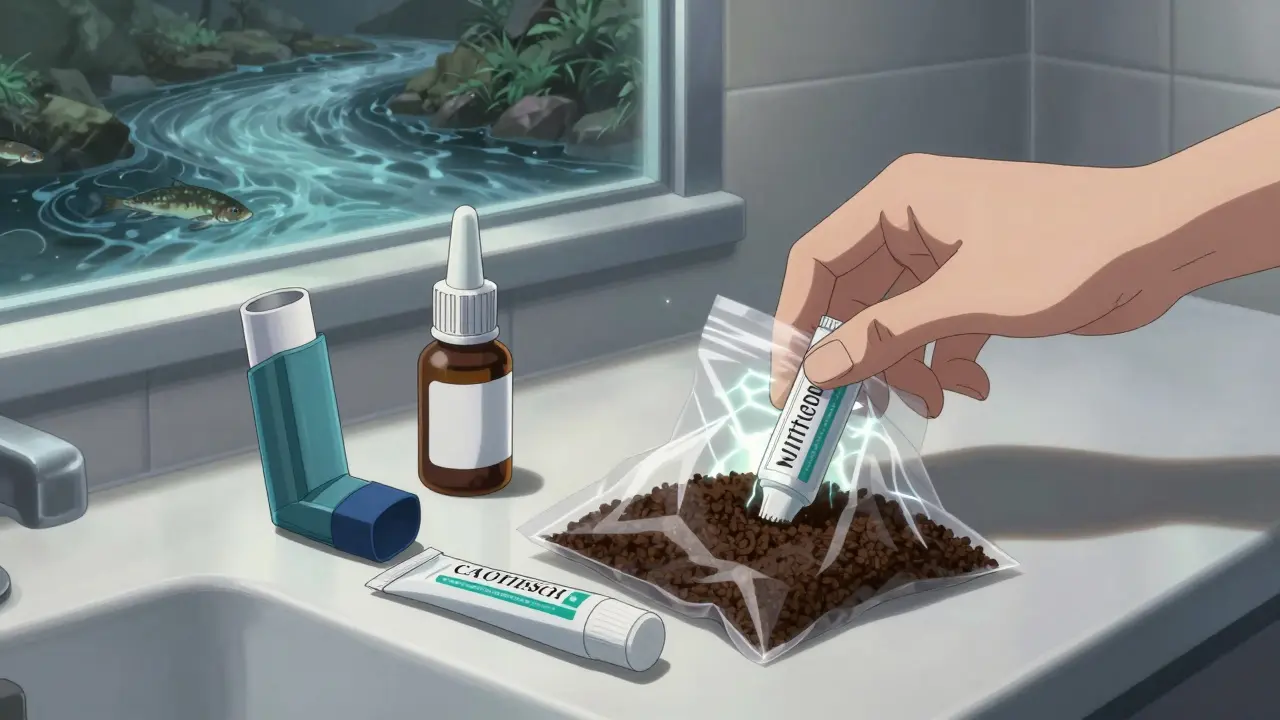
- Place the bottle in a sealed plastic bag with coffee grounds or cat litter to discourage accidental use, then throw it in the trash.
- Check the expiration date on the tube or jar.
- If it’s expired, squeeze out the remaining product into a sealed container.
- Mix it with an unappetizing substance like used coffee grounds or dirt.
- Seal the container and toss it in the trash.
- Remove the empty tube or jar from the medication packaging and recycle if your local program accepts it.
What NOT to Do
- Don’t keep expired meds "just in case." You’re not saving money-you’re risking your life.
- Don’t give expired meds to family members. What works for you might harm someone else.
- Don’t rely on smell or color. Expired eye drops don’t always look cloudy. Expired inhalers still spray.
- Don’t assume "it’s still good" because you used it once and it worked. That’s luck, not reliability.
Why People Keep Using Expired Medications
The biggest reason? Cost. A 2022 survey by the Asthma and Allergy Foundation of America found that 41% of low-income asthma patients used expired inhalers because they couldn’t afford a replacement. Medicaid patients were hit hardest after ProAir HFA was discontinued in 2022. But here’s the catch: using an expired inhaler doesn’t save money-it leads to ER visits. A 2023 Journal of Emergency Medicine case report described a 24-year-old who ended up hospitalized after an expired inhaler failed to stop his attack. The ER bill? Over $12,000. A new inhaler? Around $30 with insurance. Another reason? Misinformation. Many believe expiration dates are marketing gimmicks. The FDA’s Shelf Life Extension Program (SLEP) found that 88% of non-pressurized drugs kept their potency years past expiration-under perfect lab conditions. But those conditions don’t exist in your bathroom cabinet. Heat, humidity, sunlight, and repeated use all accelerate degradation. Inhalers? They’re excluded from SLEP for a reason.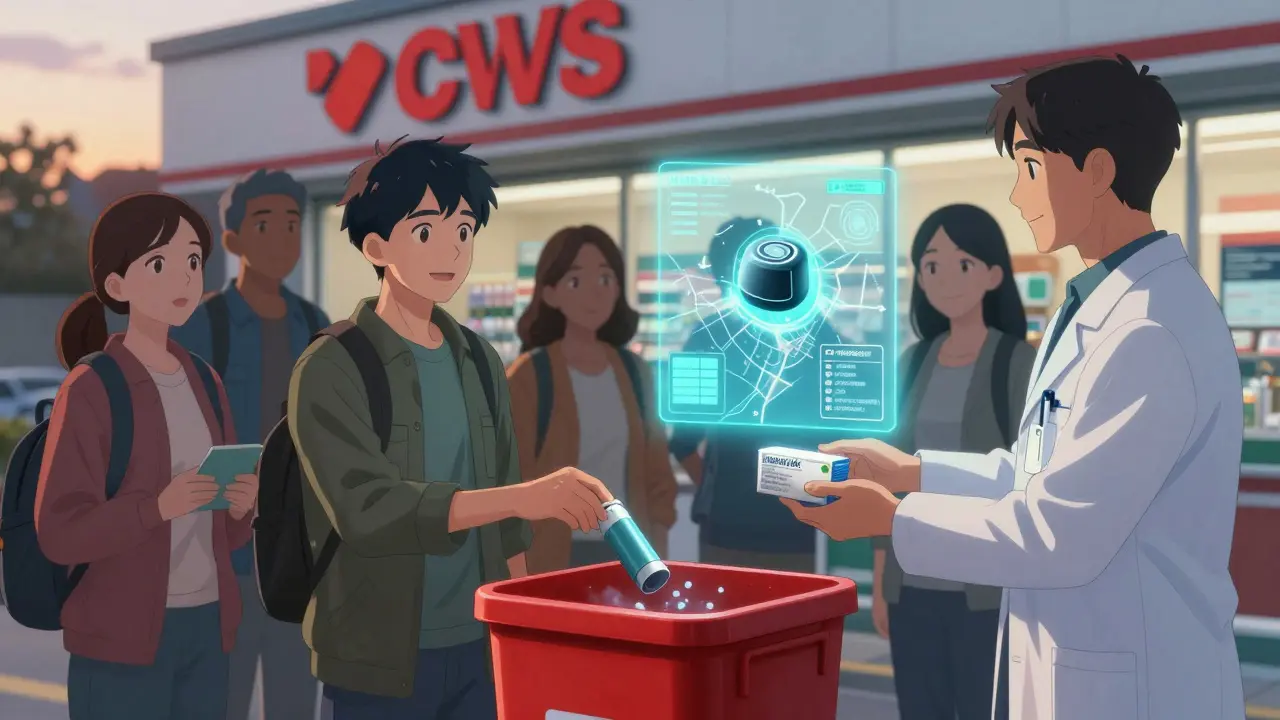
What’s Changing-And What’s Coming
Good news: disposal is getting easier. The 2022 Inflation Reduction Act funded $5 million in disposal programs. By 2024, 47 states had launched new take-back initiatives. Amazon Pharmacy, CVS, and Walgreens now offer free mail-back or in-store drop-off for expired inhalers. Propeller Health’s new GPS-enabled inhaler cap, released in mid-2023, alerts users 30 days before expiration and guides them to the nearest disposal site. The FDA is also reviewing its guidelines. A 2023 draft proposal may extend expiration dates for certain inhalers if stored properly-like in cool, dry places. But until then, assume the date on the label is final.Where to Get Help
- Medicine Safe Disposal Hotline: Call 1-800-222-1222 for free advice on disposal in your area.
- DEA National Take Back Day: Held twice a year, with over 11,000 collection sites across the U.S.
- Pharmacy chains: CVS, Walgreens, Rite Aid, and others offer year-round drop-off bins.
- Local health departments: Many offer free disposal kits, especially for asthma patients.
There’s no shame in needing help. If you can’t afford a new inhaler, ask your doctor for samples or patient assistance programs. Most manufacturers have them. If you’re unsure about a medication, call your pharmacist. They’re trained to help-not judge.
Your health isn’t a gamble. Expired meds aren’t a savings plan-they’re a ticking time bomb. Replace them. Dispose of them properly. And never, ever risk using them when you need them most.
Can I still use an expired inhaler if it looks and feels fine?
No. Even if the inhaler sprays and feels normal, the active ingredient may have degraded. A 2021 study found expired albuterol inhalers delivered only 60-70% of the labeled dose. During an asthma attack, that’s not enough. You can’t tell by feel or sound whether the dose is correct. Relying on appearance is dangerous.
Is it safe to flush expired eye drops down the toilet?
No. Flushing eye drops contributes to pharmaceutical pollution in waterways. The EPA and FDA both recommend against it. Instead, mix the contents with coffee grounds or cat litter in a sealed container and throw it in the trash. This prevents accidental ingestion and reduces environmental harm.
Why can’t I just throw expired inhalers in the regular trash?
Expired inhalers contain pressurized propellants that are classified as hazardous waste. If punctured in a landfill or incinerator, they can explode or release toxic chemicals into the air and soil. The EPA and DEA require special disposal methods. Always use a pharmacy take-back program or a prepaid mailer.
Do all expired medications become dangerous?
Not all, but some are high-risk. Inhalers, epinephrine auto-injectors, insulin, and eye drops are among the most dangerous if used past expiration. Others, like acetaminophen or ibuprofen, may just lose potency. But since you can’t tell which ones are still effective, it’s safest to dispose of all expired medications properly.
Are there free programs to get new inhalers if I can’t afford them?
Yes. Many drug manufacturers offer patient assistance programs. For example, GlaxoSmithKline (maker of Ventolin) and Teva (maker of ProAir) provide free or low-cost inhalers to eligible patients. Your doctor can help you apply. Also, organizations like the Asthma and Allergy Foundation of America partner with clinics to distribute free inhalers and disposal kits.


I am a pharmaceutical expert with over 20 years of experience in the industry. I am passionate about bringing awareness and education on the importance of medications and supplements in managing diseases. In my spare time, I love to write and share insights about the latest advancements and trends in pharmaceuticals. My goal is to make complex medical information accessible to everyone.