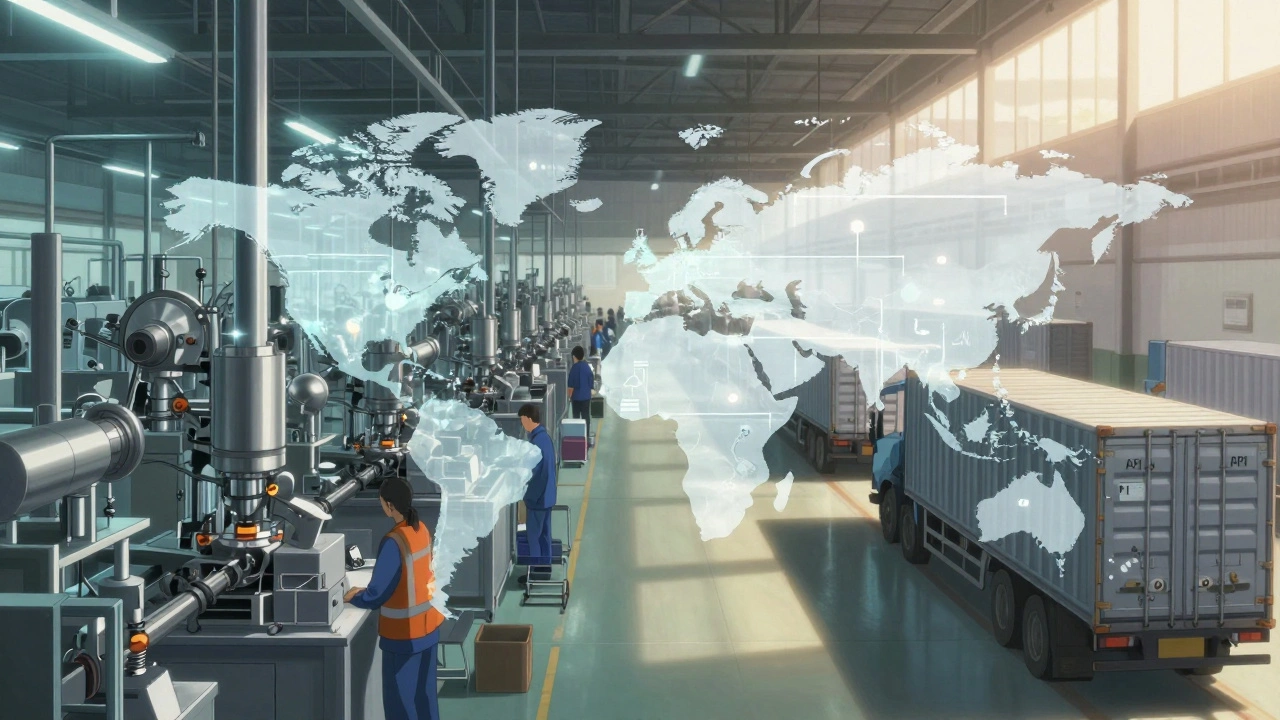
India and China dominate the global generic drug market, with India leading in volume and China controlling the supply of active ingredients. Emerging economies like Vietnam and Cambodia are carving out niche roles in this high-stakes industry.

When you buy a generic drug made in India, China, or Thailand, you’re tapping into the Asian generic markets, a global network of pharmaceutical manufacturers producing low-cost versions of brand-name medicines. Also known as offshore generic producers, these markets supply over 40% of the world’s generic drugs—everything from antibiotics to blood thinners. But not all generics are created equal. The same pill sold in the U.S. as a generic might come from a factory in Hyderabad, while another version in Europe comes from a plant in Shanghai. The difference isn’t just price—it’s regulation, oversight, and how strictly they test whether the drug actually works the same way in your body.
The bioequivalence, the standard that ensures a generic drug performs the same as the brand-name version in your bloodstream. Also known as drug absorption rates, it’s measured using the 80-125% rule, which means the generic must deliver between 80% and 125% of the active ingredient as the original. This isn’t just a number—it’s what keeps you safe. In countries with strong regulators like India’s CDSCO or Thailand’s FDA, factories follow strict guidelines. But in places with weaker oversight, testing might be skipped or falsified. That’s why some patients report side effects or ineffective treatment with generics from unverified sources. It’s not the generic label that’s the problem—it’s the lack of accountability behind it.
Then there’s the regulatory standards, the rules that govern how drugs are tested, manufactured, and approved. Also known as pharmaceutical compliance frameworks, these vary wildly—from the FDA’s strict inspections to agencies with limited resources or political pressure. The FDA doesn’t approve most Asian generics directly, but it inspects factories that export to the U.S. The EMA in Europe does the same. But if you’re buying online from a site that ships from Bangladesh or Vietnam, there’s no guarantee anyone checked the pill’s ingredients, purity, or stability. That’s why some people end up with fake drugs—empty capsules, wrong dosages, or even toxic fillers.
What you’ll find in the articles below is a practical, no-fluff look at how these markets really work. You’ll see how the Asian generic markets affect your wallet and your health, why some generics are just as good as brand names (and others aren’t), and what to look for when choosing a supplier. We’ll break down the science behind bioequivalence, compare how regulators in different countries handle safety, and show you real examples of cost savings—and risks. Whether you’re paying out of pocket, living abroad, or just trying to save money on prescriptions, this collection gives you the facts you need to make smarter choices—not guesses.
India and China dominate the global generic drug market, with India leading in volume and China controlling the supply of active ingredients. Emerging economies like Vietnam and Cambodia are carving out niche roles in this high-stakes industry.