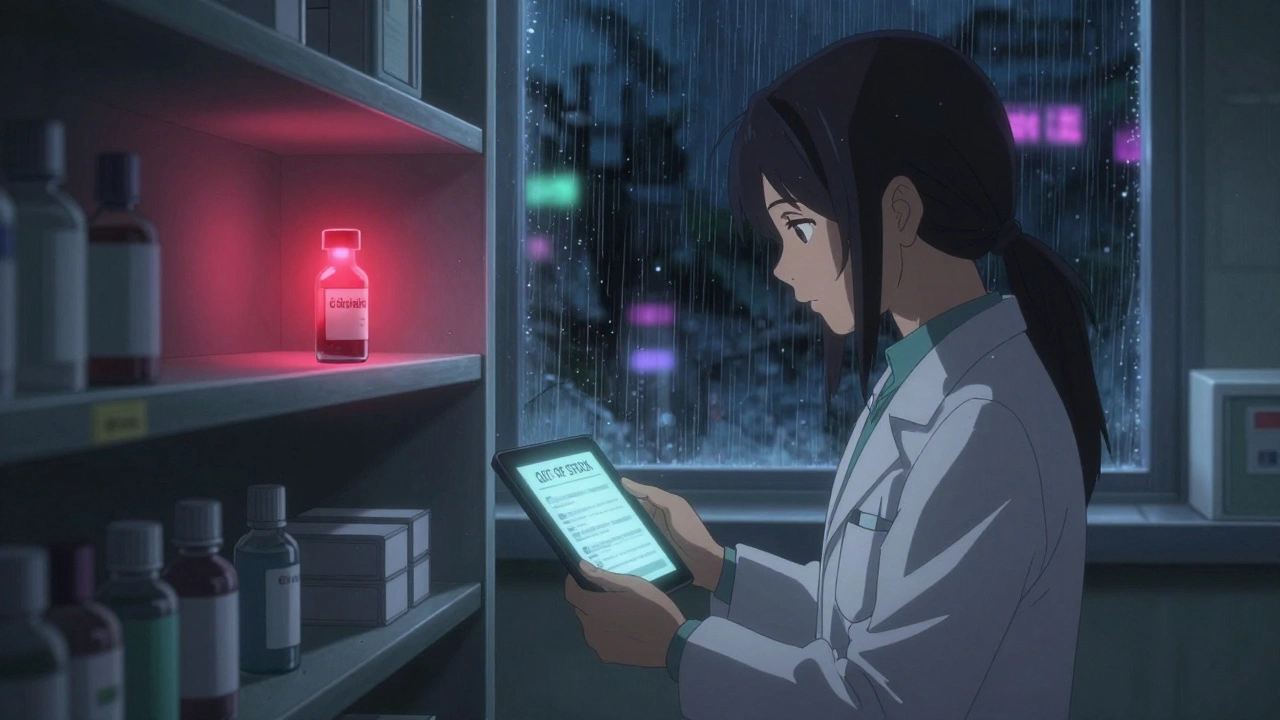
As of 2025, over 270 medications are in short supply in the U.S., including critical drugs like cisplatin, IV fluids, and GLP-1 weight-loss agents. Learn which drugs are hardest to find, why shortages keep happening, and what you can do.

When your pharmacy says they’re out of your usual pill, it’s not just bad luck—it’s a drug shortage, a situation where the supply of a medication falls below what’s needed to meet patient demand. Also known as medication shortages, these aren’t rare glitches—they’re systemic issues affecting everything from antibiotics to heart drugs. You might not hear about them in the news, but millions of people wake up to empty shelves, switched prescriptions, or higher prices because of them.
Behind every drug shortage, a situation where the supply of a medication falls below what’s needed to meet patient demand. Also known as medication shortages, these aren’t rare glitches—they’re systemic issues affecting everything from antibiotics to heart drugs. is a tangled web of pharmaceutical supply chain, the global network of manufacturers, raw material suppliers, and distributors that deliver medicines from labs to pharmacies. Most of the active ingredients in your pills come from just a few countries—India and China make up over 80% of the world’s generic drug components. If a factory there has an inspection failure, a power outage, or a raw material glitch, it ripples across the globe. One small plant shutdown can mean your blood pressure med disappears for months. And because many generics are made by low-margin companies, there’s little incentive to build backup capacity.
It’s not just about production. generic drugs, medications that are chemically identical to brand-name drugs but sold at lower prices after the patent expires are the backbone of modern healthcare. But they’re also the most vulnerable. When a brand-name drug goes generic, companies cut costs everywhere—fewer quality control staff, single-source suppliers, aging equipment. One FDA inspection finding can halt production for months. Meanwhile, demand keeps rising. More people on chronic meds, aging populations, and supply chain fragility create the perfect storm.
And when your drug is gone? You might get a different brand, a higher dose, or a substitute that doesn’t work as well. Some people delay refills. Others end up in the ER because their condition flares. The drug shortages aren’t abstract—they’re personal. They affect how you sleep, how you move, how you feel day to day.
What you’ll find in these articles isn’t just theory. It’s real-world insight into how these shortages connect to everything from how pills are made, to how pharmacies prevent errors when switching meds, to why some generic drugs cost more than the brand. You’ll learn how Asian manufacturing shapes your access, how combo pills can make shortages worse, and how lab monitoring and dosing safety become even more critical when your usual option vanishes. This isn’t about panic—it’s about understanding what’s really happening so you can protect yourself and your health.
As of 2025, over 270 medications are in short supply in the U.S., including critical drugs like cisplatin, IV fluids, and GLP-1 weight-loss agents. Learn which drugs are hardest to find, why shortages keep happening, and what you can do.