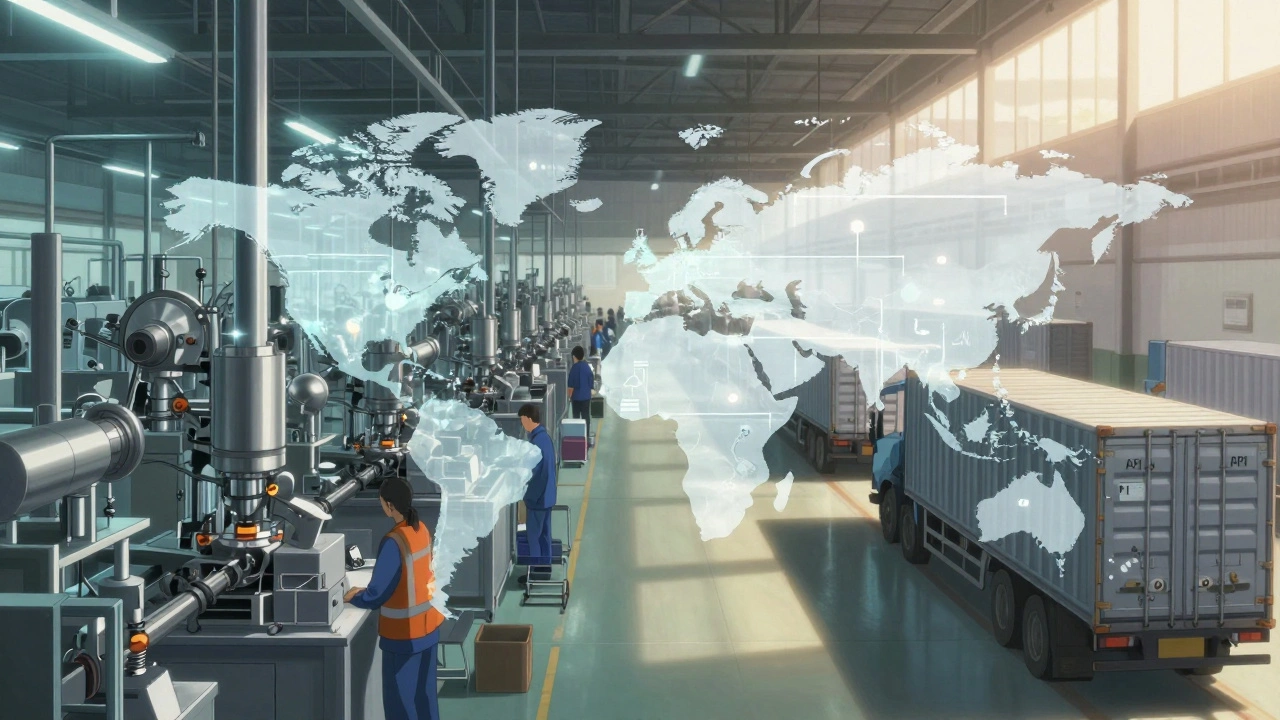
India and China dominate the global generic drug market, with India leading in volume and China controlling the supply of active ingredients. Emerging economies like Vietnam and Cambodia are carving out niche roles in this high-stakes industry.

When you take a generic pill for blood pressure, antibiotics, or diabetes, there’s a good chance it came from India pharmaceuticals, the world’s largest supplier of affordable generic medicines. Also known as the pharmacy of the world, India produces over 20% of all generic drugs sold globally—many of them cheaper than the brand versions you find at your local pharmacy. These medicines aren’t just low-cost copies. They’re rigorously tested to meet international standards, often matching the same absorption rates and effectiveness as their branded counterparts.
Behind every pill made in India is a complex system of drug manufacturing, large-scale production facilities that follow strict quality controls. Factories in states like Gujarat and Andhra Pradesh produce everything from simple painkillers to complex cancer drugs. Many of these plants are inspected by the FDA, EMA, and WHO—so when you see a generic drug labeled "Made in India," it doesn’t mean it’s low quality. It means it’s made to the same bioequivalence rules as any other generic, like the 80-125% rule, the standard that ensures generic drugs are absorbed by your body at the same rate as the brand. This rule is why a generic ibuprofen from India works just as well as the name-brand version.
But not all Indian manufacturers are created equal. Some face recalls or warnings for poor record-keeping or contamination, which is why regulators keep a close eye on imports. The real issue isn’t where the drug is made—it’s whether the company behind it follows the rules. That’s why pharmaceutical regulation, the system of inspections, audits, and compliance checks that keep drugs safe matters more than the country name on the label. Whether it’s a pill from India, the U.S., or Germany, what counts is whether it passed the same safety tests.
You’ll find plenty of posts here that dig into the details: how generics are tested, why some cost 10 times less than others, and how to tell if your medication is safe. You’ll also see how drug interactions, dosing errors, and lab monitoring apply to these medicines—no matter where they come from. The goal isn’t to praise or blame India’s drug industry. It’s to help you understand what’s really in your medicine, how it got there, and whether you can trust it.
India and China dominate the global generic drug market, with India leading in volume and China controlling the supply of active ingredients. Emerging economies like Vietnam and Cambodia are carving out niche roles in this high-stakes industry.