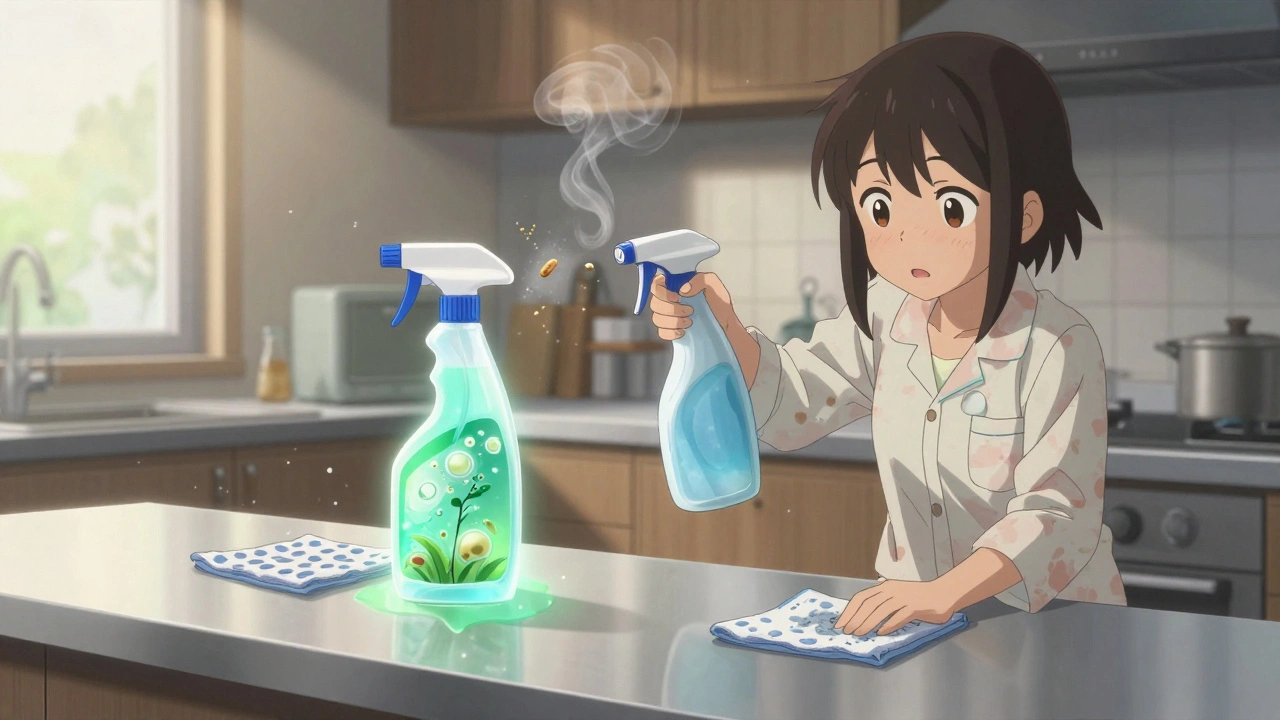
Discover which allergy-friendly cleaning products actually reduce triggers like dust mites, pet dander, and chemical fumes. Learn certified brands, effective techniques, and why "unscented" isn’t always safe.

When you reach for a bottle of non-toxic cleaning products, cleaning supplies designed to avoid harmful chemicals that can irritate skin, lungs, or disrupt hormones. Also known as eco-friendly cleaners, these products are made with ingredients that break down safely and don’t pollute your home or water supply. Most people think "clean" means strong smells and suds—but that’s not safety. It’s marketing. Real safety means no phthalates, no chlorine, no synthetic fragrances, and no endocrine disruptors hiding under the word "natural."
Many conventional cleaners contain chemical exposure, the unintended intake of harmful substances through breathing, skin contact, or ingestion. This isn’t just about allergies—it’s about long-term risks. Studies show that frequent use of spray cleaners can lead to lung function decline over time, similar to smoking. And kids? They’re on the floor, touching surfaces, then putting hands in their mouths. A cleaner labeled "safe for kids" might still contain quaternary ammonium compounds, which are linked to asthma. Even "green" brands sometimes use misleading terms. True non-toxic cleaning products avoid these entirely. indoor air quality, the condition of air inside homes and buildings, often worse than outdoor air due to trapped chemicals. It’s not just about ventilation—it’s about what you’re releasing into the air every time you spray or wipe. Volatile organic compounds (VOCs) from cleaners linger for hours, mixing with dust and settling on furniture. That’s why switching to non-toxic options isn’t just a trend—it’s a health upgrade.
You don’t need a shelf full of bottles. White vinegar, baking soda, castile soap, and hydrogen peroxide work better than most store-bought cleaners for everyday messes. They’re cheap, effective, and don’t leave behind chemical residues that build up over time. And if you do buy a pre-made product, check the label for third-party certifications like EWG Verified or Safer Choice—those actually mean something. Don’t trust "plant-based" or "natural" without proof. The FDA doesn’t regulate cleaning product labels like it does food or medicine.
What you’ll find in the articles below are real, practical guides on how to choose, use, and avoid hidden dangers in cleaning products. From how to spot red-flag ingredients to what actually works on grease and mold without poisoning your family, these posts cut through the noise. No fluff. No marketing. Just what you need to make your home safer—one clean surface at a time.
Discover which allergy-friendly cleaning products actually reduce triggers like dust mites, pet dander, and chemical fumes. Learn certified brands, effective techniques, and why "unscented" isn’t always safe.