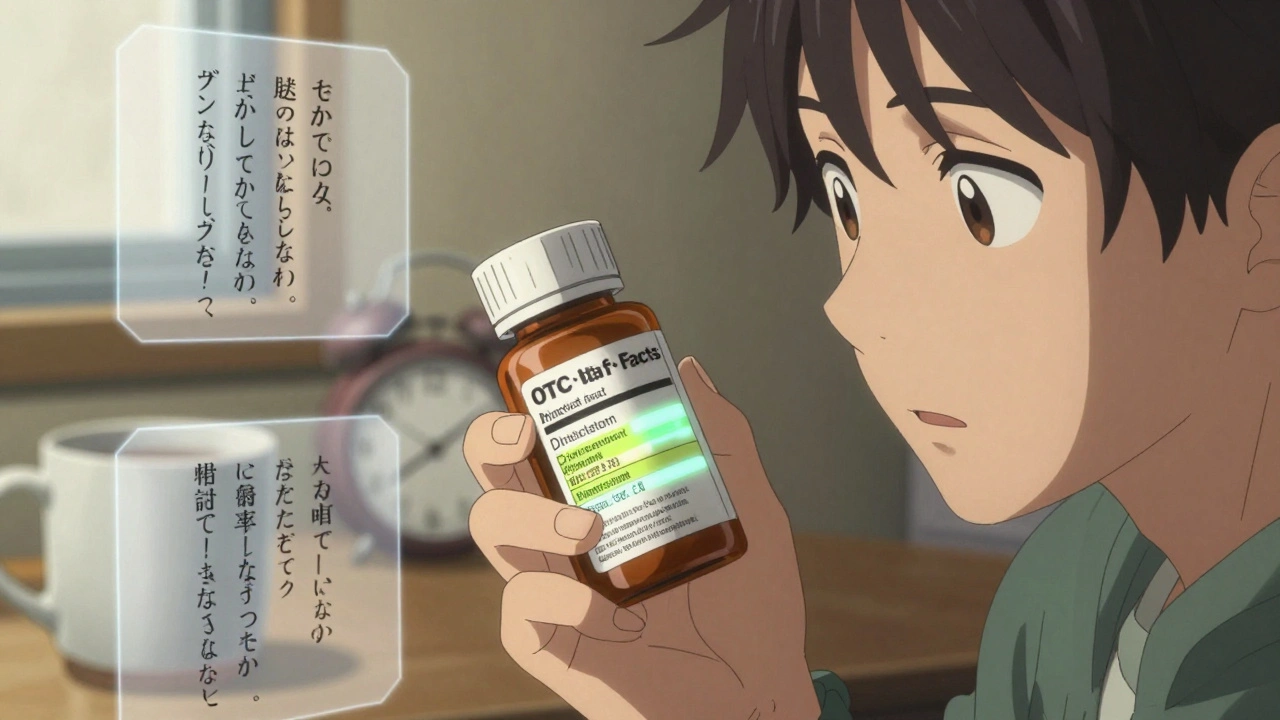
Learn how to read OTC Drug Facts labels to avoid dangerous mistakes, prevent overdoses, and use over-the-counter medicines safely. The FDA's standardized label helps you choose the right product and stay protected.

When you have a headache, a stuffy nose, or heartburn, over-the-counter meds, medicines you can buy without a prescription. Also known as OTC drugs, they’re meant to be simple, safe fixes — but only if you use them right. Millions reach for them every day without thinking twice. But what seems like a quick solution can turn into a problem if you don’t know what’s in the bottle or how it reacts with other things you’re taking.
These meds fall into a few big groups: pain relievers, like ibuprofen and acetaminophen for aches and fever, allergy meds, including antihistamines like loratadine and cetirizine for sneezing and itchy eyes, and cough and cold remedies, often packed with multiple active ingredients. The problem? Many products mix these together. You might take one for a cold and another for pain, not realizing you’re doubling up on acetaminophen — and that’s how liver damage happens. Even "natural" OTC options like Dong Quai can mess with blood thinners, as shown in real cases where people ended up in the ER after mixing supplements with warfarin.
It’s not just about what you take — it’s when and how. Using household spoons for kids’ medicine? That’s a recipe for overdose. Taking NSAIDs every day for back pain? You could be hurting your stomach or kidneys without knowing it. And caffeine? It doesn’t just keep you awake — it can make your thyroid meds less effective or turn warfarin into a wild card. These aren’t edge cases. They’re everyday mistakes.
The good news? You don’t need to be a pharmacist to use OTC meds safely. You just need to know what you’re holding, what it’s meant to do, and what it might clash with. That’s what this collection is for. Below, you’ll find clear, no-fluff guides on how to pick the right pain reliever, avoid dangerous combos, spot hidden risks in cough syrups, and protect your body from the quiet dangers of daily OTC use. No jargon. No hype. Just what actually matters when you’re standing in the pharmacy aisle with a headache and a half-empty bottle of Tylenol.
Learn how to read OTC Drug Facts labels to avoid dangerous mistakes, prevent overdoses, and use over-the-counter medicines safely. The FDA's standardized label helps you choose the right product and stay protected.