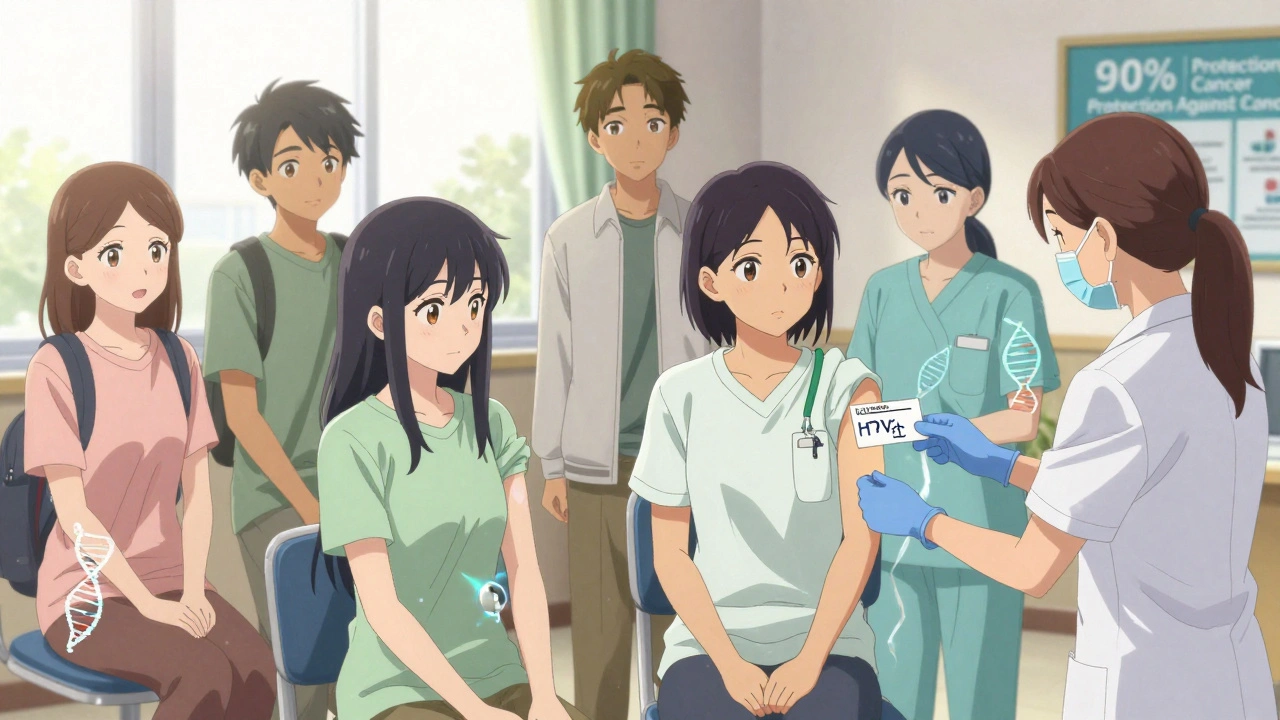
HPV causes nearly all cervical cancers, but vaccination and screening can stop it before it starts. Learn how modern testing, self-sampling, and vaccines are making cervical cancer a preventable disease.

When you hear HPV vaccination, a preventive shot that protects against infections caused by the human papillomavirus. Also known as HPV vaccine, it’s one of the few medical tools that can stop cancer before it starts. HPV isn’t just about genital warts—it’s linked to cancers of the cervix, throat, anus, penis, and vagina. The vaccine doesn’t treat existing infections, but it blocks the most dangerous strains before they ever take hold.
There are over 150 types of HPV, but just two—types 16 and 18—cause about 70% of cervical cancers. The current vaccines target up to nine strains, including those that cause most genital warts and cancers. The HPV vaccine, a series of shots given to children and young adults works best when given before anyone becomes sexually active. That’s why health groups recommend it for kids as young as 9, with catch-up doses available through age 26—and even up to 45 in some cases.
Some people worry about side effects, but serious reactions are extremely rare. The most common is soreness at the injection site. Fainting after shots happens more often than you’d think, mostly in teens, which is why clinics ask you to sit for 15 minutes after getting it. The cervical cancer prevention, the primary goal of HPV vaccination isn’t theoretical—it’s happening. Countries with high vaccination rates have seen drops in precancerous lesions in young women by over 80%. That’s not a guess. That’s data from real populations.
It’s not just for girls. Boys get HPV too, and they can pass it on. Vaccinating them reduces transmission, protects future partners, and lowers rates of throat and anal cancers in men. The HPV strains, the specific virus types targeted by the vaccine don’t care about gender—they spread the same way. So why should protection be gendered?
There’s a myth that the vaccine encourages early sexual activity. Studies have looked at this again and again. No difference. Kids who get the shot don’t start having sex sooner than those who don’t. The vaccine is like a seatbelt—it doesn’t make you drive faster, it just keeps you safer when you do.
And yes, it’s safe. The vaccine safety, the track record of HPV vaccination across millions of doses has been monitored for over 15 years. No link to infertility, autoimmune disorders, or chronic pain. The biggest risk? Not getting it.
What you’ll find below are real, practical guides on how HPV vaccination fits into everyday health—what to expect at the clinic, how it interacts with other meds, why timing matters, and how to talk to your provider if you’ve heard conflicting info. This isn’t theory. It’s what people actually need to know to make smart choices.
HPV causes nearly all cervical cancers, but vaccination and screening can stop it before it starts. Learn how modern testing, self-sampling, and vaccines are making cervical cancer a preventable disease.