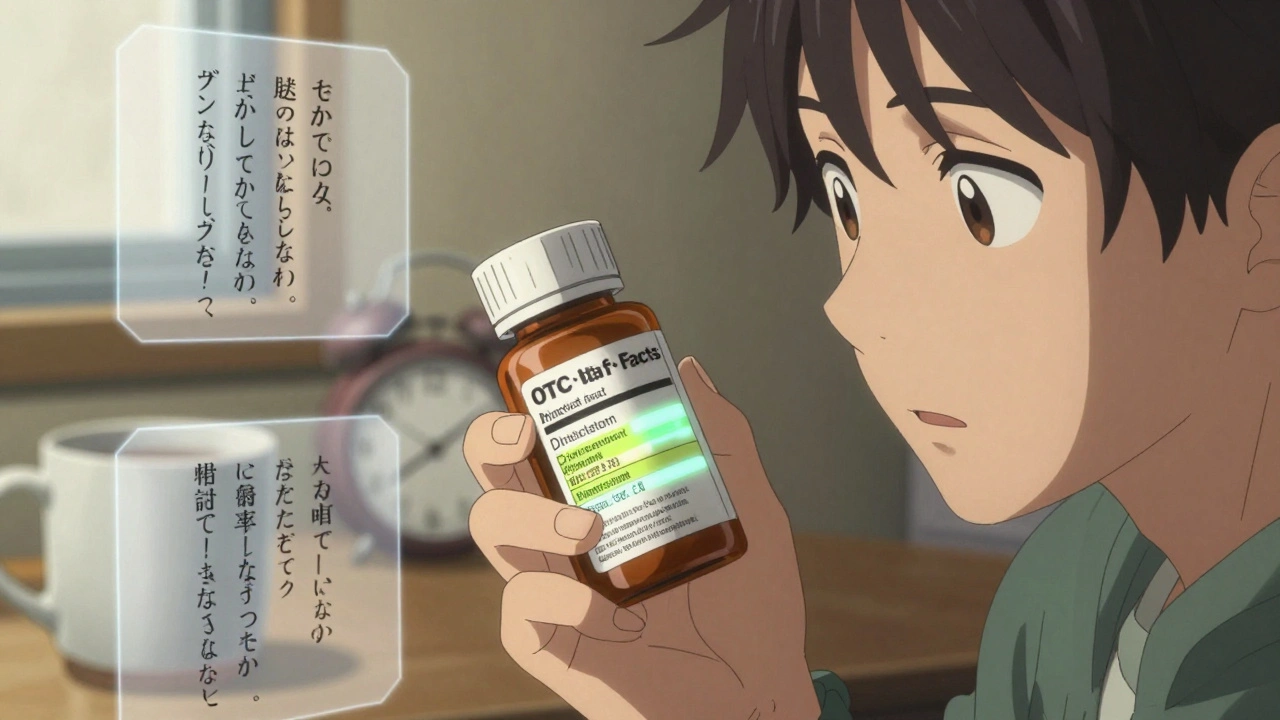
Learn how to read OTC Drug Facts labels to avoid dangerous mistakes, prevent overdoses, and use over-the-counter medicines safely. The FDA's standardized label helps you choose the right product and stay protected.

When you grab a bottle of ibuprofen, allergy pills, or cough syrup off the shelf, you’re using an OTC Drug Facts, a standardized label required by the FDA to clearly show active ingredients, uses, warnings, and dosing for over-the-counter medicines. Also known as Drug Facts label, it’s the only thing standing between you and a dangerous mistake. Most people glance at the brand name and call it good—but that’s how overdoses, bad interactions, and wasted money happen.
Every OTC Drug Facts tells you what’s inside, why you should take it, and when not to. The active ingredient is the only part that matters—whether it’s acetaminophen, loratadine, or naproxen. Many products have the same active ingredient under different brand names. If you take two at once, you’re doubling your dose. That’s why drug interactions are so common: people don’t realize their cold medicine has the same painkiller as their headache pill. And it’s not just about pills. Liquid infant formulas, topical creams, and even nasal sprays all follow the same labeling rules.
Reading the OTC Drug Facts isn’t optional—it’s your last line of defense. The "Warnings" section tells you if you have high blood pressure, liver disease, or are pregnant. The "Uses" section helps you pick the right product for your symptom. The "Directions" tell you exactly how much to take, and when to stop. Skip it, and you risk liver damage from too much acetaminophen, stomach bleeding from NSAIDs, or drowsiness that turns into a car crash. The FDA didn’t design these labels to confuse you—they were built because people kept getting hurt.
Below, you’ll find real-world guides on how to use common OTC meds safely. Learn why mixing caffeine and warfarin can be deadly, how to avoid giving your baby the wrong dose of acetaminophen, and why "unscented" cleaning products aren’t always safe for asthma. You’ll see how labels connect to real risks—like clindamycin triggering C. diff, or how spacing probiotics with antibiotics can save your gut. These aren’t theoretical warnings. They’re the kind of mistakes that land people in the ER. But they’re also the kind you can avoid—with one simple habit: always read the label.
Learn how to read OTC Drug Facts labels to avoid dangerous mistakes, prevent overdoses, and use over-the-counter medicines safely. The FDA's standardized label helps you choose the right product and stay protected.